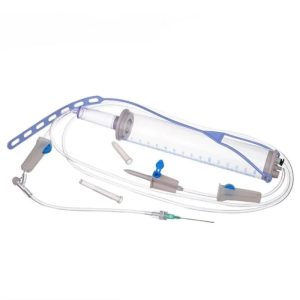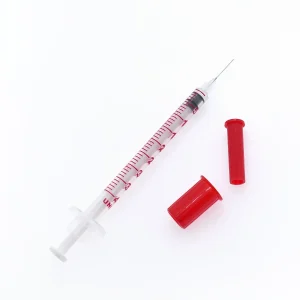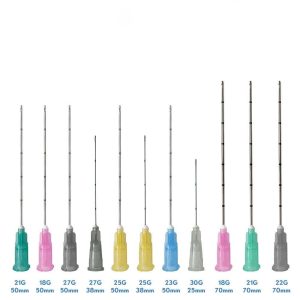
If you’re new to medical procurement, sourcing, or clinical supply management, the world of medical needles can feel surprisingly complicated. Walk into any hospital supply catalog and you’ll see dozens of listings — different lengths, different bevels, different colors, and a confusing string of numbers followed by the letter “G.” Where do you even start?
This guide breaks it all down in plain language. By the end, you’ll understand the different types of medical needles, how the gauge sizing system works, and what actually separates a reliable needle supplier from a risky one. Whether you’re buying for a clinic, a lab, or a hospital procurement department, this article gives you the foundation you need before you place your first order.
Why Understanding Needle Types Actually Matters
It’s tempting to think “a needle is just a needle.” In reality, the needle you choose directly affects patient comfort, procedure accuracy, medication delivery, and even infection risk. A needle that’s too thick can cause unnecessary tissue trauma. One that’s too thin might bend, clog, or fail to deliver viscous medication properly. The wrong length can mean missing the intended tissue layer entirely — subcutaneous instead of intramuscular, for example.
For buyers, this means procurement decisions aren’t just about price. They’re about matching the right needle to the right clinical task, and making sure whatever you source is manufactured to consistent, verifiable standards.
Needle Anatomy 101: The Parts You Should Know
Before diving into gauge sizes, it helps to understand the basic anatomy of a needle:
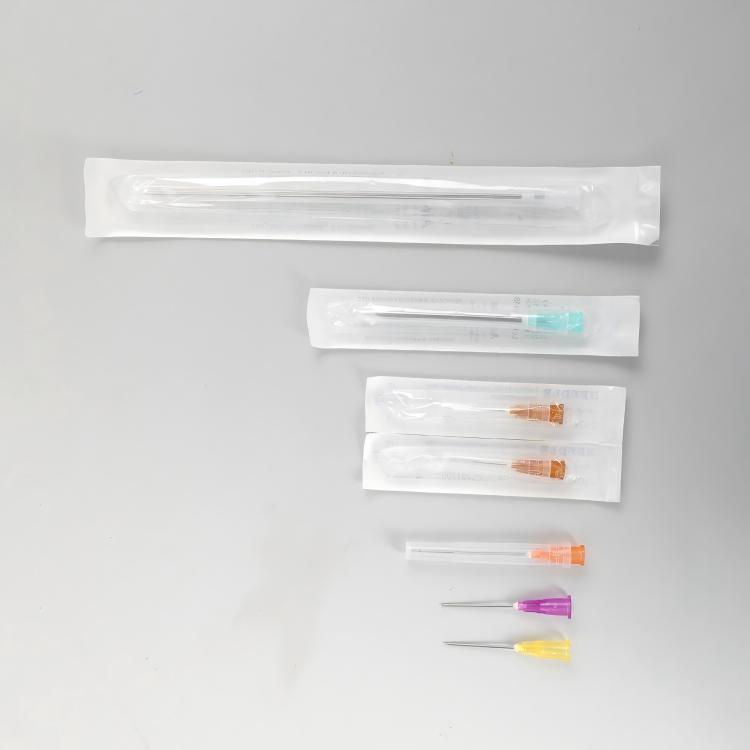
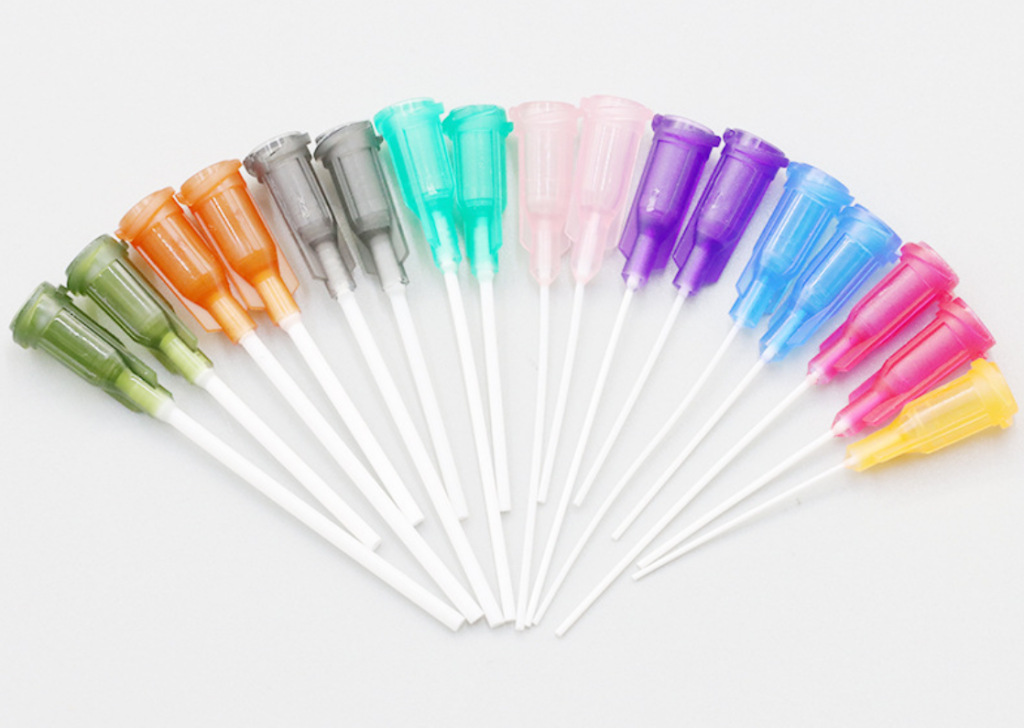
- Hub — the colored plastic base that attaches to the syringe. Hub color is actually standardized by gauge size (more on this below), which is why experienced clinicians can identify a needle’s thickness just by glancing at the color.
- Shaft — the metal tube itself, through which fluid travels.
- Bevel — the angled tip cut into the needle. Bevel design affects how smoothly the needle penetrates skin and tissue, and how much resistance the patient feels.
- Lumen — the hollow bore running through the center of the shaft. This is what actually determines the gauge number.
Once you understand these four elements, gauge sizing starts to make a lot more sense.
Needle Gauge Sizes Explained (With Chart)
Here’s the part that trips up most beginners: needle gauge sizes work on an inverse scale. The higher the gauge number, the thinner the needle. A 30G needle is extremely fine, while a 14G needle is quite thick. This system dates back to wire gauge measurement standards and was carried over into medical manufacturing because it offered a consistent, standardized way to describe tube diameter.
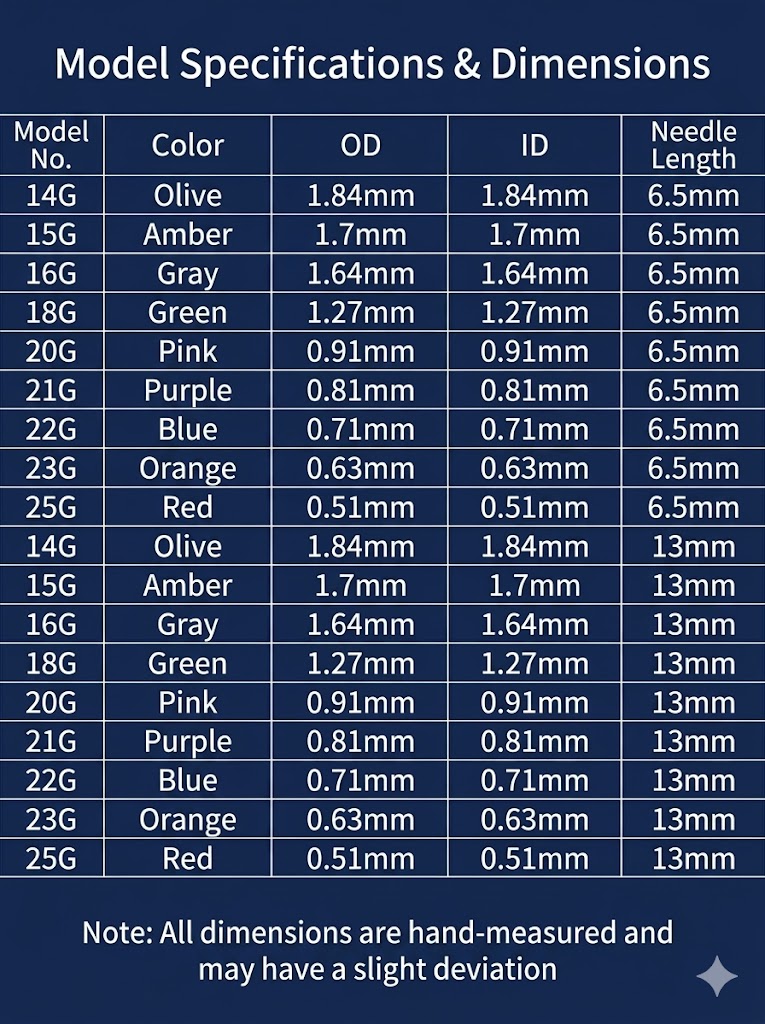
Here is a simplified needle gauge sizes reference chart commonly used in clinical and procurement settings:
| Gauge | Outer Diameter (approx.) | Hub Color | Typical Use |
|---|---|---|---|
| 14G | 2.1 mm | Orange | Rapid fluid/blood transfusion, trauma care |
| 16G | 1.65 mm | Grey | Blood donation, large-volume IV infusion |
| 18G | 1.27 mm | Green | Blood transfusion, viscous medication |
| 20G | 0.91 mm | Pink | Standard IV access, contrast injection |
| 21G | 0.82 mm | Green (dark) | Blood draws, IM injections |
| 22G | 0.72 mm | Black | Spinal and epidural procedures, pediatric IV |
| 23G | 0.64 mm | Blue | Small vein blood draws, fine injections |
| 25G | 0.5 mm | Orange | Subcutaneous and intramuscular injections |
| 27G | 0.41 mm | Grey (light) | Dental anesthesia, cosmetic injections |
| 30G | 0.3 mm | Yellow | Insulin injections, fine cosmetic work |
Keep in mind that exact hub colors can vary slightly between manufacturers and regional standards (ISO vs. other regional systems), so it’s always worth confirming color-coding conventions with your specific supplier before large-volume orders.
Main Types of Medical Needles by Application
Gauge size is only half the story — the other half is needle type, which refers to the needle’s intended clinical use and design. Here’s a breakdown of the most common categories.
1. Hypodermic Needles
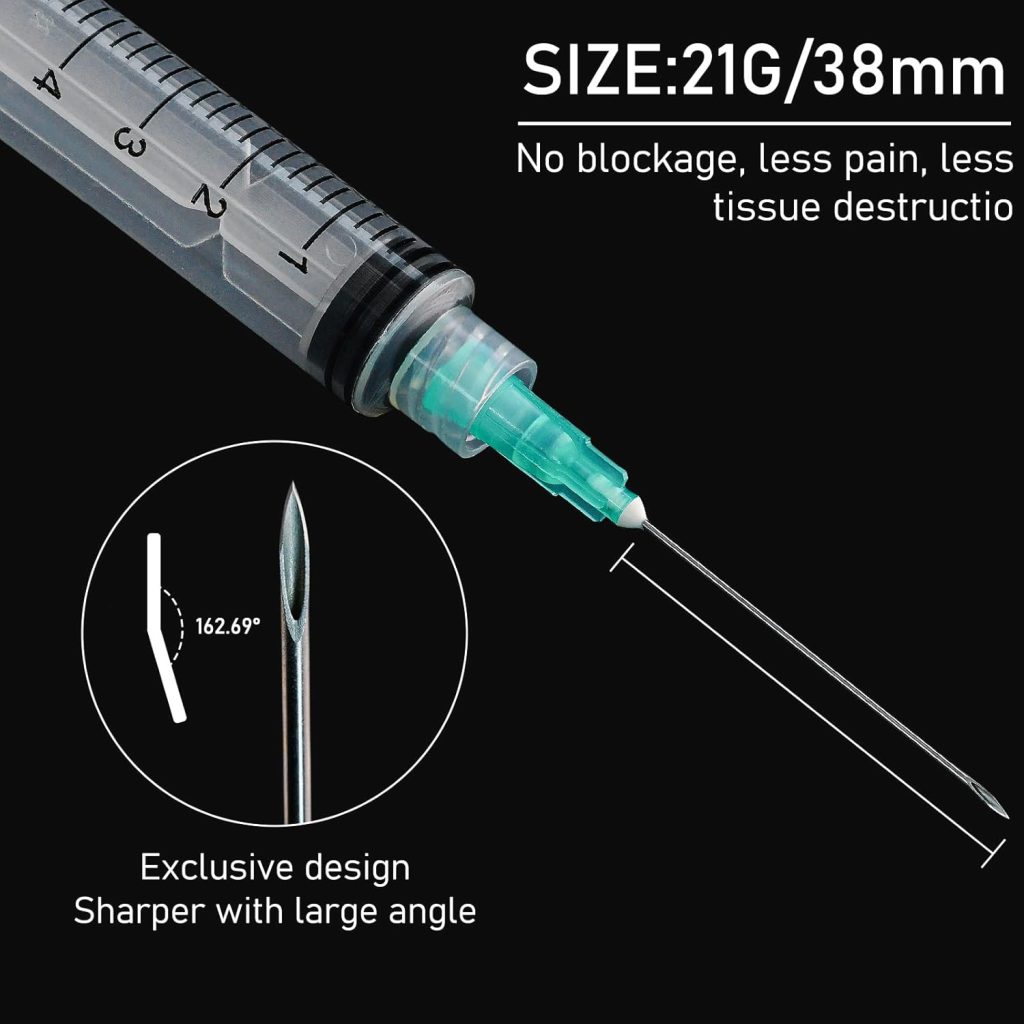
The most familiar type, used for injections and blood draws. They come in a wide range of gauges (typically 18G–30G) and are designed for short-term, single-use applications into subcutaneous or intramuscular tissue.
2. Spinal Needles
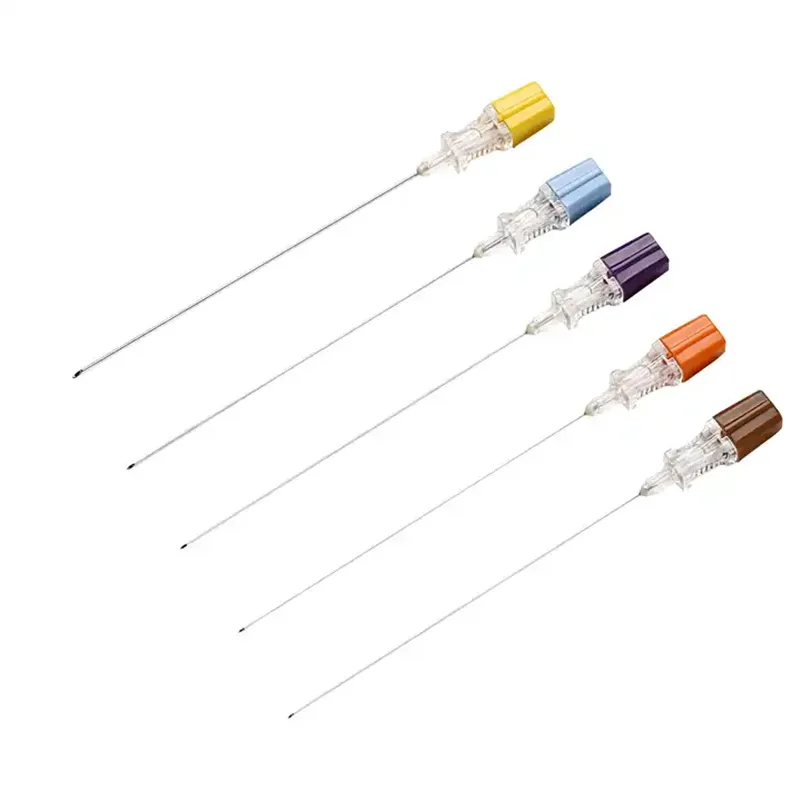
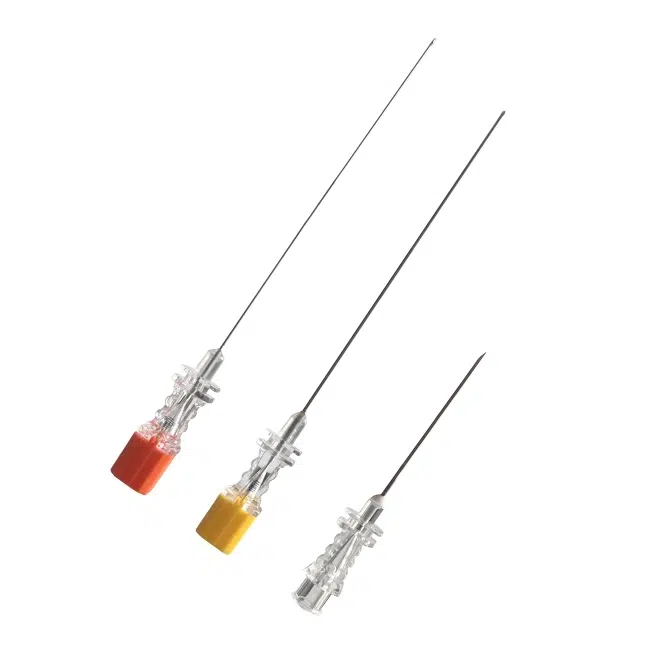
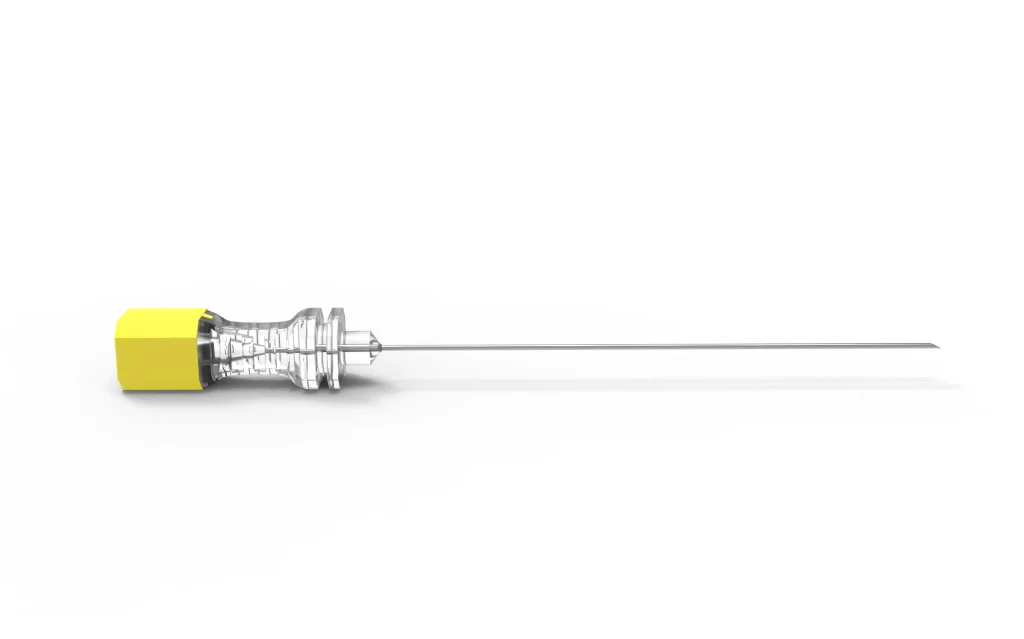
Spinal needles are longer, thinner, and require exceptional precision because they’re used to access the subarachnoid or epidural space — a task where accuracy is critical for both efficacy and patient safety. These needles typically feature a stylet (a removable inner wire) to prevent tissue coring during insertion, and their tip design (such as pencil-point vs. cutting-tip styles) directly affects the risk of post-procedure complications like spinal headaches. Because of the precision required, sourcing spinal needles — such as this 22G spinal needle — from a manufacturer with tight tolerance control is especially important.
3. Biopsy Needles
Used to extract tissue samples for diagnostic testing. These are often larger gauge (thicker) and may include specialized mechanisms like spring-loaded cores or coaxial systems to capture tissue cleanly with minimal trauma.
4. Dental Needles
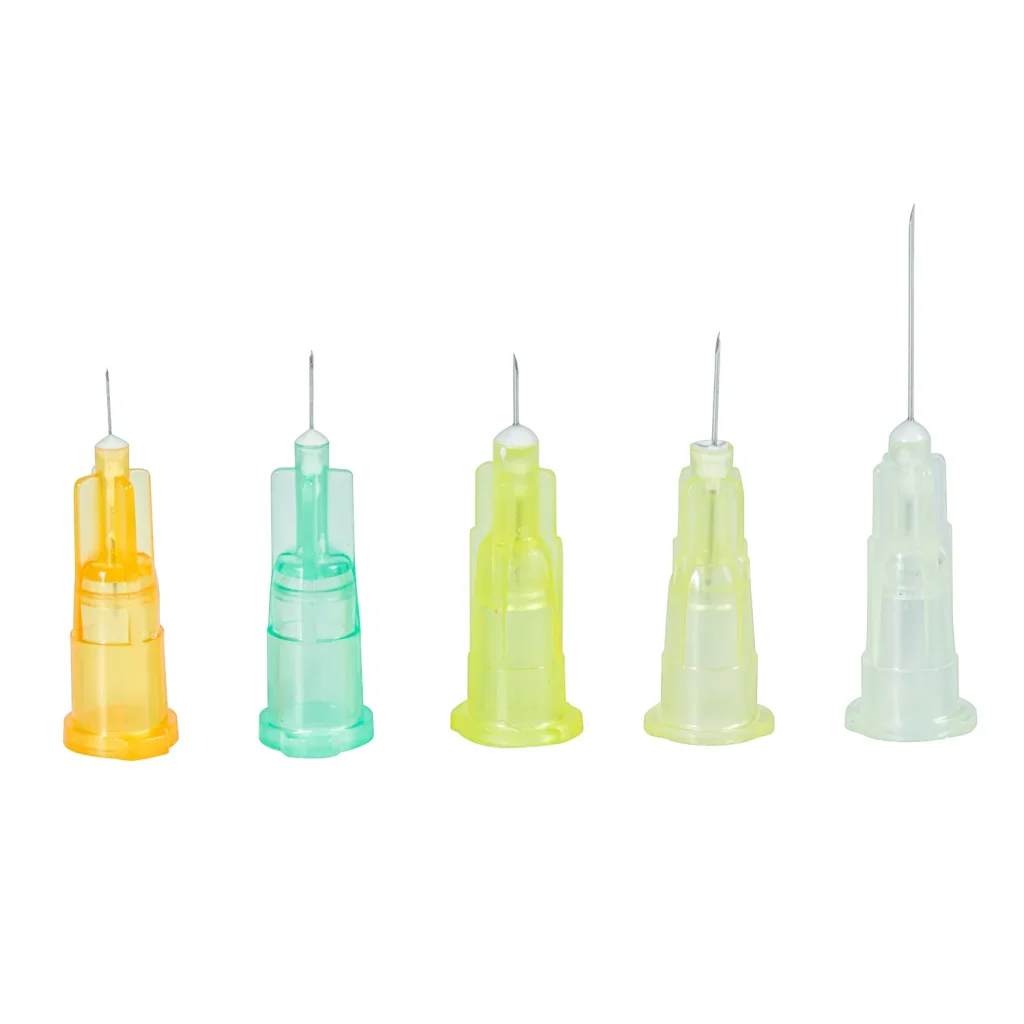
Shorter and finer than most hypodermic needles, dental needles are designed for precise, low-discomfort delivery of local anesthesia in a confined oral environment.
5. Winged (Butterfly) Needles
Recognizable by their plastic “wings,” these needles are commonly used for blood draws and short-term IV therapy, particularly in patients with small or fragile veins, such as children or the elderly.
6. Safety-Engineered Needles
An increasingly standard category across nearly all needle types, these include a retractable or shielding mechanism that automatically covers the needle tip after use, significantly reducing the risk of accidental needlestick injuries to healthcare workers.
7. Filter Needles
Used specifically when drawing medication from glass ampoules, filter needles contain a built-in filter to catch glass particles, preventing them from entering the syringe and, ultimately, the patient.
How to Choose the Right Needle: A Practical Framework
If you’re new to procurement, here’s a simple way to think through needle selection:
- Identify the clinical task first. Is this for a blood draw, an injection, a spinal procedure, or a biopsy? The task determines the needle type.
- Match gauge to fluid viscosity and patient anatomy. Thicker fluids (like blood products) need lower gauge (thicker) needles. Delicate patients — pediatric or elderly — often require finer gauges and shorter lengths.
- Consider length alongside gauge. Two needles with the same gauge can have very different lengths depending on the target tissue depth.
- Check for safety mechanisms. Many regions now require safety-engineered needles in clinical settings by regulation.
- Verify sterilization and packaging standards. This is where manufacturer quality becomes critical — more on that below.
What Separates a Reliable Needle Manufacturer From the Rest
Once you understand needle types and gauge sizing, the next — and arguably more important — question for a procurement professional is: who are you actually buying from?
A few things worth checking when evaluating any needle supplier:
- Material consistency. High-quality needles use medical-grade stainless steel with consistent wall thickness across every batch. Inconsistent tubing leads to bent tips, uneven bevels, or breakage during use.
- Sterilization validation. Look for documented, validated sterilization processes (typically ethylene oxide or gamma irradiation) with batch traceability.
- Tolerance control. Especially for precision applications like spinal or biopsy needles, tight manufacturing tolerances directly affect both safety and procedural success.
- Regulatory compliance. Certifications such as ISO 13485, CE marking, or FDA registration (depending on your target market) are baseline indicators of manufacturing discipline.
- Customization capability. Larger institutional buyers or OEM/private-label buyers often need custom lengths, packaging, or branding — not every manufacturer can support this at scale.
A Word on Kohope’s Background
For readers who are curious about the manufacturing side of this industry: companies like Kohope have built their operations specifically around precision needle production for global medical device markets. Kohope originated as a manufacturer focused on fine-gauge and specialty needles — including spinal, biopsy, and hypodermic product lines — and has since expanded its catalog to serve hospital distributors, OEM partners, and clinical suppliers internationally. Over the years, the company has invested in tighter quality control systems and ISO-aligned production processes, which is fairly typical of manufacturers that have grown from smaller regional operations into export-focused suppliers. If you’re doing due diligence on any manufacturer — Kohope included — it’s always worth asking directly about their certifications, minimum order quantities, and sample testing process before committing to a bulk order.
Frequently Asked Questions
What’s the most common needle gauge for injections? For standard intramuscular or subcutaneous injections, 22G–25G needles are most commonly used, depending on medication viscosity and injection site.
Why do spinal needles need to be so precise? Because they’re inserted near the spinal cord and nerve roots, even small deviations in tip design or shaft consistency can affect both safety and the success rate of the procedure.
Can needle gauge affect patient pain levels? Yes, generally — thinner (higher gauge) needles tend to cause less discomfort, but they’re not always clinically appropriate for every fluid type or procedure.
How do I know if a supplier’s needles meet international standards? Ask for ISO 13485 certification, CE marking documentation (for EU markets), or FDA registration (for the US market), along with batch-level quality control records.
Final Thoughts
Understanding the different types of medical needles and how gauge sizing works isn’t just academic knowledge — it directly informs smarter, safer procurement decisions. As you move from general hypodermic needles into more specialized categories like spinal or biopsy needles, manufacturing precision becomes increasingly important, which is why vetting your supplier’s quality systems should be just as high a priority as comparing price per unit.
If you’re building out a procurement checklist, start with the gauge chart above, identify your clinical use cases, and then evaluate suppliers based on certification, tolerance control, and sterilization validation — not just catalog price.