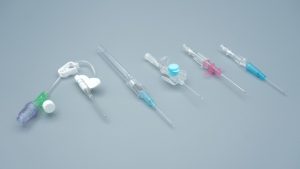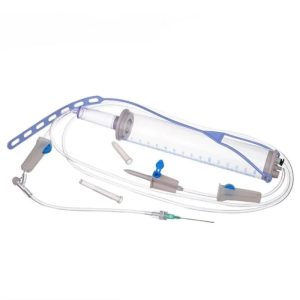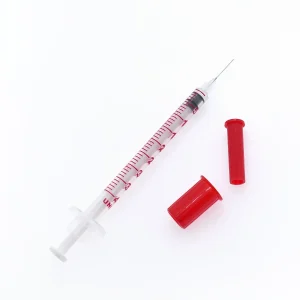

Anyone who works with hypodermic needles regularly — clinicians, procurement staff, or medical suppliers — eventually runs into the same counterintuitive detail: a “30G” needle is thinner than an “18G” needle. The numbering appears inverted at first glance, and if you don’t understand why, it’s easy to select the wrong needle for a given clinical task.
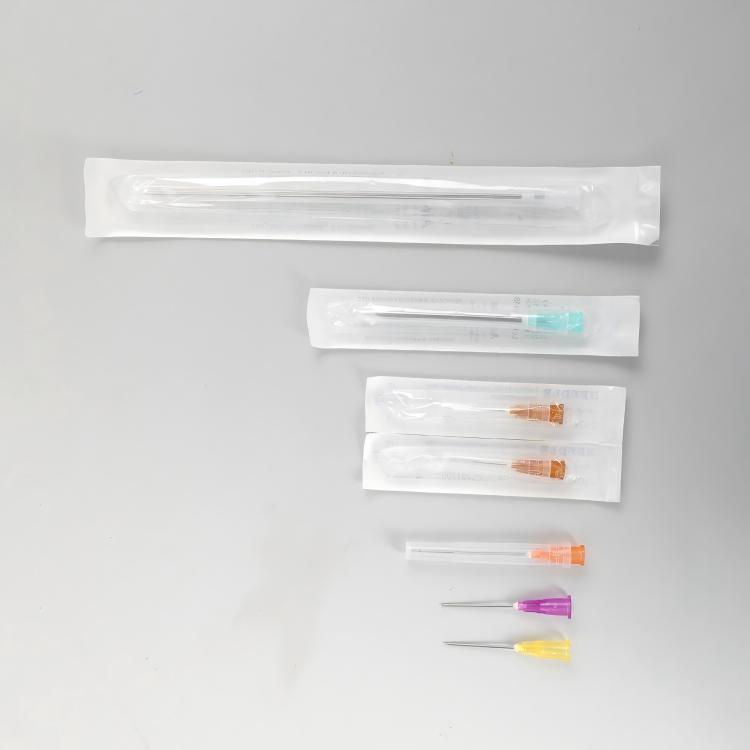
This guide walks through the needle gauge system in detail: where it comes from, how to read a hypodermic needle gauge chart correctly, and how gauge interacts with length, flow rate, and clinical indication. The goal is a reference precise enough to use in a procurement or clinical setting, not just a casual overview.
What Needle Gauge Measures
Needle gauge is a standardized measurement of a needle’s outer diameter (OD). It does not directly describe wall thickness or inner diameter (ID), though both are related specifications that matter for flow rate and structural integrity.
The system originates from the Birmingham Wire Gauge (BWG), a 19th-century wire-manufacturing standard. In that process, wire was progressively drawn through a series of dies to reduce its diameter — the more draws a wire underwent, the thinner it became, and the higher its assigned gauge number. That manufacturing logic is the reason the scale runs in reverse of what most people expect: the higher the gauge number, the smaller the outer diameter.
Medical device manufacturers adopted BWG numbering for needles decades ago, and it remains the dominant convention in the United States. Internationally, needles are also specified under ISO 9626, which assigns each gauge a corresponding color code for the needle hub — a detail worth knowing if you’re sourcing from suppliers outside the U.S. or cross-referencing specifications across markets.
Needle Gauge Sizes Chart
The table below lists the most commonly used hypodermic needle gauges, their outer diameter in both millimeters and inches, the standard ISO hub color, and typical clinical applications.
| Gauge | Outer Diameter (mm) | Outer Diameter (in) | ISO Color | Typical Clinical Use |
|---|---|---|---|---|
| 14G | 2.11 mm | 0.083 in | Orange | Trauma resuscitation, rapid blood transfusion |
| 16G | 1.65 mm | 0.065 in | Grey/White | Blood donation, large-volume IV infusion |
| 18G | 1.27 mm | 0.050 in | Pink/Green | Blood transfusion, viscous medication delivery |
| 20G | 0.91 mm | 0.036 in | Pink/Yellow | Routine IV cannulation, standard blood draws |
| 21G | 0.82 mm | 0.032 in | Green | General venipuncture, medication injection |
| 22G | 0.72 mm | 0.028 in | Black/Blue | Pediatric IV access, fragile or small veins |
| 23G | 0.64 mm | 0.025 in | Blue/Deep Blue | Small-vein blood draws, butterfly (winged) sets |
| 25G | 0.51 mm | 0.020 in | Orange | Intramuscular and subcutaneous injections |
| 27G | 0.41 mm | 0.016 in | Grey/Medium Grey | Dermal and cosmetic injections, dental blocks |
| 30G | 0.31 mm | 0.012 in | Yellow | Insulin administration, fine dermal work |
| 31G–33G | 0.21–0.26 mm | 0.008–0.010 in | Varies by manufacturer | Ultra-fine insulin pens, pediatric subcutaneous use |
Manufacturers can vary slightly in tolerances even within a stated gauge, so when precision matters — particularly for flow-rate-sensitive applications — it’s good practice to confirm exact OD and wall thickness against the manufacturer’s data sheet rather than the gauge number alone.
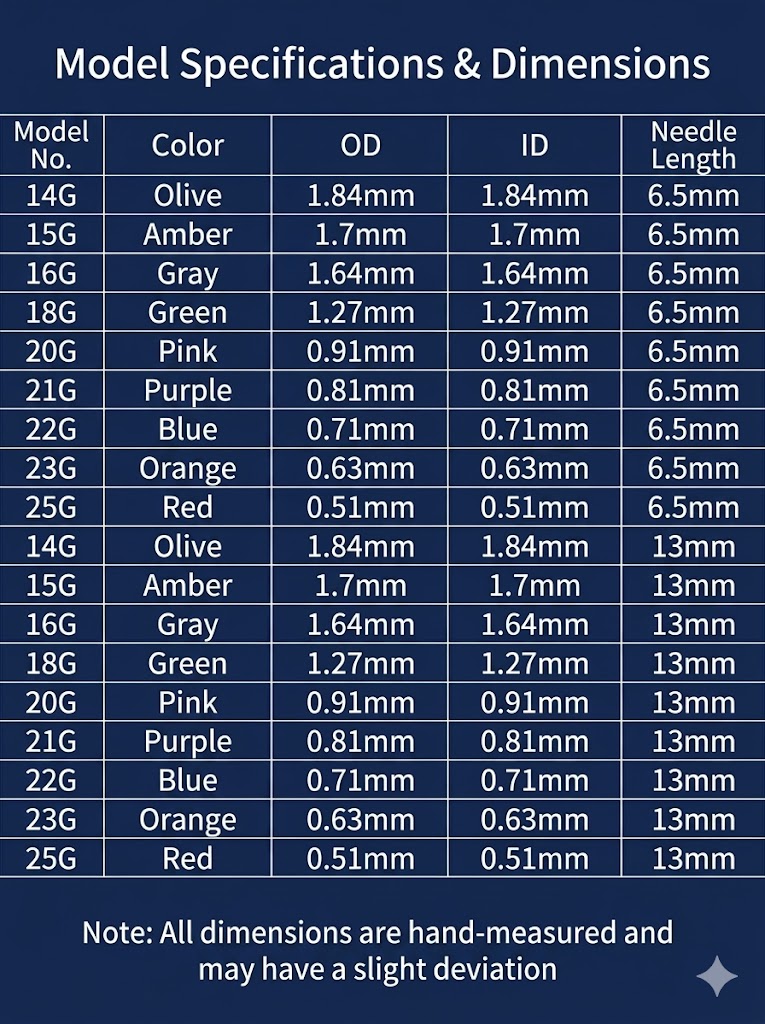
Needle Anatomy: Why More Than Gauge Matters
Gauge is the specification most people ask about first, but it’s only one variable in needle selection. A complete clinical decision also accounts for:
- Wall type. “Regular wall,” “thin wall,” and “ultra-thin wall” needles can share the same outer gauge while offering a larger internal lumen, which increases flow rate without increasing the puncture diameter. This is particularly relevant in phlebotomy and infusion settings.
- Bevel design. Standard bevels, short bevels, and intradermal bevels affect insertion force and tissue trauma. Short-bevel needles are often preferred for injections into smaller or more mobile structures.
- Length. Gauge and length are independent specifications. Two needles of identical gauge can differ substantially in length depending on the required injection depth — subcutaneous, intramuscular, or intravenous.
Treating gauge as the only variable is a common sourcing mistake. A correct needle specification always pairs gauge with length, bevel, and wall type.
Gauge and Flow Rate: The Physics Behind Needle Selection
Flow rate through a needle is governed approximately by Poiseuille’s Law, which states that flow rate is proportional to the fourth power of the internal radius. In practical terms, this means small reductions in gauge produce disproportionately large increases in flow capacity. This is why emergency and trauma protocols specify large-bore needles (14G–16G) for rapid fluid or blood administration — a modest jump from 18G to 16G meaningfully increases the volume that can be delivered per minute, which matters when every minute counts in a resuscitation scenario.
Conversely, viscosity works against bore size. Highly viscous medications — certain antibiotics, hormonal suspensions, or biologics — require a wider bore to avoid excessive injection pressure and potential needle occlusion, regardless of how thin the target tissue might otherwise allow.
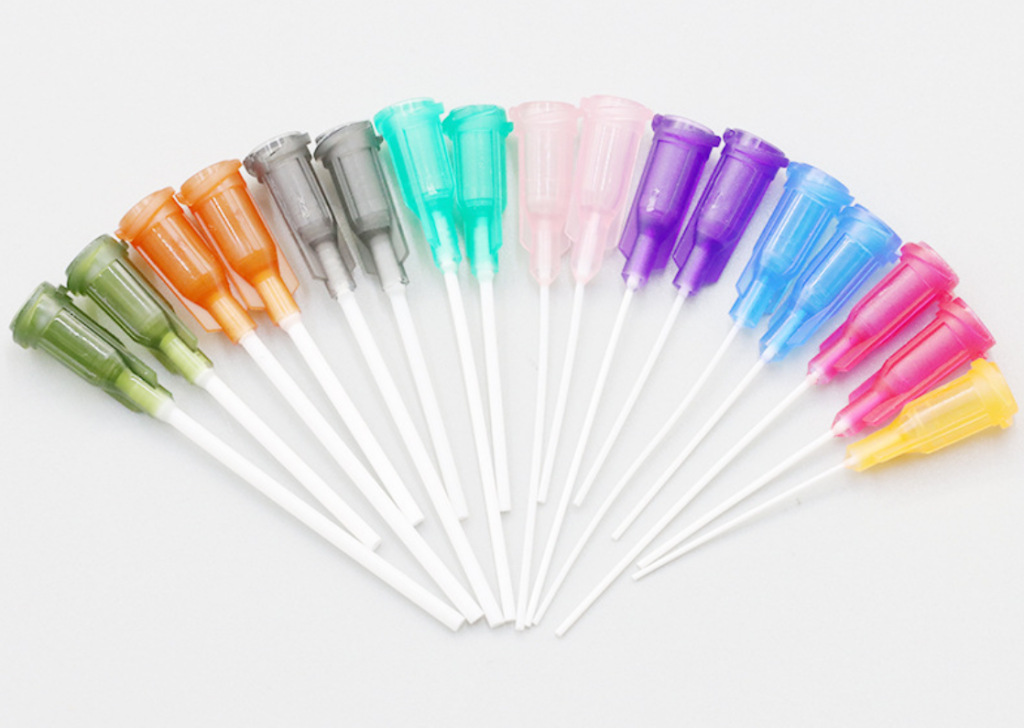
Matching Gauge to Clinical Application
| Clinical Scenario | Recommended Gauge Range | Rationale |
|---|---|---|
| Emergency/trauma fluid resuscitation | 14G–16G | Maximizes flow rate for large-volume, time-critical delivery |
| Blood donation/collection | 16G–18G | Preserves red cell integrity while allowing adequate flow |
| Standard adult IV therapy | 18G–20G | Balances flow rate with patient comfort for routine use |
| Routine venipuncture/blood draw | 21G–23G | Standard for adult vein access under normal conditions |
| Pediatric or fragile-vein access | 22G–25G | Reduces vessel trauma in smaller or more delicate veins |
| Intramuscular injection | 21G–25G | Depends on medication viscosity and muscle mass |
| Subcutaneous injection (e.g., insulin) | 27G–31G | Minimizes discomfort for frequent, patient-administered use |
| Dermal/cosmetic procedures | 27G–33G | Prioritizes minimal tissue trauma and precision |
This table is a general clinical reference, not a substitute for facility protocols or product-specific instructions — actual selection should always follow institutional guidelines and the prescribing clinician’s judgment.
Regulatory and Quality Considerations
In the U.S., hypodermic needles are regulated by the FDA as Class II medical devices, generally requiring 510(k) clearance demonstrating substantial equivalence to a predicate device. Key quality benchmarks to verify when evaluating a supplier include:
- Compliance with ISO 7864 (sterile hypodermic needles for single use) or ISO 9626 (stainless steel tubing for needle manufacture)
- Documented sterilization method (typically ethylene oxide or gamma irradiation) with validated sterility assurance levels
- Consistent gauge and length labeling that matches ISO color-coding conventions
- Traceability documentation, particularly important for institutional or bulk procurement
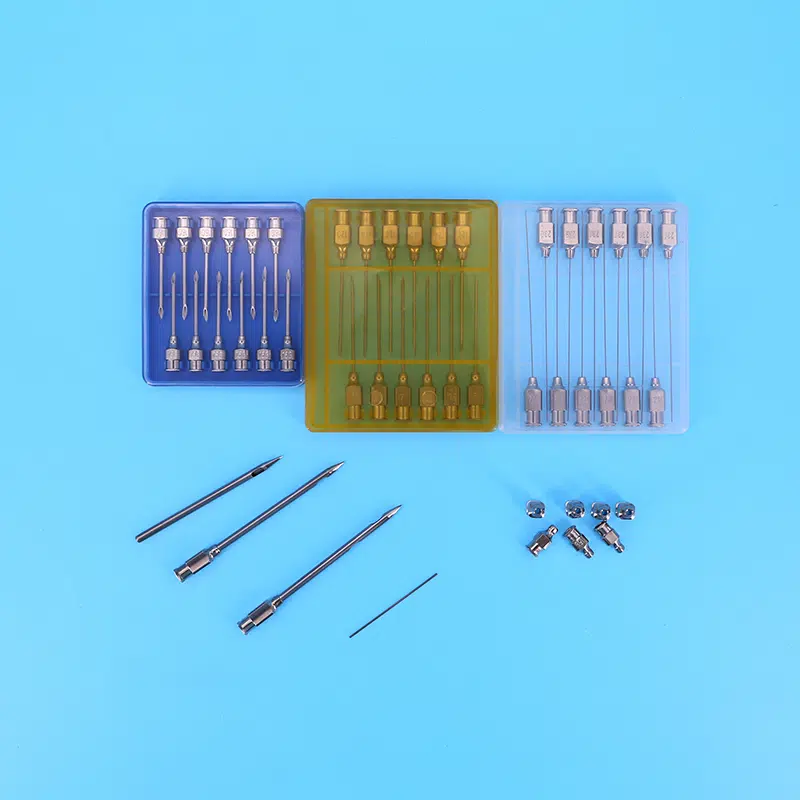
For buyers and distributors comparing suppliers, it’s worth reviewing how a vendor documents these specifications before committing to a bulk order — a well-organized hypodermic needle product line will typically list gauge, length, wall type, and sterilization method clearly for each SKU, which makes it much easier to match products to clinical need without back-and-forth with a sales rep.
Common Questions
Why does a higher gauge number mean a smaller needle? The convention comes from wire manufacturing, where gauge reflected how many times a wire was drawn through a die. More draws produced thinner wire and a higher gauge number — a convention that carried over unchanged into medical needle specifications.
What’s the most commonly used needle gauge in general clinical practice? For general intramuscular and subcutaneous injections, 22G–25G needles see the widest use, balancing flow rate against patient comfort.
Does a thinner needle always mean less pain? Generally yes, but only within limits set by the medication being administered. Forcing a viscous fluid through too fine a bore can increase injection pressure, cause tissue trauma, or lead to an incomplete or inaccurate dose — pain reduction has to be balanced against those risks.
Is gauge the same across all manufacturers? The nominal gauge number is standardized, but exact outer diameter tolerances can vary slightly between manufacturers. For flow-rate-critical or precision applications, it’s worth checking the specific product’s data sheet rather than relying on the gauge number alone.
Final Thoughts
Needle gauge selection sits at the intersection of physics, clinical need, and regulatory standards — it’s a small specification with outsized consequences if it’s chosen carelessly. Once the inverse relationship between gauge number and diameter is internalized, and gauge is considered alongside length, wall type, and bevel, needle selection becomes a straightforward, evidence-based decision rather than a guessing game. Keep this chart as a working reference, but always confirm final specifications against the product data sheet and applicable clinical protocol.