If you buy or manage syringes for a hospital, clinic, vaccination program, or distribution business, you have probably seen two terms that sound similar: auto-disable (AD) syringes and safety syringes. They are often mixed up, but they solve two different problems. Choosing the wrong one can mean wasted budget, compliance gaps, or avoidable injuries.
This guide explains the difference in plain language, compares them side by side, and helps you decide which one fits your facility. If you are weighing auto-disable vs safety syringes for the first time, start here.
The Two Risks Syringes Are Designed to Prevent
Every syringe safety feature targets one of two dangers:
- Reuse risk: A syringe is used on more than one patient, spreading bloodborne diseases such as hepatitis B, hepatitis C, and HIV.
- Needlestick risk: A healthcare worker is accidentally pricked by a used needle, exposing them to the same infections.
The scale of both problems is significant. The World Health Organization has estimated that unsafe injection practices caused millions of new infections in the year 2000 alone, and that roughly 2 million sharps injuries occur among healthcare workers worldwide every year. In the United States, the CDC has estimated around 385,000 needlestick and sharps injuries per year among hospital-based healthcare personnel. These figures are older estimates, but they remain the figures most often cited, and they explain why two separate types of safety syringe exist.
Put simply: AD syringes protect the next patient. Safety syringes protect the person holding the syringe.
What Is an Auto-Disable (AD) Syringe?
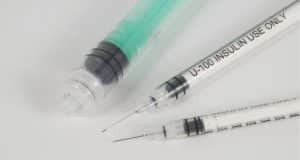
An auto-disable syringe has a built-in mechanism that locks or breaks the plunger after one injection. After the dose is delivered, the plunger cannot be pulled back again, so the syringe physically cannot be reused.
Key features
- Designed for fixed-dose injections, most commonly vaccines
- Plunger locks, breaks, or becomes unusable after a single push
- Relatively simple design, which keeps the price low
- Covered by ISO 7886-3 (auto-disable syringes for fixed-dose immunization)
Where they are used AD syringes are the standard in mass immunization programs. UNICEF has supplied only AD syringes for immunization since the early 2000s, and WHO has long recommended them for vaccine delivery. For programs running measles, polio, or routine childhood vaccination campaigns across thousands of sites, AD syringes provide reliable reuse protection at very low cost per dose.
Limitations
- A standard AD syringe does not protect the user from a needlestick after injection, because the needle is still exposed
- Primarily designed for fixed doses, so they are less suited to variable-dose or multi-draw clinical use
What Is a Safety Syringe?
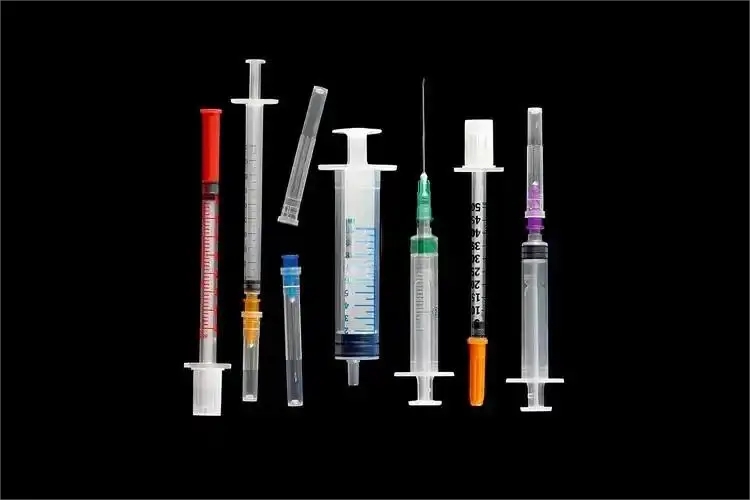
A safety syringe, also called a sharps injury prevention syringe, has a feature that covers, retracts, or blunts the needle after use. The goal is to protect the healthcare worker from accidental pricks while handling or disposing of the device.
Common designs
- Retractable needle: the needle pulls back into the barrel after injection
- Sliding or hinged shield: a sleeve or cap covers the needle, usually with one hand
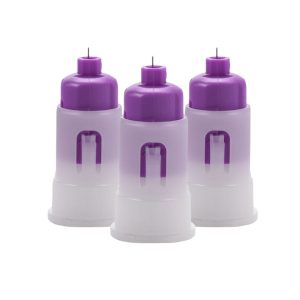
- Shielded needle with locking cap: a protective cover that clicks and locks into place
Key features
- Designed to reduce needlestick injuries
- Suitable for many clinical injection types, including variable doses and drawing medication from vials
- Covered by ISO 23908 (sharps injury protection requirements for needles and related devices)
- Often required or strongly encouraged by occupational safety rules. For example, the US Needlestick Safety and Prevention Act of 2000 requires employers to consider safer needle devices
Limitations
- Typically cost more than standard syringes and AD syringes
- Staff need brief training so the safety feature is activated correctly every time
- Not every safety syringe prevents reuse, so check whether the model also has a reuse-prevention feature
Side-by-Side Comparison
| Factor | Auto-Disable (AD) Syringe | Safety Syringe |
|---|---|---|
| Main purpose | Prevent reuse between patients | Prevent needlestick injuries |
| Who it protects | The next patient | The healthcare worker |
| How it works | Plunger locks or breaks after one use | Needle retracts or is covered after use |
| Typical use | Vaccination, fixed-dose injections | General clinical care, hospitals, labs |
| Relevant standards | ISO 7886-3 | ISO 23908 |
| Approximate cost | Lowest among protected syringes, often a few cents per unit in bulk | Higher, commonly two to several times the cost of a standard syringe |
| Training needed | Minimal | Short, but important |
| Best for | Large immunization programs | Facilities focused on staff safety |
Prices vary widely by volume, market, and supplier. Treat these ranges as a rough guide and always request current quotes.
Which One Fits Your Facility?
The right choice depends on your risk profile, budget, and how you use syringes.
Choose auto-disable syringes if:
- You run or supply vaccination campaigns or public health programs
- Your main concern is preventing reuse, especially where supply shortages or limited oversight make reuse a real risk
- You need the lowest possible cost per injection at high volume
- You administer mostly fixed, pre-measured doses
Choose safety syringes if:
- You operate a hospital, clinic, laboratory, or dialysis center where staff handle many injections each day
- Your jurisdiction or insurer expects safer needle devices to protect employees
- Staff regularly draw medication from vials or give variable doses
- Reducing sharps injuries and the cost of post-exposure treatment is a priority
Consider using both if:
- You are a distributor or large health system serving different departments. Immunization teams may rely on AD syringes, while wards and procedure rooms use safety syringes
- You want layered protection. Some products combine reuse prevention with needle protection, which can be a strong option when both risks matter
A Simple Decision Checklist
Ask these five questions before ordering:
- What is our biggest risk, reuse or needlestick?
- What types of injections do we give most often? Fixed-dose vaccines or varied clinical doses?
- Do local regulations or tenders require a specific type?
- What is our true cost? Include not only unit price but also injury treatment, staff time, and waste handling
- Can our staff be trained quickly? Even the best device fails if it is not activated properly
What to Check Before You Buy
Whichever type you choose, confirm the basics with your supplier:
- Certification such as ISO 13485 for the quality system and CE marking or FDA clearance where required
- Compliance with the relevant ISO standard, with test reports you can review
- Sterilization method and shelf life on the label
- Lot traceability so any problem can be tracked quickly
- Samples for hands-on evaluation by the nurses and technicians who will use them
- Reliable supply capacity, so you are not forced into emergency substitutions
Working with a manufacturer that follows recognized single-use syringe standards makes these checks much easier, since documentation and testing records should already be in place.
Don’t Forget Disposal
Neither type removes the need for proper waste handling. Used syringes should go straight into puncture-resistant sharps containers, which should never be overfilled. Safety features reduce risk but do not make a used needle harmless. A clear disposal procedure and regular staff reminders remain essential.
Final Thoughts
The choice between auto-disable and safety syringes comes down to one question: who are you trying to protect? If the priority is stopping reuse across large patient volumes, especially in immunization, auto-disable syringes deliver dependable protection at low cost. If the priority is shielding your staff from needlestick injuries in daily clinical work, safety syringes are the better fit. Many facilities will end up using both, matched to each department’s needs.
Start with your risks, check the standards, test samples with your own team, and compare total cost rather than just unit price. That approach will lead you to the syringe that truly fits your facility.