
If you are new to medical procurement, an intravenous (IV) administration set can look like a simple piece of plastic tubing. In reality, a single disposable set combines up to 10 or more precision-engineered parts, and each one affects patient safety, dosing accuracy and cost. Understanding infusion set components helps you read supplier datasheets, compare quotes fairly and avoid ordering the wrong product for your hospital, clinic or distribution business.
This guide breaks down every part of a standard gravity infusion set, explains the materials and standards behind them, and gives you a practical checklist for sourcing. Whether you are a first-time buyer or refreshing your product knowledge, it will help you speak confidently with manufacturers.
What Is an Infusion Set?
An infusion set (also called an IV set, IV administration set or IV giving set) is a sterile, single-use device that delivers fluids, medications, nutrients or blood products from a container, such as a bag or bottle, into a patient’s vein. Gravity-fed sets are the most common type worldwide, and they are the focus of this article. Pump sets and specialty sets share most of the same parts, with a few additions.
Single-use infusion sets are typically manufactured to the international standard ISO 8536-4 (infusion equipment for medical use, single-use gravity-feed sets). Many markets also require CE marking, FDA 510(k) clearance or equivalent registration. If you want to browse the range of options before reading further, see this overview of infusion sets.
Infusion Set Components at a Glance
Here is a quick reference of the main IV set parts, listed in the order fluid flows through them:
| # | Component | Main function | Typical material |
|---|---|---|---|
| 1 | Protective cap | Keeps the spike sterile | PE / PP |
| 2 | Spike (piercing needle) | Punctures the fluid container | ABS / PP |
| 3 | Air vent with filter | Lets air in to replace outflowing fluid | PP + hydrophobic membrane |
| 4 | Drip chamber | Shows and counts drops | PVC / PP |
| 5 | Particulate filter | Traps particles (about 15 µm) | Nylon or polyester mesh |
| 6 | Tubing | Carries fluid | Medical-grade PVC (or alternatives) |
| 7 | Roller clamp | Controls flow rate | ABS / PP |
| 8 | Injection (Y-) site | Allows extra drug injection | Latex-free rubber / polyisoprene |
| 9 | Flow regulator (optional) | Fine-tunes flow | ABS |
| 10 | Luer connector (slip or lock) | Connects to cannula or needle | PP / ABS |
| 11 | Needle (optional) | Direct venipuncture, in some sets | Stainless steel |
Now let’s look at each one in detail.
1. Protective Cap
The protective cap covers the spike and the final luer connector until use. It is a small part, but it protects the sterile fluid path. Buyers should check that caps fit tightly and don’t fall off during transport, since a loose cap can invalidate sterility. Most sets are sterilized with ethylene oxide (EO) gas, and the caps must allow gas penetration during sterilization while still acting as a bacterial barrier in the final package.
2. Spike (Piercing Needle)
The spike is the hard, pointed tip that pierces the rubber stopper of an IV bag or bottle. Spikes are available in two common versions:
- Plastic spike for bags: shorter and often with a single channel.
- Spike for bottles: typically paired with an air vent to let the bottle drain.
Quality points to check include the sharpness of the tip, the strength of the wall (it must not crack under force) and the absence of plastic shavings when piercing. A poorly molded spike can shed particles into the fluid, which is a real clinical risk. Reputable manufacturers test for this, so ask for particulate-matter test results.
3. Air Vent with Filter
When fluid leaves a rigid bottle, air must enter to replace it. Without this, flow stops. The air vent allows air in through a hydrophobic membrane, commonly rated at around 0.2 µm or finer, which blocks bacteria and keeps the entering air clean. Sets used only with flexible collapsible bags can sometimes do without a vent. Many standard sets include one, so they work with both bottles and bags. A vent with a closure cap lets the nurse switch it off when using a bag.
4. Drip Chamber
The drip chamber is the transparent, squeezable chamber just below the spike. It does three important things:
- Lets the clinician see and count drops, so they can set the flow rate.
- Acts as an air trap, preventing bubbles from traveling down the line.
- Helps with priming: squeezing it fills the chamber to about half-full before the line is flushed.
The drop factor is determined by the drip nozzle inside the chamber. This is one of the most important specifications you will see on a datasheet:
- Macro-drip sets: 10, 15 or 20 drops per mL (gtt/mL). Used for routine adult infusion.
- Micro-drip (paediatric) sets: 60 drops per mL. Used when precise, small volumes are needed, such as for children and neonates.
A common mistake is ordering the wrong drop factor. 20 gtt/mL is the most widespread in many markets, while 15 gtt/mL is common in North America for blood sets. Always confirm local clinical preference.
Quick Flow-Rate Calculation (Useful for Buyers Too)
Drip rate (drops/min) = Volume (mL) × Drop factor (gtt/mL) ÷ Time (min)
Example: infusing 1,000 mL over 8 hours (480 minutes) with a 20 gtt/mL set:
1,000 × 20 ÷ 480 ≈ 42 drops per minute.
The same bag with a 15 gtt/mL set would need about 31 drops per minute. This shows why the drop factor matters to end users, and why mixing up product types can create dosing confusion.
5. Particulate Filter
Most standard sets include a small mesh filter in or just below the drip chamber, commonly with a pore size around 15 µm. It catches rubber core fragments, glass particles or undissolved drug crystals. Different filter types exist for different needs:
- 15 µm mesh filter: standard in general-purpose sets.
- 5 µm filter: used in some transfusion and specialty sets.
- 0.2 µm in-line filter: used for sterile filtration of certain drugs and nutrition mixtures (check clinical guidance, as some drugs can bind to filter membranes).
- 1.2 µm filter: typically used for lipid emulsions (parenteral nutrition) that include larger droplets.
Blood transfusion sets use a different, much coarser filter, commonly around 170–260 µm, which is designed to remove clots without damaging blood cells. Never substitute one for the other.
6. Tubing
Tubing makes up most of the set’s length and cost. Typical specifications:
- Length: commonly about 150 cm, though 100–200 cm lengths are available.
- Dimensions: often around 3.0 mm inner diameter and 4.1 mm outer diameter.
- Material: most commonly medical-grade PVC because it is clear, flexible, kink-resistant and economical.
There is a significant materials trend buyers should know about. Traditional PVC tubing often uses DEHP as a plasticizer. Because of regulatory concern about DEHP leaching, particularly for neonates and long-term patients, many markets (including the EU) now ask for labeling or encourage alternatives. Options include:
- DEHP-free PVC (using plasticizers such as TOTM or DINCH)
- Polyethylene (PE)-lined tubing for drugs that stick to PVC, such as nitroglycerin
- Polyurethane (PU) or polyolefin-based non-PVC tubing
Non-PVC and DEHP-free options generally cost more, so ask whether your target market actually requires them. Request the material declaration and biocompatibility test reports (ISO 10993) from any supplier.
7. Roller Clamp
The roller clamp is a small wheel that squeezes the tube to regulate or stop flow. It is the main control on a basic gravity set. Quality considerations:
- Smooth rolling with no sticking or sudden slipping
- Ability to fully shut off flow
- No permanent deformation of the tubing after prolonged clamping
A cheap clamp can cause flow drift, meaning the rate changes slowly over time, which becomes a nuisance for nurses. For higher precision, many buyers choose sets with an additional flow regulator.
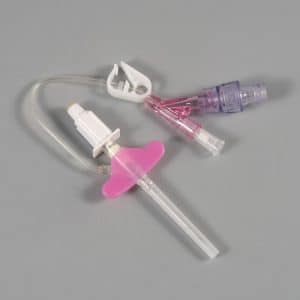
8. Injection Site (Y-Site)
The injection site is a self-sealing port, usually made of latex-free rubber or polyisoprene, that lets clinicians add medication into the running line without disconnecting it. They are often Y-shaped, hence the name. Things to check:
- Latex-free labeling, to prevent allergic reactions
- Resealing performance after multiple punctures
- Compatibility with needleless connectors, where required by local safety policy
Some health systems have moved to needle-free systems to reduce needlestick injuries, so confirm whether your customers want traditional or needleless ports.
9. Flow Regulator (Optional)
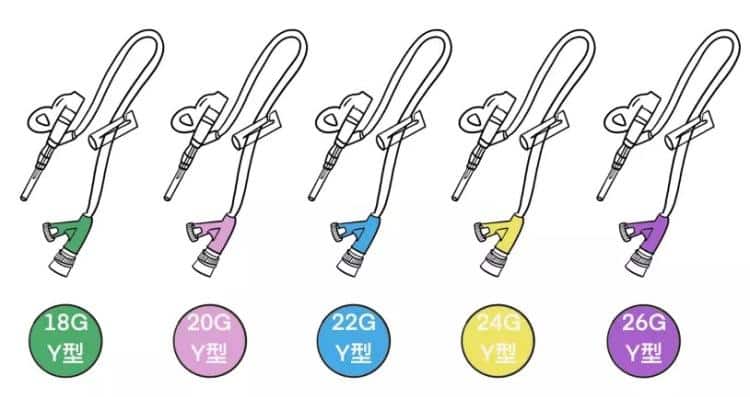
A flow regulator is a dial-type device that provides finer control than the roller clamp. Typical regulators let users set flow in a range such as roughly 5 to 250 mL/h. It is not an electronic pump, so accuracy is still affected by fluid viscosity, bag height and patient vein pressure. For critical drugs, an infusion pump remains the safer choice, but regulators are a good middle option when pumps are not available.
10. Luer Connector (Slip or Lock)
The luer connector sits at the patient end of the set and connects it to the IV cannula or needle. The luer taper is standardized at 6%, defined in the ISO 80369 series.
- Luer slip: pushes on and is quick to attach.
- Luer lock: includes a threaded collar that twists to secure, which prevents accidental disconnection and is preferred for higher-pressure or critical lines.
Many hospitals now prefer luer lock for safety. Check whether your buyers need rotating collars, which are easier to attach.
11. Needle (In Some Sets)
Some sets are supplied with a needle already attached, commonly in sizes such as 21G, 22G or 23G (gauge numbers are inversely related to diameter: a higher number means a thinner needle). Others are sold without a needle so that users can attach a cannula of their choice. Confirm the requirement, because needle-included and needle-free sets are classified and priced differently, and some countries regulate them differently.

Sterility, Packaging and Shelf Life
Beyond the parts themselves, a set is only safe when properly sterilized and packaged:
- Sterilization: usually EO gas, with residual limits defined by standards.
- Packaging: individual blister or peel pouch, then inner boxes and an outer carton. Look for a clear label with batch number, manufacturing date and expiry date.
- Shelf life: typically 3 to 5 years from sterilization when stored in a cool, dry place away from direct light.
Standards and Certifications to Ask About
When you request a quotation, ask for the following documents:
- ISO 13485 certificate (medical device quality management system)
- CE certificate (for the EU) or FDA registration/510(k) (for the US), depending on your target market
- ISO 8536-4 test reports
- ISO 10993 biocompatibility report
- EO residual test report
- Product registration support for your country, if required
Clinical Use Guidelines Buyers Should Know
Your end users will follow infection-control guidance, and it influences how many sets they consume. For example, the US CDC guidelines suggest that administration sets used for continuous infusions are typically replaced at intervals of no more than 96 hours, and at least every 7 days, while sets used for blood, blood products or lipid emulsions should be replaced much sooner (within 24 hours). Intermittent-use sets are replaced more often. This means that demand forecasting should account for local protocols, not just bed counts.
Common Types of Infusion Sets
Once you understand the IV set parts, the main product types are easy to tell apart:
- Standard gravity infusion set: all basic components above; the volume leader.
- Paediatric / burette set: includes a graduated chamber (commonly 100 or 150 mL) to limit the volume delivered, which is safer for children.
- Blood transfusion set: has a larger drip chamber and a coarser filter (around 170–260 µm).
- Pump set: designed for use with specific infusion pumps, with a pump-compatible segment.
- Light-protected set: amber or opaque tubing for light-sensitive drugs.
- Precision filter set: includes a fine membrane filter for particle and bacteria control.
How to Choose: A Buyer’s Checklist
Use this simple list when comparing suppliers or products:
- Define the clinical use: general infusion, paediatric, blood, or pump?
- Confirm the drop factor: 10, 15, 20 or 60 gtt/mL.
- Select tubing material: standard PVC, DEHP-free or non-PVC.
- Check the connector: luer slip or lock; needle included or not.
- Verify filter specifications: pore size and filter type.
- Request certifications and test reports (ISO 13485, CE/FDA, ISO 10993).
- Ask for samples and run a basic trial: check drip accuracy, clamp performance and priming ease.
- Compare total landed cost, not just unit price. Include packaging, freight, minimum order quantity and shelf life.
- Confirm labeling and language for your market.
- Evaluate after-sales support, including consistent batch quality and delivery reliability.
Common Mistakes First-Time Buyers Make
- Buying on price alone. The cheapest set may use thin tubing that kinks or a clamp that slips.
- Ignoring the drop factor. Ordering 15 gtt/mL when the clinic uses 20 gtt/mL causes confusion.
- Skipping material questions. DEHP and latex requirements can block registration in some markets.
- Not asking for samples. A datasheet cannot show how a clamp feels or how well the chamber primes.
- Overlooking shelf life. A product with 2 years left when it arrives is hard to sell.
Frequently Asked Questions
What is the difference between an infusion set and an IV set?
In everyday usage, there is no difference. Both terms describe the tubing set that delivers fluid from a container to a patient. “IV set parts” and “infusion set components” refer to the same list of elements.
Are all infusion sets compatible with all bags and bottles?
Most standard spikes fit standard IV containers, but bottles generally require an air vent, whereas flexible bags may not. Check compatibility with your specific containers.
Can infusion sets be reused?
No. They are single-use, sterile devices. Reuse increases the risk of infection and contamination.
What is the most important component?
There is no single answer, because the set works as a system. However, the drip chamber (drop factor) and the filter often have the greatest effect on clinical performance, while tubing material has the biggest effect on registration and cost.
Conclusion
An infusion set may look simple, but every part, from the spike and air vent to the drip chamber, filter, tubing, clamp, injection site and connector, has a defined role. Once you know the key infusion set components, you can read specifications confidently, ask the right questions and compare suppliers on quality instead of price alone.
Start by defining your clinical use case, confirm the drop factor, tubing material and connector type, and always request certifications and samples. To explore specifications and available options, visit the full range of infusion sets and use this guide as your checklist.