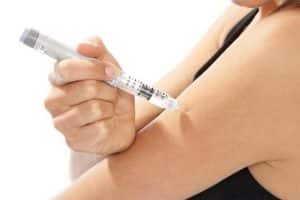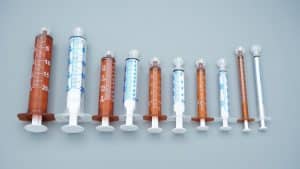
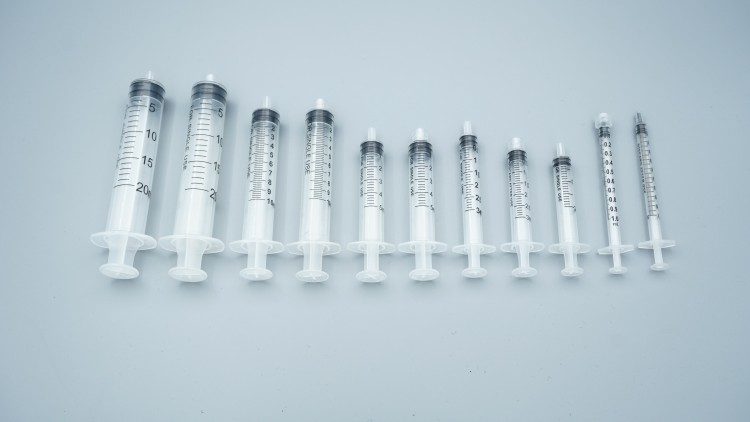
If you are new to buying diabetes supplies, the first look at a shelf of syringes can be confusing. One box says 31G, another says 0.3 mL, and a third says 8 mm. They all look similar, yet they are not interchangeable.
This insulin syringe guide explains every size in plain language. You will learn what the numbers mean, how to read the markings, and what to check before you place an order. It is written for first-time buyers, caregivers, pharmacy staff and small clinics.
Important note: This article is general educational information, not medical advice. The right syringe for a person depends on their insulin type, dose and body. A doctor, diabetes educator or pharmacist should always confirm the choice.
Why Insulin Syringe Sizes Matter
Diabetes is common and growing. The International Diabetes Federation estimated that more than 530 million adults worldwide were living with diabetes in 2021, and the number keeps rising. In the United States, the CDC reports that about 38 million people have diabetes. A large share of them use insulin, and many of those use syringes.
Choosing the right syringe affects four things:
- Dose accuracy. The wrong barrel size makes small doses hard to measure.
- Comfort. A thinner and shorter needle usually hurts less.
- Safety. A needle that is too long can reach muscle instead of the fat layer under the skin, which changes how fast insulin works.
- Cost and supply planning. Buyers who understand the specifications avoid ordering the wrong item in bulk.
Understanding insulin syringe sizes is therefore the first step to buying well.

The Three Measurements Every Syringe Has
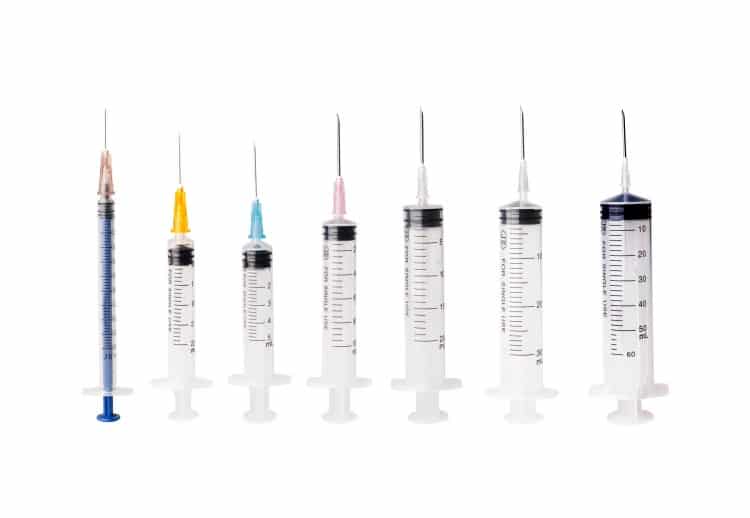
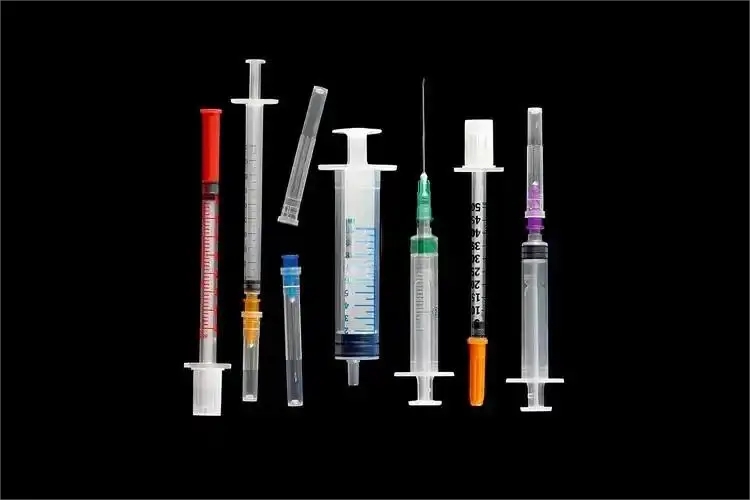
Every insulin syringe is described by three specifications:
- Barrel volume: how much liquid the syringe holds (0.3 mL, 0.5 mL or 1 mL)
- Needle gauge: how thick the needle is (for example 29G, 30G or 31G)
- Needle length: how long the needle is (for example 6 mm, 8 mm or 12.7 mm)
Together, these three numbers describe the syringe. A typical product might read “0.5 mL, 31G, 6 mm”. We will go through each one.
1. Barrel Volume: 0.3 mL, 0.5 mL and 1 mL
Barrel volume is the amount of liquid the syringe can hold. It is also the size most buyers notice first.
Most insulin sold in North America is U-100. That means each milliliter contains 100 units of insulin. This is why insulin syringes are marked in units rather than milliliters. The conversion is simple:
| Syringe size | Maximum capacity | Typical unit markings | Best for |
|---|---|---|---|
| 0.3 mL (3/10 cc) | 30 units | Every 1 unit, often with half-unit marks | Small doses, children, very insulin-sensitive users |
| 0.5 mL (1/2 cc) | 50 units | Every 1 unit | Moderate doses |
| 1 mL (1 cc) | 100 units | Every 2 units | Larger doses |
How to choose a barrel size
A common rule of thumb is to pick the smallest syringe that can hold the full dose in a single injection:
- Doses of 30 units or less can often use a 0.3 mL syringe.
- Doses of 31 to 50 units usually suit a 0.5 mL syringe.
- Doses of 51 to 100 units need a 1 mL syringe.
Why not simply use the biggest syringe for everything? Because the scale gets more crowded. On a 1 mL syringe, a 5-unit dose is only a tiny fraction of the barrel, and the marks are two units apart. A smaller barrel has more space between marks, so it is easier to read and measure accurately.
A quick example
Imagine someone takes 12 units of rapid-acting insulin before a meal. A 0.3 mL syringe is a good match, because the 12-unit mark sits clearly on the scale. On a 1 mL syringe, the same dose would sit between two-unit lines and be harder to judge.
2. Needle Gauge: What “29G, 30G, 31G” Means
Gauge describes the thickness of the needle. The key point that confuses many beginners is this:
The higher the gauge number, the thinner the needle.
Insulin syringe needles are very fine compared with needles used for blood draws. The usual range is 28G to 31G. Approximate outer diameters are:
| Gauge | Approx. outer diameter | Feel |
|---|---|---|
| 28G | 0.36 mm | Thicker, less common today |
| 29G | 0.33 mm | Common standard |
| 30G | 0.30 mm | Thinner, popular choice |
| 31G | 0.26 mm | Thinnest in common use, often the most comfortable |
Does a thinner needle always mean a better injection?
For most people, thinner needles feel more comfortable, and that is why 30G and 31G are widely sold. There are some trade-offs:
- Very thick insulin products can feel slightly slower to push through a thinner needle.
- Some users find that very thin needles bend more easily if they are handled roughly.
- Comfort is also personal. Technique, injection site and needle length matter as much as gauge.
For most first-time users, 30G or 31G is a reasonable starting point to discuss with a healthcare provider.
3. Needle Length: 6 mm, 8 mm and 12.7 mm
Needle length decides how deep the insulin goes. Insulin is meant to be delivered into the subcutaneous fat layer, which is the layer just under the skin. It is not meant for muscle.
The three common lengths are:
| Length (metric) | Length (inches) | Typical use |
|---|---|---|
| 6 mm | 15/64″ | Children, slim adults, and many adults generally |
| 8 mm | 5/16″ | Standard length for many adults |
| 12.7 mm | 1/2″ | Older style, now used less often |
Shorter needles are now widely preferred
Over the past two decades, diabetes experts have moved toward shorter needles. Clinical guidance such as the FORTH recommendations in the UK has supported the use of short needles. The main reasons are:
- Short needles have a lower risk of accidentally reaching muscle.
- They tend to hurt less.
- Studies have found that insulin control is similar with shorter needles for most adults.
If a longer needle is used on a thin person, insulin may enter muscle. That can make absorption faster and less predictable, which affects blood sugar control. This is a good reason to ask a professional about needle length rather than guessing.
Note that very short needles of 4 mm and 5 mm are usually sold as pen needles, which fit insulin pens, not syringes. We will cover the difference later in this guide.
How to Read the Markings on an Insulin Syringe
Reading the scale correctly is just as important as picking the right size. Here is a simple walk-through.
- Find the plunger’s rubber tip. Look at the black or colored rubber stopper at the end of the plunger. The dose is read at the edge of the stopper closest to the needle, not the cone-shaped tip.
- Look at the number labels. Most syringes label every 5 or 10 units with a number.
- Count the small lines. Each small line is 1 unit on 0.3 mL and 0.5 mL syringes, and often 2 units on 1 mL syringes. Check the packaging if you are unsure.
- Check at eye level. Hold the syringe at eye level so the reading is not distorted by the angle.
- Remove air bubbles. Tap the barrel gently and push out any large bubbles before measuring the final dose.
Many buyers also look for large, high-contrast print. This helps people with weaker eyesight, and it can reduce reading mistakes.
U-100, U-40 and U-500: A Warning for Buyers
Not every syringe is made for every insulin concentration. This is one of the most important safety points in this insulin syringe guide.
- U-100 syringes are the standard for human insulin in the US and many other countries.
- U-40 syringes are designed for 40 units per mL. They are used in some regions and are common in veterinary care, for example for pets.
- U-500 insulin is a concentrated product used for patients with very high insulin needs. It is normally given with specific syringes or pens, under medical direction.
Never use a U-40 syringe with U-100 insulin, or the reverse, unless a healthcare professional has explained exactly how. The markings will not match the concentration, and the dose could be wrong by a large amount. If you buy for a pharmacy, clinic or reseller, the concentration should be printed clearly on the product listing and the box.
Insulin Syringes vs. Pen Needles
Newcomers often mix up syringes and pen needles. They are related, but they are not the same product.
| Feature | Insulin syringe | Pen needle |
|---|---|---|
| Comes with its own barrel | Yes | No, it attaches to a pen |
| How insulin is drawn | From a vial | From a pen cartridge |
| Typical needle lengths | 6 mm, 8 mm, 12.7 mm | 4 mm, 5 mm, 6 mm, 8 mm |
| Dose control | Read from the barrel scale | Dial on the pen |
Syringes are often chosen for their lower cost and flexibility, for example when two types of insulin are mixed, or when a person’s insurance covers vials more readily than pens. Pens can be easier to carry and use. Which is better depends on the person, and this is a topic for the care team.
Choosing the Right Size: A Simple Decision Guide
Here is a practical way to think through the choice. This is a starting point for the conversation with a healthcare provider, not a prescription.
Step 1: Check the insulin concentration.
Most users need U-100 syringes. Confirm this on the vial.
Step 2: Check the typical dose.
- Up to 30 units: 0.3 mL
- 31 to 50 units: 0.5 mL
- 51 to 100 units: 1 mL
Step 3: Pick the needle length.
- Children and slim adults: often 6 mm
- Many adults: 6 mm or 8 mm
- Longer lengths only when advised by a clinician
Step 4: Pick the gauge.
- 30G or 31G for comfort
- 29G if a slightly sturdier needle is preferred
Step 5: Check the unit markings.
If the dose is small or needs to be precise, choose a syringe with half-unit markings.
Quick-Reference Chart for Beginners
| Situation | Suggested starting point to discuss |
|---|---|
| Child on small doses (under 30 units) | 0.3 mL, 31G, 6 mm |
| Adult on 20–50 units per injection | 0.5 mL, 30G or 31G, 6 mm or 8 mm |
| Adult on large single doses (over 50 units) | 1 mL, 29G–31G, 8 mm |
| Insulin-sensitive user needing half-unit doses | 0.3 mL with half-unit markings |
You can see the full range of available products in our insulin syringe guide, which lists the options side by side.
Buying Tips for Beginners and First-Time Purchasers
If you are sourcing syringes for a pharmacy, clinic, distribution business or home care program, a few checks make buying simpler and safer.
Check the quality and compliance information
- Sterile and single-use. Insulin syringes should come individually sterilized and be intended for one use only.
- Regulatory approval. Look for the product’s approvals for your market, such as FDA clearance in the US or CE marking in Europe.
- Standards. Many quality syringes follow international standards such as ISO 8537, which covers sterile single-use syringes for insulin. Ask the supplier for documentation.
- Latex-free. This is important for people with latex allergies. Check whether the plunger stopper and packaging are latex-free.
Look closely at the specification sheet
A good product listing should clearly state:
- Barrel volume (0.3, 0.5 or 1 mL)
- Needle gauge and length
- Insulin concentration (U-100 or U-40)
- Unit markings and scale increments
- Pack quantity, commonly 100 per box
- Needle features, such as lubricated or silicone-coated tips and a fixed (staked-on) needle
Fixed needle vs. detachable needle
Most insulin syringes have the needle permanently attached. This design has very little “dead space”, which is the small volume of liquid that stays inside the needle hub. Less dead space means less wasted insulin and a more accurate dose. Detachable needles can leave more insulin trapped, so fixed-needle designs are the common standard for insulin.
Plan quantities realistically
People who inject insulin several times a day use a lot of syringes. A person on four injections daily will use about 120 syringes a month, or about 1,460 in a year. When buying for others, calculate usage first. Ordering by box count (for example 100 per box) makes planning easier, and bulk orders often lower the cost per unit.
Store them well
Keep syringes in a clean, dry place at room temperature, away from direct sunlight. Do not use a syringe if the packaging is damaged, wet or opened.
Safe Use and Disposal Basics
Even though this article focuses on size, safe use is part of responsible buying.
- Use each syringe once. Reusing needles can make them blunt and increase pain, bruising, infection risk and skin changes at the injection site.
- Rotate injection sites. Rotating between areas such as the abdomen, thighs and upper arms helps prevent lumps under the skin that can disturb insulin absorption.
- Never recap or share. Sharing needles can spread serious infections.
- Use a sharps container. After use, place the syringe in an FDA-cleared sharps container or a heavy-duty plastic container with a secure lid. Do not throw loose needles into household trash.
- Follow local disposal rules. Regulations differ by city and country, so check with your pharmacy or local waste authority.
Common Mistakes Beginners Make
- Assuming a higher gauge means a thicker needle. It is the opposite.
- Choosing the largest syringe “just in case”. This makes small doses harder to read.
- Mixing up U-100 and U-40. This can cause dosing errors, so always check the label.
- Using a needle that is too long. This can deliver insulin into muscle.
- Reusing syringes to save money. The savings are small compared with the risks.
- Ordering by price alone. Quality, markings and certification matter more than a few cents per piece.
Frequently Asked Questions
What is the most common insulin syringe size?
The most common size is 1 mL (100 units), often with a 29G–31G needle. However, 0.3 mL and 0.5 mL syringes are very popular for people with smaller doses.
What does 31G 6 mm mean?
It means the needle is 31 gauge, which is very thin, and 6 mm long, which is short. This combination is widely chosen for comfort.
Can I use any syringe for insulin?
No. Use only syringes made for insulin and matched to your insulin concentration. A general-purpose syringe is marked in milliliters, not units, and can lead to dosing mistakes.
Is a smaller needle always better?
Not always. Thin, short needles are comfortable for most people, but the best choice depends on body type, injection technique and the advice of a healthcare provider.
How many units does a 0.5 mL syringe hold?
A 0.5 mL syringe holds up to 50 units of U-100 insulin.
Are insulin syringes and pen needles interchangeable?
No. Syringes include their own barrel and are used with vials. Pen needles attach to insulin pens.
Understanding insulin syringe sizes does not need to be difficult. Remember the three core points: barrel volume sets how much the syringe can hold, gauge sets how thick the needle is, and length sets how deep the injection goes. Combine those with the right concentration marking, good quality standards and safe disposal habits, and you have what you need to buy with confidence.
When you are ready to compare real products, our detailed insulin syringe sizes page lays out the options clearly. If you are ever unsure which size fits a patient or customer, ask a doctor, nurse or pharmacist before you decide.