“We got three quotes for the same syringe spec, and they were 40% apart. How do I know which one isn’t cutting corners?”
That question — or some version of it — comes up constantly from buyers sourcing medical devices from China for the first time. It’s a fair question, and it doesn’t have a simple answer. Choosing a syringe manufacturer isn’t like choosing a t-shirt supplier; you’re buying a Class II medical device that has to meet sterility, dosing accuracy, and regulatory standards, often across multiple export markets at once.
This guide walks through the process the way it actually plays out — as a series of questions a buyer needs answered, and the reasoning a serious supplier should be able to walk you through in response. Where a concept might not be obvious from the outside, we’ll use a real-world comparison to make it concrete.
Why China, and Why the Decision Matters More Than It Looks
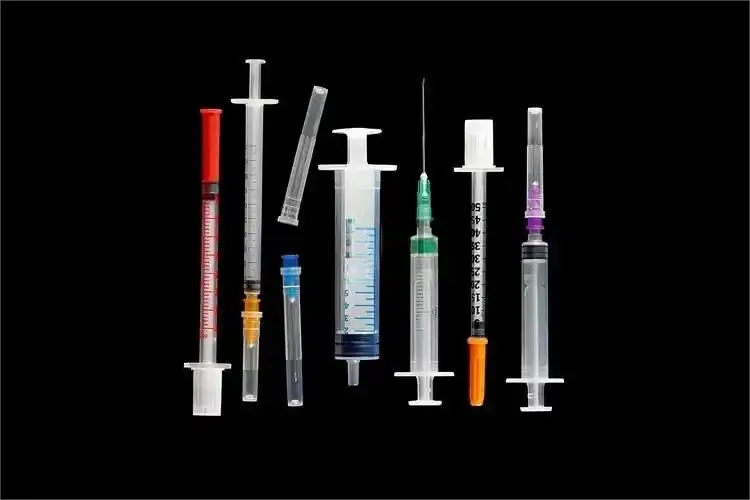
China manufactures a substantial share of the world’s disposable syringes, largely because the country combines mature plastic-injection-molding infrastructure with decades of specialization in medical-grade polymer processing. That scale is an advantage — but it also means the market includes everything from world-class, export-certified manufacturers to small workshops producing off-spec product for undemanding domestic buyers. The gap between the two isn’t always visible in a product photo or a first quote.
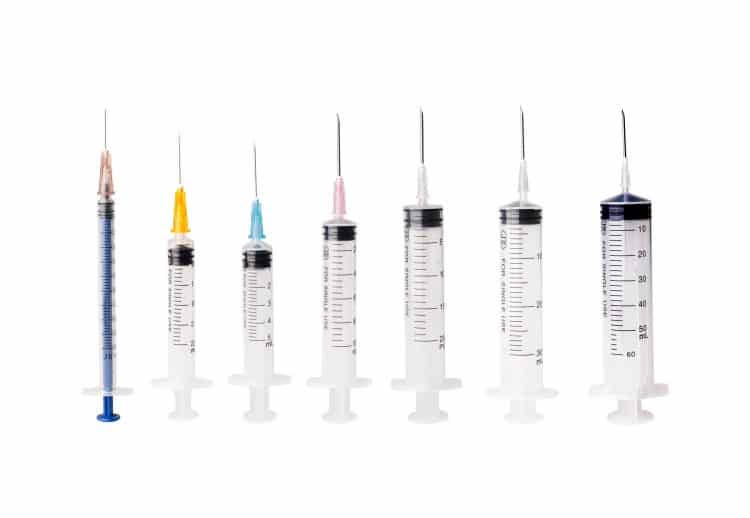
Customer: “If two factories can both make a 3ml Luer-lock syringe, what’s actually different between them?”
Supplier: “Think of it like two bakeries that both claim to make sourdough. One follows a documented, tested process every single time — the same flour supplier, the same fermentation time, the same oven calibration — and can show you records proving it. The other ‘makes sourdough’ too, but the process shifts batch to batch depending on who’s working that day. The bread might taste fine most of the time. But you’re not buying bread — you’re buying a device that has to perform identically, every time, because a dosing error or a barrel that sticks isn’t a quality complaint, it’s a patient safety issue.”
That’s the real question underneath “how do I choose a manufacturer”: which one has a process you can verify, not just a product you can inspect.
Step 1: Verify Certifications Before You Verify Price
The starting filter for any serious buyer should be regulatory documentation, not unit cost. At minimum, a legitimate syringe manufacturer supplying international markets should hold:
- ISO 13485 certification (quality management systems for medical devices)
- CE marking documentation under the EU Medical Device Regulation (MDR), if exporting to Europe
- FDA registration and, where applicable, 510(k) clearance, if exporting to the U.S.
- ISO 7886 compliance specifically for sterile hypodermic syringes for single use
Customer: “A supplier sent me a certificate, but how do I know it’s actually theirs and not borrowed from another factory?”
Supplier: “This happens more often than buyers expect — a trading company or smaller workshop will present a certificate that technically belongs to a partner factory. The fix is simple: certifying bodies maintain public registries. Take the certificate number and cross-check it directly against the issuing body’s database, and confirm the registered facility address matches where your product will actually be produced. If a supplier hesitates when you ask for that cross-check, treat it as a signal, not a technicality.”
Step 2: Understand What a Factory Audit Actually Tells You
Certifications establish that a factory meets a baseline standard at the time of audit. They don’t tell you how the factory operates day to day, which is why experienced buyers — especially for larger orders — request either a third-party factory audit or a live video walkthrough before committing.
A useful audit checklist covers:
- Clean room classification for syringe barrel and plunger assembly (typically Class 100,000 / ISO 8 or better)
- Raw material traceability — can the factory show which resin batch went into your specific production run?
- In-process quality checks — sampling frequency for barrel dimension, plunger fit, and dead-space measurement
- Sterilization validation records — ethylene oxide (EO) residual testing is particularly important, since EO sterilization is common for syringes but requires careful residual gas monitoring to meet safety limits
Customer: “That’s a lot to check. Is there a shortcut for a buyer who isn’t a quality engineer?”
Supplier: “There’s no full shortcut, but there’s a reasonable proxy: ask for the Certificate of Analysis (CoA) and the sterilization validation report for the specific batch you’d be receiving, not a generic template. A factory with disciplined documentation will produce this without delay. A factory that stalls, sends inconsistent numbers, or reuses the same report across different batches is telling you something important about how tightly they control their own process.”
Step 3: Ask About Minimum Order Quantities the Right Way
MOQs vary widely — from a few thousand units for standard product lines to much higher volumes for custom specifications (custom barrel printing, non-standard needle attachment, or bespoke packaging). New buyers sometimes assume a low MOQ signals a more flexible, buyer-friendly manufacturer. In practice, it more often signals a trading intermediary rather than the factory itself, since intermediaries can break up larger production runs into smaller resale batches.
Customer: “Is it bad if I’m actually buying through a trading company instead of the factory directly?”
Supplier: “Not necessarily — a good trading company can add real value, particularly for buyers who aren’t equipped to manage factory relationships, customs documentation, or quality escalation directly. The risk isn’t the intermediary itself, it’s not knowing you’re working with one. If something goes wrong with a batch, you need to know who actually owns the corrective action — the factory or the reseller — and whether your contract gives you direct recourse.”
Step 4: Request Samples — and Test Them Properly
Every credible manufacturer will provide samples before a production order. What separates a careful buyer from a rushed one is what happens to the sample after it arrives.
At minimum, sample evaluation should include:
- Visual inspection for flash, burrs, or barrel graduation clarity
- Plunger travel test — smooth, consistent resistance without sticking or excessive force
- Dead space measurement, particularly important for vaccine and biologic applications where residual dead-space volume affects dosing accuracy
- Packaging integrity check, including peel-strength of sterile pouch seals
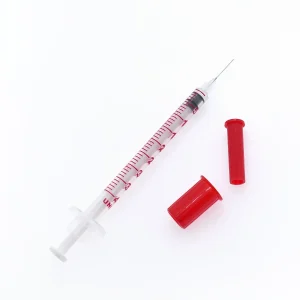
Case in point: one mid-sized distributor sourcing insulin syringes skipped dead-space testing on an early sample batch because the syringes “looked fine” visually. The production run that followed had a dead-space variance outside acceptable range for low-dose insulin delivery — invisible to the eye, but significant for patients on precise dosing regimens. The fix cost a re-tooling cycle and a delayed launch. The lesson: visual inspection catches maybe half of what actually matters in a syringe.
Step 5: Look Past the Product Page to the Documentation Behind It
A manufacturer’s willingness to organize and share technical documentation is one of the more reliable — and most overlooked — signals of manufacturing discipline. Buyers evaluating a syringe manufacturer’s product catalog should expect to see, at minimum, clear specifications for barrel material, needle gauge compatibility, sterilization method, and shelf-life data listed per product line, rather than a single generic spec sheet applied across an entire catalog. Suppliers that organize this information clearly at the catalog level tend to organize it just as clearly when you ask for batch-specific documentation later — the two usually go together.
Step 6: Clarify Terms Before You Clarify Price
Price comparisons across manufacturers are meaningless without matching Incoterms and payment terms. A quote listed as FOB Shanghai and a quote listed as CIF Los Angeles are not directly comparable — one excludes freight, insurance, and destination-port charges, and the other includes them.
Customer: “What’s a reasonable payment structure for a first order?”
Supplier: “A common structure for new buyer relationships is a 30% deposit before production and 70% before shipment, against inspected goods — ideally with a third-party pre-shipment inspection built into that final payment trigger. Full payment upfront on a first order with an unverified supplier is a common point of loss for new buyers; it’s worth pushing back on if a factory insists on it without any track record with you.”
Step 7: Protect Your IP and Product Specifications
If your syringe design includes custom branding, proprietary barrel markings, or a specification developed with your own regulatory filings, get an NNN agreement in place — Non-Disclosure, Non-Use, Non-Circumvention — rather than a standard Western NDA, since NNN agreements are enforceable under Chinese law in a way that a translated U.S.-style NDA often isn’t.
A Quick Comparison Checklist
| Evaluation Area | What to Ask For | Red Flag |
|---|---|---|
| Certifications | Certificate numbers, cross-checked against issuing registry | Certificate belongs to a different factory address |
| Quality documentation | Batch-specific CoA and sterilization validation | Generic or reused reports |
| Samples | Independently tested for dead space, plunger travel, seal integrity | “Looks fine” visual approval only |
| Order structure | Clear MOQ and disclosure of trading company vs. direct factory | Vague ownership of the manufacturing relationship |
| Payment terms | Staged payment tied to inspection milestones | Full payment demanded upfront, no track record |
| IP protection | NNN agreement under Chinese jurisdiction | Standard NDA template with no local enforceability |
Final Thoughts
Choosing a syringe manufacturer in China isn’t a single decision — it’s a sequence of smaller verifications, each of which filters out a different category of risk. Certifications establish a baseline. Audits and documentation reveal process discipline. Sample testing catches what a spec sheet can’t show. And clear terms around payment, Incoterms, and IP protect the relationship once production is underway. Buyers who treat this as a one-time price comparison tend to learn these lessons the expensive way; buyers who treat it as due diligence tend not to.