
A medical syringe looks simple: a tube, a plunger, and sometimes a needle. Yet behind that simple shape sits a precisely regulated medical device. It is used in vaccination programs, hospitals, diabetes care, laboratories, dental clinics, veterinary practices and home care. For buyers, choosing the wrong syringe can mean wasted budget, compliance problems, or in the worst case, patient or staff injury.
This guide explains the main medical syringe types, what each one is used for, and how to choose between them. It is written for procurement beginners, but it includes the technical detail a professional buyer needs. If you want to browse product options as you read, you can see our full medical syringe types range.
1. What Is a Medical Syringe?
A medical syringe is a hand-operated pump. It draws up liquid (aspiration), holds a measured amount, and delivers it (injection) through a needle, catheter, or connector. It can also be used without a needle, for example to flush a line, feed a patient through a tube, or give oral medicine to a child.
Main parts of a syringe
| Part | What it does | Why buyers should care |
|---|---|---|
| Barrel | The clear tube with printed graduation marks | Clarity and print quality affect dosing accuracy |
| Plunger rod | The rod the user pushes and pulls | Should move smoothly without jerking |
| Plunger stopper (piston) | The rubber or elastomer seal at the end of the rod | Must seal well and be latex-free if required |
| Nozzle / tip | Where the needle or tube connects (Luer slip, Luer lock, or others) | Determines which needles and devices fit |
| Needle (if attached) | Hub, cannula (shaft) and bevel | Gauge and length must match the injection route |
| Flange (finger grip) | The flat edge at the barrel base | Gives a stable hold during injection |
Most disposable syringes today have a polypropylene barrel and plunger rod. The stopper is made of synthetic rubber or thermoplastic elastomer, with silicone oil as a lubricant. Using a plastic barrel is one reason modern syringes can be made cheaply, in huge volumes, and sterilised in bulk, typically with ethylene oxide (EO) gas.

2. Why Syringe Choice Matters: Some Numbers
Syringes are among the most widely used medical devices in the world. The World Health Organization has estimated that around 16 billion injections are administered worldwide every year. A large share of them are for treatment, and a smaller share are for immunisation. With volumes like this, even small differences in quality, cost or safety design add up quickly.
Safety is the other major reason. Needlestick injuries are a recognised occupational hazard for healthcare workers, exposing them to bloodborne pathogens such as hepatitis B, hepatitis C and HIV. This is why regulations have moved toward safety-engineered devices. The United States passed the Needlestick Safety and Prevention Act in 2000, and the WHO has promoted the use of syringes with sharps injury protection and reuse-prevention features.
Accuracy matters too. A 1 mL syringe is typically marked in 0.01 mL steps, while a 20 mL syringe is marked in 1 mL steps. Using a syringe far larger than the dose, for example a 10 mL syringe to draw 0.5 mL, reduces measurement precision. That is why selecting the right size is a core part of any syringe selection guide.
3. Main Medical Syringe Types
There is no single way to classify syringes. Buyers usually look at them from four angles: tip type, function, safety design, and application. Understanding all four makes purchasing much easier.
3.1 By tip (connection) type
Luer slip (Luer slip tip)
The needle or tube simply pushes onto a smooth, tapered tip and is held by friction. It is quick to attach and remove, and generally the lowest-cost option. It suits routine injections, drawing blood samples, and general ward use. The risk is that the needle can come loose under high pressure.
Luer lock
The tip has a threaded collar. The needle is twisted on and locks in place. This is more secure for high-pressure injections, IV administration, chemotherapy drugs, contrast agents and any use where a disconnection would be dangerous. It costs slightly more than slip tip but is the preferred choice in many hospital settings.
Eccentric (off-centre) tip
The tip sits at the side of the barrel instead of the centre. This lets the needle lie almost parallel to the skin, which is helpful for venipuncture, superficial veins and some blood sampling.
Catheter tip
A long, tapered tip made for connecting to catheters, feeding tubes and irrigation sets. It is often used for wound irrigation, bladder flushing and enteral feeding.
Enteral (ENFit) tip
A dedicated connector designed under ISO 80369-3 for enteral (tube feeding) applications. Its purpose is to prevent dangerous misconnections, for example, accidentally connecting a feeding syringe to an IV line. Standard Luer syringes should not be used for tube feeding where ENFit is required.
Beginner tip: Starting in recent years, Luer connectors are covered by the ISO 80369 family of standards. If you source for markets with misconnection-prevention rules, check that your suppliers comply.
3.2 By function and design
General-purpose hypodermic syringes
The standard single-use syringe, usually 1 mL to 60 mL, with or without an attached needle. It is the workhorse of hospitals, clinics and vaccination campaigns. Manufacturing is governed by ISO 7886-1 (sterile single-use hypodermic syringes for manual use).
Insulin syringes
Designed for subcutaneous insulin delivery, with a fine, short needle and markings in units rather than millilitres. Most insulin used worldwide is U-100 (100 units per mL), so common syringe sizes are 0.3 mL (30 units), 0.5 mL (50 units) and 1 mL (100 units). Typical needles are around 29G–31G and 6 mm–12.7 mm long. Mixing up U-100 syringes with other insulin strengths is a classic dosing error, so confirm the concentration your market uses.
Tuberculin (TB) syringes
Usually 1 mL, with fine graduations for small volumes. They are used for intradermal tests such as the Mantoux tuberculin skin test, and for small-dose drugs and paediatric dosing.
Low dead space (LDS) syringes
“Dead space” is the liquid that remains in the syringe and needle hub after the plunger is fully pressed. In standard syringes with a detachable needle, this can be significant. Low dead space designs reduce this waste. They matter for expensive vaccines and medicines, because each dose saved is money saved, and in vaccination programs they can allow extra doses to be drawn from a vial.
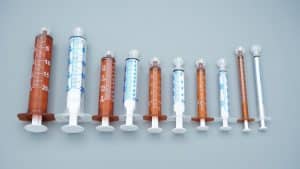
Oral syringes
Used to give liquid medicine by mouth, especially to children and elderly patients. They have no needle connection, often use a distinct colour or tip, and are marked in millilitres. Their design helps prevent accidental IV injection.
Irrigation / Toomey syringes
Large-volume syringes (often 60 mL or more) with a catheter or Toomey tip for wound irrigation, bladder irrigation and feeding.
Prefilled syringes
Supplied already filled with a drug, often made of glass or specialist plastics (such as cyclic olefin polymers). They reduce preparation time and dosing errors. They are heavily used for vaccines, heparin, biologics and emergency drugs. These are usually supplied by pharmaceutical companies rather than general medical-supply sources.
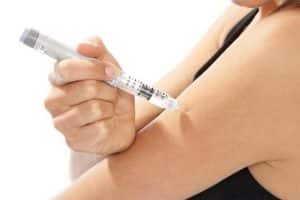
Pen injectors and auto-injectors
Device-based delivery systems for insulin, GLP-1 drugs, epinephrine and others. These are often covered by ISO 11608 and, strictly speaking, are drug-delivery devices rather than plain syringes. However, buyers in diabetes and chronic disease markets often handle them together with syringes and needles.
3.3 By safety design
Safety syringes are designed to reduce needlestick injuries and prevent reuse. The main categories are:
| Type | How it works | Typical use |
|---|---|---|
| Retractable needle syringe | The needle pulls back into the barrel after injection | Hospitals, clinics, blood drawing |
| Shielded / sliding sheath syringe | A sleeve slides over the needle after use | Hospitals, outpatient care |
| Hinged cap (flip-over) safety needle | A cover is flipped over the needle with one hand | Needle-and-syringe combinations in wards |
| Auto-disable (AD) syringe | The plunger locks after one injection, preventing reuse (ISO 7886-3) | Mass immunisation programs |
| Reuse-prevention (RUP) syringe | Built-in feature that makes a second use impossible or very difficult (ISO 7886-4) | Therapeutic injections, high-risk settings |
For mass vaccination, auto-disable syringes are the standard recommendation by global health agencies. For general hospital use in countries with sharps-safety regulations, retractable or shielded safety syringes are increasingly required.
3.4 By application
Because many buyers think in terms of “where will this be used?” rather than “what is the tip type?”, here is a quick overview:
- Hospitals and clinics: 1 mL, 3 mL, 5 mL, 10 mL and 20 mL Luer lock or slip syringes, plus safety versions.
- Vaccination campaigns: 0.5 mL or 1 mL auto-disable syringes, often with fixed needles.
- Diabetes care: 0.3 mL, 0.5 mL and 1 mL insulin syringes.
- Laboratories: Syringes for sample handling, filtration and chromatography.
- Dental clinics: Specialised dental aspirating syringes using cartridges.
- Veterinary use: A wide range from 1 mL to 60 mL, including large sizes for livestock.
- Aesthetic and cosmetic clinics: Small syringes (often 1 mL) with fine needles for fillers and mesotherapy.
- Home care: Insulin syringes, oral syringes, and enteral feeding syringes.
4. Syringe Size Guide: Volume Capacity
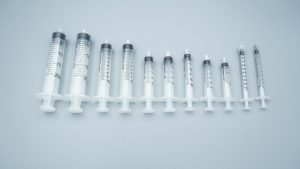
Choosing the right volume is the simplest way to improve accuracy. The rule most clinicians follow is to use the smallest syringe that can hold the required dose.
| Syringe size | Typical graduation | Common uses |
|---|---|---|
| 0.3 mL – 0.5 mL | 0.01 mL or 1 unit | Insulin, very small doses |
| 1 mL | 0.01 mL | Tuberculin tests, small-dose medication, vaccines, aesthetic injections |
| 2 mL / 2.5 mL | 0.1 mL | Intramuscular injections, small-volume drugs |
| 3 mL | 0.1 mL | General injections, the most commonly used size in many wards |
| 5 mL | 0.2 mL | Injections, drawing blood, mixing drugs |
| 10 mL | 0.2 mL | Flushing IV lines, larger drug volumes |
| 20 mL | 1 mL | Large-volume injections, flushing |
| 30 mL / 50 mL / 60 mL | 1–2 mL | Irrigation, enteral feeding, syringe pumps |
The numbers above are typical, but graduation steps can differ slightly by manufacturer and standard, so always check the product data sheet.
5. Needle Gauge and Length: A Quick Primer
Many syringes are sold with needles attached, or are packed together with separate needles. Understanding needle specifications is a vital part of any syringe selection guide.
Gauge (G): The higher the number, the thinner the needle. A 30G needle is very fine, while an 18G needle is wide and used for drawing thick fluids or giving blood products.
Length: Needle length is given in millimetres or inches. Shorter needles (6 mm to 16 mm) are used for subcutaneous and intradermal injections. Longer needles (25 mm to 40 mm) are used for intramuscular injections.
Needle hubs are colour-coded under ISO 6009 so staff can identify gauge quickly. Common examples:
| Gauge | Hub colour | Typical outer diameter | Typical use |
|---|---|---|---|
| 18G | Pink | 1.2 mm | Drawing up drugs, blood transfusion |
| 21G | Green | 0.8 mm | General IM injection, blood sampling |
| 22G | Black | 0.7 mm | IM injection |
| 23G | Blue | 0.6 mm | IM / subcutaneous injection |
| 25G | Orange | 0.5 mm | Subcutaneous, intradermal, paediatric |
| 27G | Grey | 0.4 mm | Intradermal, fine injections |
A practical example: a standard adult intramuscular injection often uses a 21G–23G needle that is 25 mm–38 mm long, whereas a subcutaneous insulin injection uses a 29G–31G needle with a length of only 4 mm–8 mm.
6. Standards, Certifications and Regulations
For professional buyers, documentation is as important as the product itself. Here are the key items to understand.
ISO 7886-1: Sterile hypodermic syringes for single use, for manual use. This is the core performance standard. It covers dimensions, graduation, tolerance on capacity, freedom from leakage, and more.
ISO 7886-3 and 7886-4: Auto-disable syringes and syringes with reuse-prevention features.
ISO 7864: Sterile hypodermic needles for single use.
ISO 80369 series: Small-bore connectors for liquids and gases, replacing older Luer specifications for specific uses.
ISO 13485: Quality management systems for medical device manufacturers. A supplier holding this certificate is showing a controlled process for design and production.
CE marking (EU MDR 2017/745): Required for sale in the European Union. Check that the certificate is valid and that the notified body, device class, and product scope match the items you are buying.
FDA 510(k) clearance (United States): Most syringes are regulated as Class II devices. Buyers should request the 510(k) number and confirm it for the specific product.
Other markets: Many countries have their own registration systems (for example, NMPA in China, ANVISA in Brazil, TGA in Australia, or Health Canada licences). Always check that your importer or distributor can register the product in your target market.
Shelf life: Sterile syringes usually carry a shelf life of three to five years from the manufacturing date. Always check the expiry date when receiving stock, and make sure it is long enough to be sold or used within your supply chain.
7. How to Choose: A Step-by-Step Syringe Selection Guide
This is the section most buyers come for. Follow these seven steps and you will cover the main decisions.
Step 1: Define the clinical use
Start with the question “What will this syringe be used for?” The answer drives everything else. A syringe for vaccination, one for drawing blood, and one for tube feeding are three completely different products. Write down the injection route (intradermal, subcutaneous, intramuscular, intravenous, oral, enteral), the volume range, and the drug type if relevant.
Step 2: Choose the volume
Match syringe volume to the dose. Avoid oversized syringes, which reduce accuracy. If your facility uses several dose sizes, it is usually efficient to standardise around a small range, for example 1 mL, 3 mL, 5 mL, 10 mL and 20 mL.
Step 3: Choose the tip type
Use Luer slip for routine low-pressure injections and cost-sensitive purchases. Choose Luer lock when a secure connection is critical, such as IV therapy. Choose catheter tip or ENFit for feeding and irrigation. This is the most common area where beginners make mistakes, so confirm the tip against the needles and accessories you already have.
Step 4: Decide whether you need a safety feature
Check local regulations and hospital policy. If you serve markets with sharps-safety requirements, or you buy for institutions that want to reduce staff injuries, choose retractable or shielded safety syringes. For vaccination programs, choose auto-disable syringes. Safety models cost more per unit, but they can reduce injury-related costs and liability.
Step 5: Match needles correctly
Decide whether you need syringes with fixed needles, detachable needles, or separate needle packs. Remember that fixed-needle syringes generally have lower dead space, which matters for expensive drugs. Select gauge and length based on the injection route and patient group (adult, child, infant, elderly).
Step 6: Check material, sterility and quality
Ask the supplier about:
- Barrel and plunger material (medical-grade polypropylene is standard)
- Stopper material and whether it is latex-free
- Whether the product is free of DEHP and other unwanted additives, if your market has such requirements
- Sterilisation method (usually EO) and residue limits
- Test reports for leakage, graduation accuracy, and plunger force
- Batch traceability
Step 7: Evaluate supplier capability and total cost
The lowest unit price is not always the lowest total cost. Consider:
- Certificates: ISO 13485, CE, FDA, and local registrations
- Capacity and lead time: Can they meet your volume, and how reliable is delivery?
- MOQ (minimum order quantity): Typical MOQs are set in cartons or by the container load
- Packaging: Individual blister packs or peel pouches, box counts (for example 100 pieces per box), and carton sizes, which affect shipping cost
- Customisation: Private label, custom packaging, and instructions in your market’s language
- After-sales service: Complaint handling, recall procedures and technical support
- Samples: Always test samples before committing to a large order
8. Common Mistakes Beginners Make
- Buying on price alone. Cheap syringes with poor plunger movement or inaccurate markings can lead to complaints and returns.
- Ignoring tip compatibility. A Luer lock syringe will not work with a pure slip needle design in the same way. Check the connectors.
- Choosing a size that is too large. This reduces dose accuracy.
- Skipping the registration check. A product that cannot be legally sold in your market is useless, however good the price.
- Overlooking shelf life and storage. Syringes should be stored in a clean, dry place away from direct sunlight and extreme temperatures.
- Confusing insulin concentrations. Use syringes marked for the insulin strength used in your market.
- Forgetting the disposal side. Safe disposal of sharps (puncture-resistant sharps containers, and compliant waste handling) is part of the total solution.
9. Storage, Handling and Disposal
Even the best syringe becomes unsafe if mishandled. Keep these points in mind:
- Store cartons off the floor, in a dry, ventilated area, away from chemicals and heat sources.
- Do not use any syringe whose sterile packaging is damaged, wet or open.
- Use the oldest stock first (FIFO, first in, first out).
- Never reuse single-use syringes. Reuse is a major cause of infection transmission and is explicitly prohibited by international health authorities.
- Place used syringes in a sharps container straight after use, without recapping where possible.
10. Market Trends Worth Knowing
Several trends are shaping what buyers ask for today:
- Growth of safety syringes. More countries are introducing rules requiring safety-engineered devices.
- Rise of chronic disease care. Growing diabetes and obesity treatment is pushing demand for insulin syringes, pen needles and injectable medication.
- Vaccination programs. Large immunisation campaigns need very high volumes of auto-disable syringes.
- Prefilled and ready-to-use formats. Healthcare providers are shifting toward prefilled syringes to cut preparation time and error risk.
- Sustainability and supply-chain resilience. Buyers increasingly ask about lead times, dual sourcing and packaging waste.
11. Frequently Asked Questions
What are the most common medical syringe types?
The most common types are Luer slip and Luer lock syringes in general sizes from 1 mL to 60 mL, insulin syringes, tuberculin syringes, oral syringes, and safety syringes such as retractable and auto-disable models.
What is the difference between Luer slip and Luer lock?
Luer slip tips connect by friction, which makes them fast and simple. Luer lock tips use a threaded collar to lock the needle in place, which is more secure for high-pressure or IV use.
Which syringe size is best for intramuscular injections?
Many intramuscular injections use 2 mL to 5 mL syringes, depending on the drug volume, with a needle usually between 21G and 23G. The correct choice depends on the dose, the patient and local clinical guidelines.
What does “auto-disable syringe” mean?
It is a syringe that locks after a single use, so it cannot be used a second time. It is the standard type for immunisation programs.
Do I need to buy syringes with needles or without?
It depends on the application. Fixed-needle syringes have lower dead space and are common in vaccination. Syringes with detachable needles give flexibility to match gauge and length to each case.
How long can I store sterile syringes?
Check the label. Sterile single-use syringes commonly have a shelf life of three to five years, provided packaging stays intact and storage conditions are correct.
What certificates should I ask a supplier for?
At minimum, ISO 13485, CE (for EU markets), and FDA 510(k) or the relevant local registration. Also ask for test reports and batch records.
12. Buyer’s Quick Checklist
Before placing an order, run through this list:
- Intended use and injection route defined
- Volume range and graduation confirmed
- Tip type (slip, lock, catheter, ENFit) matched to your devices
- Needle gauge and length selected
- Safety feature requirement checked against local rules
- Material (latex-free, DEHP-free if required) confirmed
- Standards and certificates reviewed (ISO 7886, ISO 13485, CE, FDA)
- Shelf life and sterilisation method verified
- Packaging, MOQ, lead time and Incoterms agreed
- Samples tested before bulk order
Conclusion
Syringes may be small and low-cost, but they carry high responsibility. Understanding the main medical syringe types, from Luer slip and Luer lock to insulin, oral and safety models, helps you match each product to the right clinical need. A structured syringe selection guide, covering use, volume, tip, safety, needles, quality and supplier capability, helps you avoid common mistakes and build a reliable supply.
If you are comparing options and want to see how these categories look in practice, explore our syringe selection guide and product range. Before any bulk purchase, request samples and documentation so you can verify quality and compliance in your own market.