The precision dispensing industry has undergone significant transformation with the introduction of polypropylene (PP) flexible needles. As manufacturing processes demand higher accuracy and contamination-free solutions, understanding the technical capabilities and application scenarios of PP medical needles becomes essential for production engineers and procurement specialists.
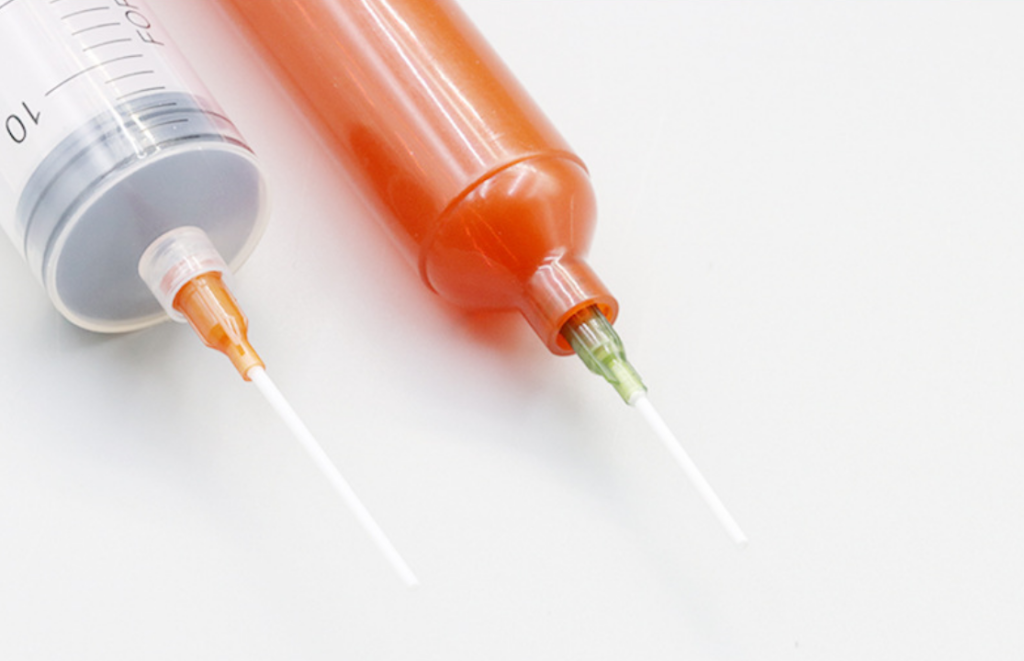
Understanding PP Flexible Needle Technology
Material Science Behind Superior Performance
Polypropylene represents a breakthrough in dispensing technology. Unlike traditional stainless steel needles, high-quality medical needles manufactured from medical-grade PP offer unique advantages:
Chemical Resistance Profile:
- Compatible with cyanoacrylates, epoxies, and silicones
- Resistant to most solvents and pharmaceutical compounds
- No oxidation or corrosion issues
- pH stability range: 2-12
Mechanical Properties:
- Flexural modulus: 1,300-1,800 MPa
- Tensile strength: 30-40 MPa
- Operating temperature range: -20°C to +80°C
- Flexibility prevents substrate damage during application
Manufacturing Process and Quality Control
Leading medical needle manufacturers employ precision injection molding with automated quality verification:
Production Standards:
- Dimensional tolerance: ±0.02mm across all gauges
- Internal diameter consistency: ≤0.01mm variation
- Surface roughness: Ra ≤0.8μm
- Lot traceability with batch documentation
- ISO 13485 certified manufacturing environments
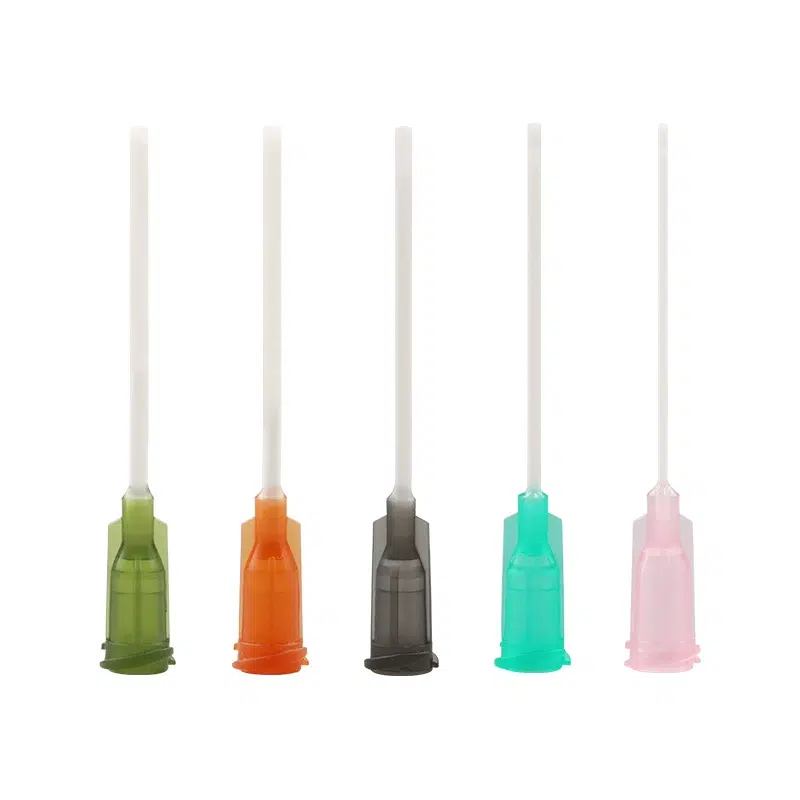
Critical Application Scenarios
1. Electronics Assembly and SMT Manufacturing
The electronics industry represents the largest consumer of PP medical needles, with specific applications including:
Chip Underfill Operations:
- Gauge recommendation: 22G-25G for capillary flow control
- Typical viscosity range: 1,000-15,000 cPs
- Application pattern: Precise L-shaped dispensing along chip edges
- Production rate: 1,200-1,800 units/hour with automated systems
Conformal Coating Application:
- Gauge selection: 18G-20G for medium-viscosity coatings
- Coating materials: Acrylic, silicone, urethane, parylene
- Coverage requirement: 25-250μm thickness control
- Benefit: Flexible tip prevents PCB component damage
Solder Paste Dispensing:
- Optimal gauge: 14G-16G for thixotropic materials
- Paste viscosity: 150,000-250,000 cPs
- Deposit volume accuracy: ±5% repeatability
- Contamination prevention: Zero metal particle shedding
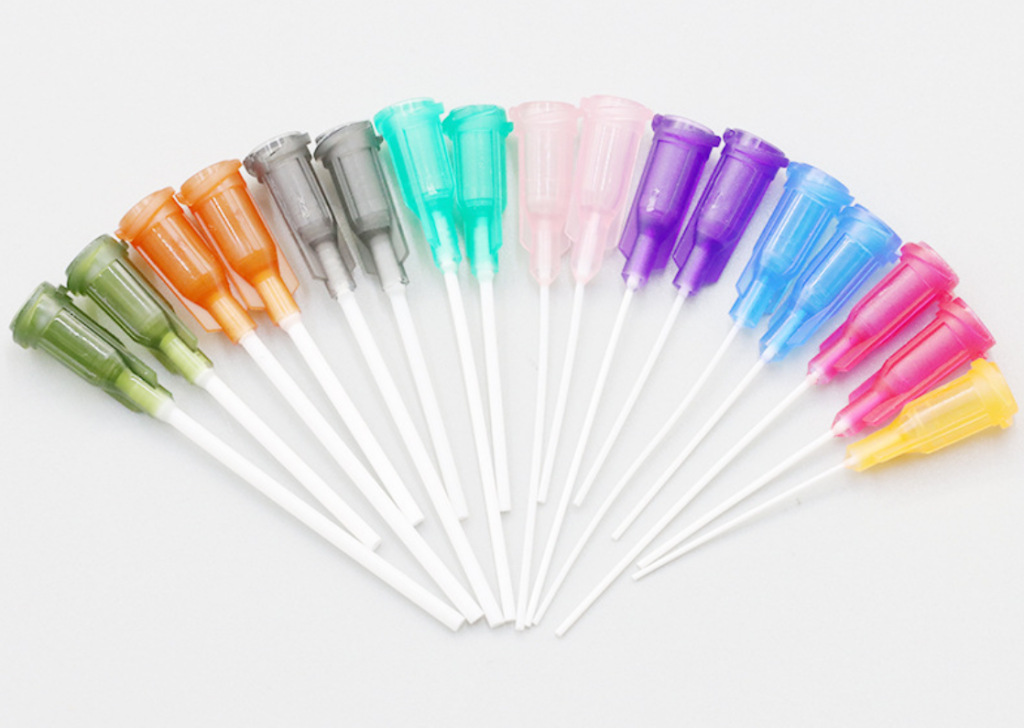
2. Medical Device Manufacturing
Medical device assembly requires contamination-free processes where high-quality medical needles deliver measurable advantages:
Catheter Assembly:
- Application: Adhesive bonding of multi-lumen extrusions
- Gauge range: 20G-22G for precise glue lines
- Bond width tolerance: ±0.1mm
- Regulatory compliance: Biocompatibility tested materials (ISO 10993)
Diagnostic Device Production:
- Microfluidic channel sealing with UV-cure adhesives
- Gauge: 25G for sub-millimeter precision
- Dispensing accuracy: 0.5-2.0μL per shot
- Process validation: Supports IQ/OQ/PQ documentation
Hearing Aid Manufacturing:
- Shell bonding and potting compound application
- Recommended: 22G flexible tips for curved surface following
- Material compatibility: Two-part epoxies and silicones
- Quality metric: Zero contamination in sealed acoustic chambers
3. Automotive Electronics and Sensors
Advanced driver assistance systems (ADAS) and electric vehicle components require precision adhesive application using medical needle manufacturer solutions:
LiDAR Sensor Assembly:
- Optical component bonding with low-stress adhesives
- Gauge specification: 20G for controlled bead geometry
- Dispensing environment: Class 10,000 cleanroom
- Alignment tolerance: ±10μm maintained through cure
Battery Management System (BMS) Potting:
- Thermal interface material (TIM) application
- Gauge selection: 14G-16G for filled compounds
- Material viscosity: 50,000-100,000 cPs
- Volume throughput: 2-5mL per assembly
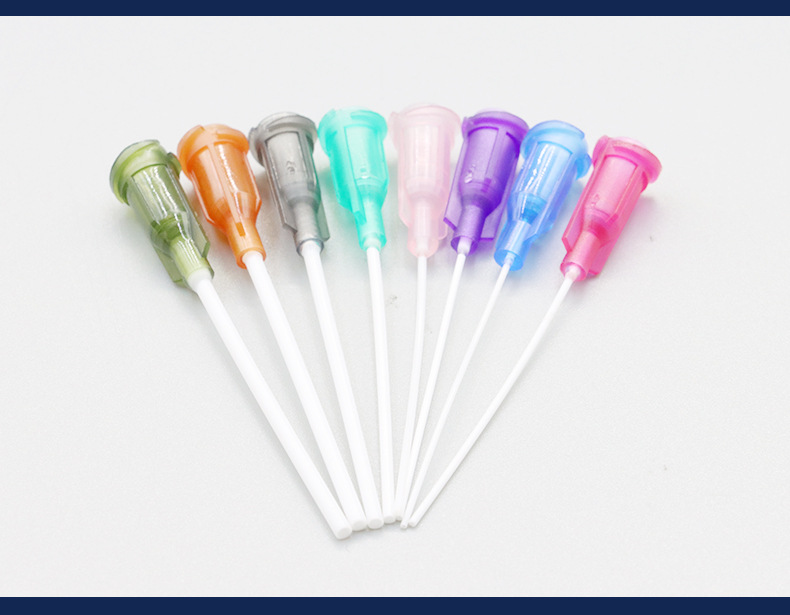
4. Laboratory and Pharmaceutical Applications
Research environments and pharmaceutical production benefit from the disposable, contamination-free nature of PP medical needles:
High-Throughput Screening (HTS):
- Reagent dispensing into microplate wells
- Gauge: 22G-25G for 96/384-well formats
- Volume precision: CV ≤3% across plate
- Chemical compatibility: DMSO, organic solvents, buffers
Pharmaceutical Filling:
- Sterile formulation dispensing
- Available in gamma-irradiated packaging
- Gauge range: 18G-20G for viscous suspensions
- Clean room classification: ISO Class 5-7 compatible
Clinical Diagnostics:
- Sample preparation and assay development
- Single-use design eliminates cross-contamination
- Volume range: 1μL to 1mL depending on gauge
- Traceability: Lot coding for GMP compliance
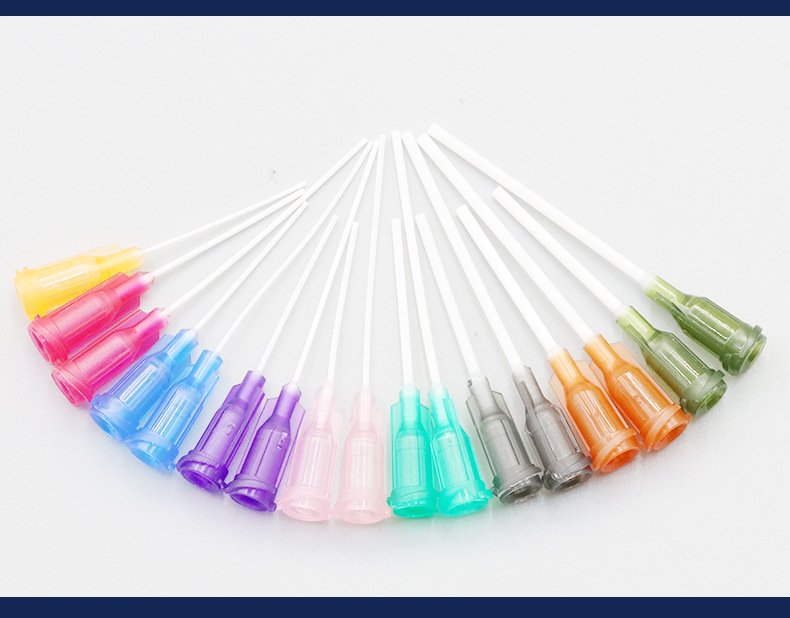
Technical Selection Guide: Matching Gauge to Application
Viscosity-Based Gauge Selection
Understanding the relationship between material properties and needle gauge ensures optimal dispensing performance:
Ultra-Low Viscosity (1-100 cPs):
- Recommended gauge: 25G
- Applications: Water-like solutions, thin cyanoacrylates
- Flow characteristics: Gravity-assisted, rapid dispensing
- Typical materials: Primers, fluxes, cleaning agents
Low Viscosity (100-1,000 cPs):
- Recommended gauge: 22G-25G
- Applications: Standard instant adhesives, inks
- Flow characteristics: Controlled pneumatic pressure (5-15 PSI)
- Typical materials: CA adhesives, UV inks, lubricants
Medium Viscosity (1,000-10,000 cPs):
- Recommended gauge: 18G-22G
- Applications: Epoxies, silicones, acrylics
- Flow characteristics: Moderate pressure (15-40 PSI)
- Typical materials: 2-part adhesives, gasketing compounds
High Viscosity (10,000-100,000 cPs):
- Recommended gauge: 14G-18G
- Applications: Thick pastes, greases, potting compounds
- Flow characteristics: High pressure (40-80 PSI) or auger systems
- Typical materials: Thermal compounds, solder paste, filled adhesives
Length Selection Considerations
High-quality medical needles are available in multiple lengths to accommodate various access requirements:
25mm Length:
- Best for: Standard surface applications
- Accessibility: Direct line-of-sight dispensing
- Precision: Maximum control for fine-pitch work
- Common scenarios: PCB assembly, small part bonding
38mm Length:
- Best for: Deep cavity access
- Accessibility: Recessed areas, narrow openings
- Applications: Potting, cavity filling, through-hole applications
- Flexibility advantage: Reaches without fixture modification
Custom Lengths (15-50mm): Available from medical needle manufacturers for specialized equipment configurations.
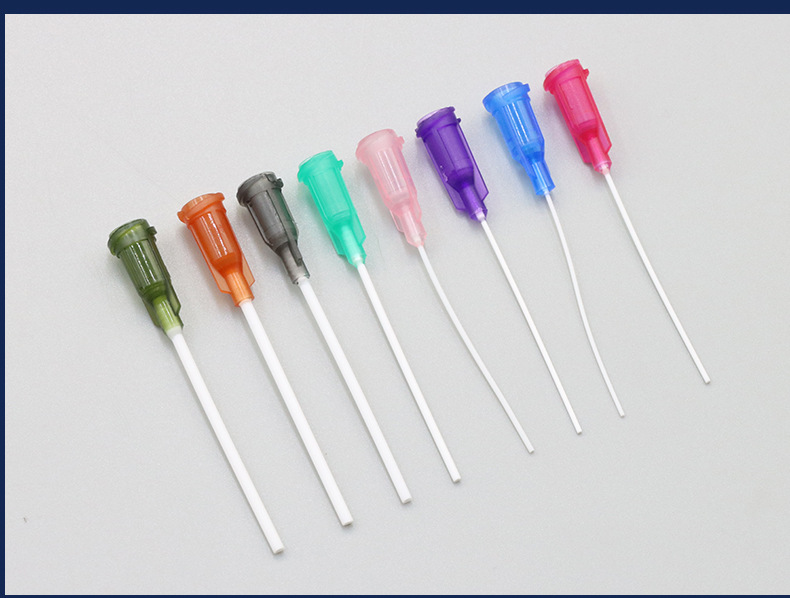
Production Integration and Process Optimization
Automated Dispensing System Compatibility
Modern PP medical needles integrate seamlessly with leading dispensing platforms:
Compatible Equipment:
- Nordson EFD automated systems
- Fisnar robotic dispensers
- Musashi Engineering jet dispensers
- Custom pneumatic and auger systems
Performance Parameters:
- Luer lock/luer slip compatibility: Universal fit
- Pressure rating: Up to 100 PSI
- Cycle life: 50,000+ dispense cycles (depending on material)
- Changeover time: <30 seconds for gauge switching
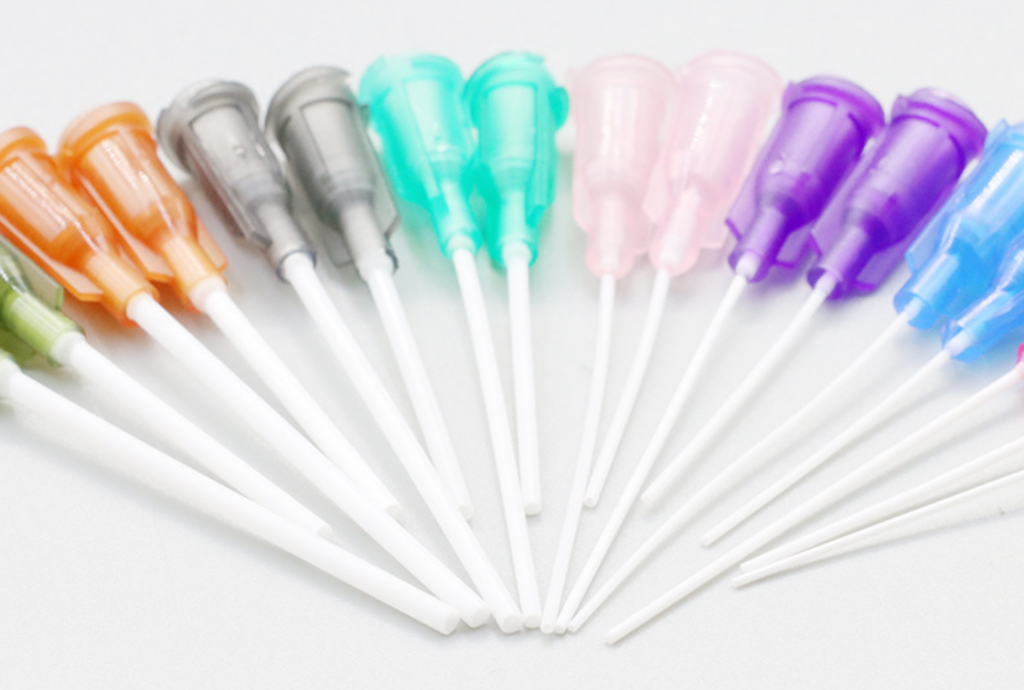
Quality Metrics and Process Control
Implementing high-quality medical needles enables measurable quality improvements:
Key Performance Indicators:
- Deposit weight consistency: ±2-3% CV achievable
- Bead geometry repeatability: ±5% variation within batch
- Contamination reduction: 100% elimination of metal particles
- Yield improvement: 15-30% reduction in rework rates
- Tool life: Extended service versus clogging-prone metal tips
Cost-Benefit Analysis for High-Volume Users
Direct Cost Savings:
- Material waste reduction: 10-15% through improved deposit control
- Downtime minimization: 40% fewer clogs versus metal alternatives
- Rework elimination: Zero metal contamination defects
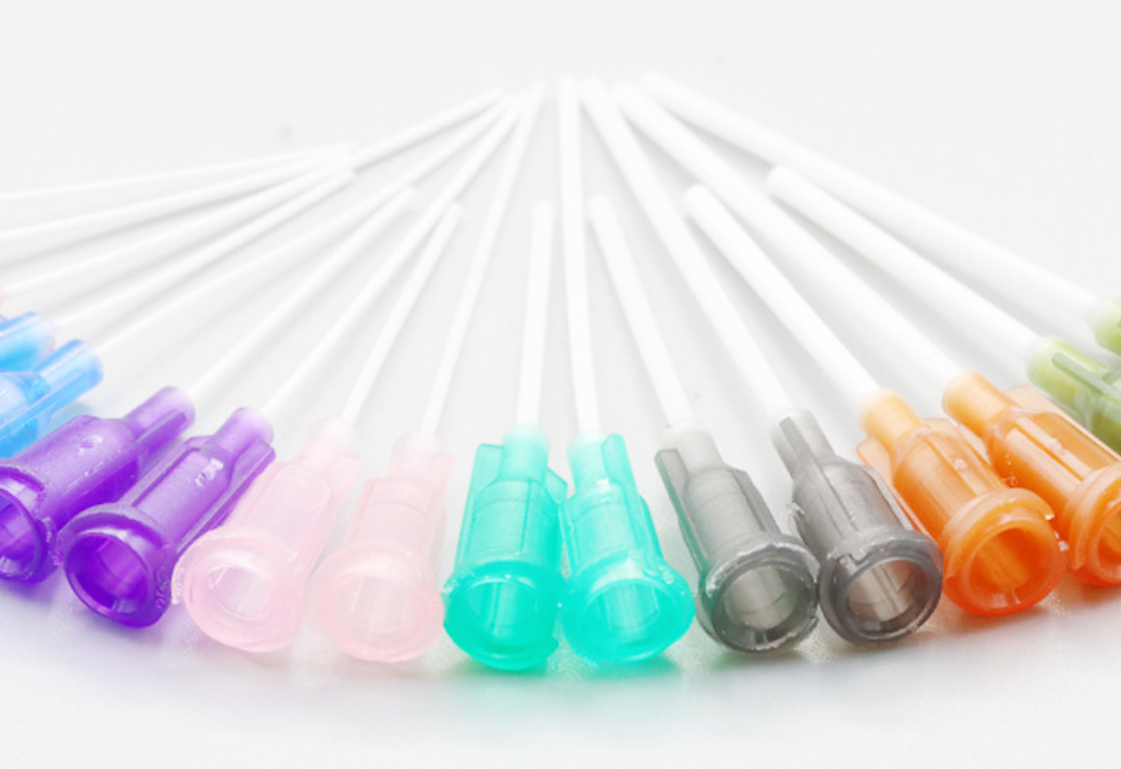
- Inventory simplification: Color-coded systems reduce selection errors
Operational Efficiency:
- Changeover speed: Rapid gauge switching without tools
- Training reduction: Intuitive color identification systems
- Maintenance: No cleaning protocols required—disposable design
- Regulatory compliance: Simplified lot traceability
Case Study: Electronics Manufacturer Efficiency Gains
A Tier-1 automotive electronics supplier transitioned to PP medical needles for radar module assembly:
Application: Underfill adhesive dispensing on 12mm x 12mm BGA packages
Previous Process:
- Stainless steel 22G needles
- Defect rate: 2.3% (metal contamination, incomplete flow)
- Needle change frequency: Every 2,500 units
- Average deposit variance: ±8%
Optimized Process with PP Needles:
- PP flexible 22G needles
- Defect rate: 0.3% (non-needle related defects only)
- Needle change frequency: Every 15,000 units (6x improvement)
- Average deposit variance: ±3%
- Annual savings: $127,000 in reduced scrap and labor
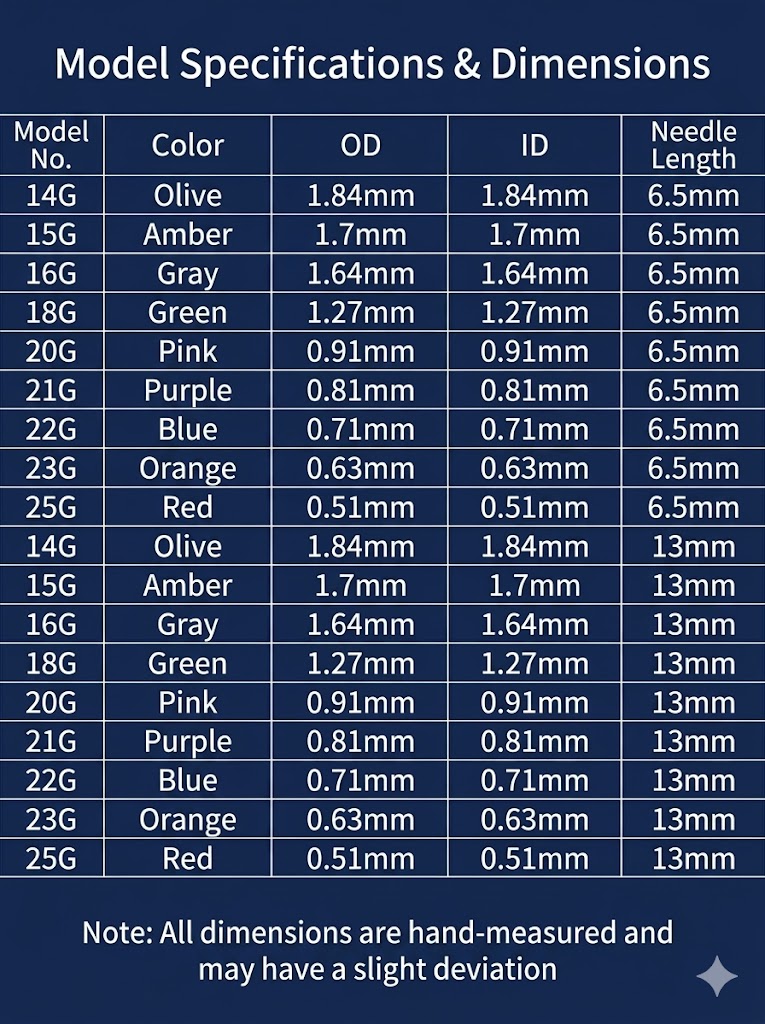
Custom Manufacturing and OEM Solutions
For specialized applications, medical needle manufacturers offer extensive customization:
Available Customizations
Dimensional Options:
- Gauges from 10G to 30G (beyond standard range)
- Lengths from 12mm to 75mm
- Custom internal diameter specifications
Design Modifications:
- Angled tip cuts (15°, 30°, 45°)
- Tapered tip geometry for narrow access
- Blunt or beveled end configurations
- Anti-drip tip designs
Identification Systems:
- Custom color coding for proprietary workflows
- Laser marking with part numbers or lot codes
- Fluorescent materials for UV inspection environments
- Translucent options for visual flow verification
Packaging Solutions:
- Bulk packaging: 1,000-10,000 units per bag
- Individual sterile pouches for medical applications
- Custom dispensing trays for automated pick-and-place
- Private labeling with customer branding
Regulatory Compliance and Documentation
For regulated industries, high-quality medical needles provide necessary compliance support:
Available Documentation:
- Material Safety Data Sheets (SDS)
- Raw material certifications (medical-grade PP)
- Biocompatibility test reports (ISO 10993 series)
- Dimensional inspection reports (per lot)
- RoHS/REACH compliance declarations
- FDA DMF (Drug Master File) support available
Traceability Features:
- Lot number laser marking (on request)
- Batch genealogy records
- Manufacturing date coding
- Full supply chain documentation
Future Trends in Dispensing Technology
The evolution of PP medical needles continues with emerging innovations:
Material Advancements:
- Enhanced chemical resistance formulations for aggressive solvents
- Antistatic PP compounds for electronics applications
- Transparent materials for UV-cure adhesive compatibility
- Bioabsorbable polymers for implantable device assembly
Smart Manufacturing Integration:
- RFID-tagged needles for automated inventory management
- QR codes linking to digital batch records
- Integration with Industry 4.0 tracking systems
- Predictive maintenance algorithms based on cycle counting
Procurement Strategies for Bulk Buyers
Maximizing value when sourcing from medical needle manufacturers:
Volume Tier Optimization
Strategic Inventory Planning:
- Analyze historical usage patterns across gauges
- Consolidate orders to achieve volume pricing tiers
- Standard lead times: 2-3 weeks for stock items, 4-6 weeks for custom
- Safety stock recommendation: 30-day supply
Request for Quotation (RFQ) Best Practices:
- Specify exact gauge, length, and quantity per SKU
- Define delivery schedule (single shipment vs. blanket order)
- Request samples for validation testing (typically FOC)
- Clarify packaging requirements and labeling needs
- Confirm compliance documentation requirements
Quality Assurance in Supplier Selection
Verification Criteria:
- ISO 9001/13485 certification status
- Manufacturing facility audit reports
- Customer reference checks in your industry
- Sample testing: dimensional verification, material compatibility
- Technical support responsiveness evaluation
Conclusion: Optimizing Your Dispensing Process
The transition to PP medical needles represents more than a simple component substitution—it’s a strategic process improvement delivering measurable quality and cost benefits.
Key Takeaways:
- Material compatibility and contamination elimination drive adoption in electronics and medical sectors
- Proper gauge and length selection directly impacts deposit quality and process yield
- High-quality medical needles from certified manufacturers ensure consistent performance
- Custom options enable optimization for unique production requirements
- Volume purchasing strategies maximize ROI for high-consumption applications
Next Steps: Ready to optimize your dispensing process? Request a quote for bulk or custom orders, or contact our applications engineering team for process consultation and free sample evaluation.
Related Resources
- Technical Data Sheets: Download comprehensive specifications for all gauge options
- Compatibility Charts: Cross-reference adhesive types with optimal needle configurations
- Application Videos: Watch best practices for various dispensing scenarios
- Webinar Series: Monthly technical sessions on dispensing optimization

About Kohope Medical Supplies
As a leading medical needle manufacturer, Kohope maintains ISO-certified production facilities serving electronics, medical device, automotive, and pharmaceutical industries worldwide. Our engineering team provides application support to help customers achieve optimal dispensing results.