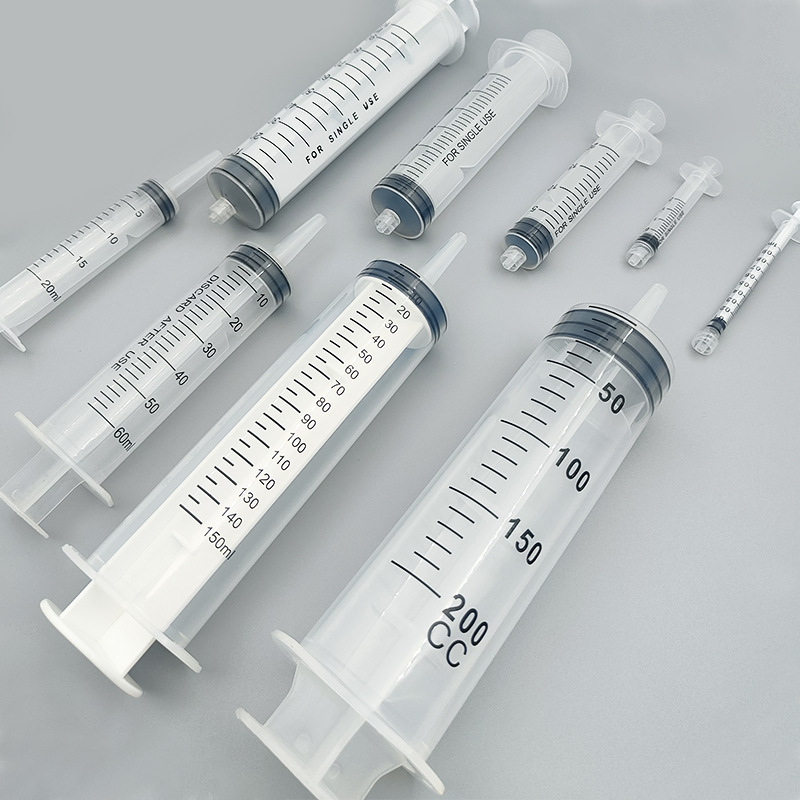
For hospital procurement teams, medical distributors, and importers, the disposable 50ml syringe is one of the most frequently reordered items in a medical supply catalog — yet few buyers fully understand what happens inside a factory before that syringe reaches their warehouse. This article breaks down the manufacturing technology behind disposable syringes, current global market data, and a step-by-step guide to sourcing directly from a qualified factory.
Part 1: How Disposable 50ml Syringes Are Manufactured
Step 1 — Injection Molding of the Barrel and Plunger
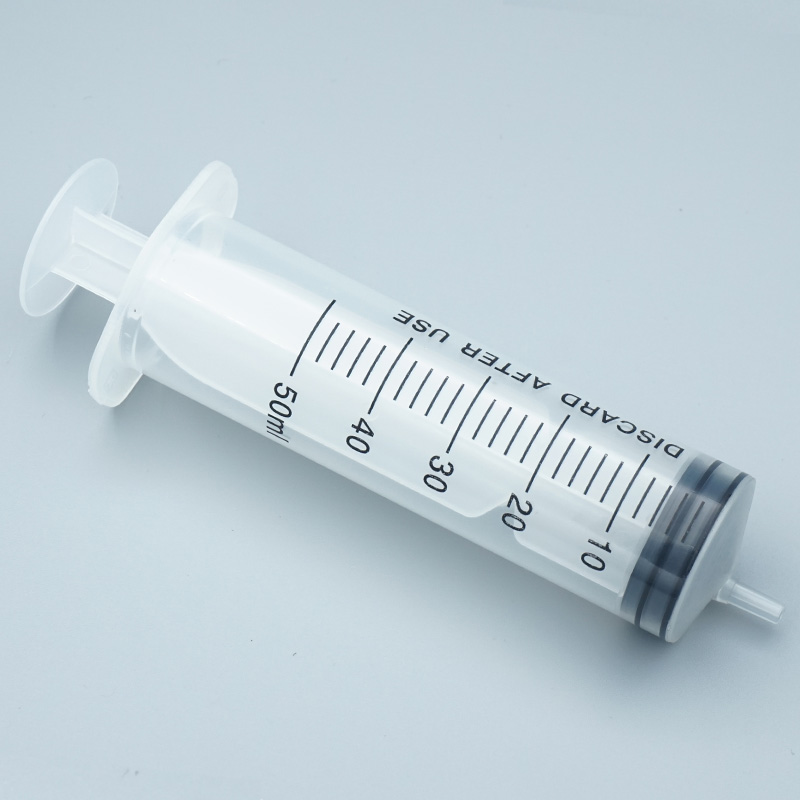
Every disposable syringe begins as medical-grade polypropylene (PP) granules. These granules are melted and injected into precision steel molds under controlled, chilled conditions to form the barrel and plunger with tight dimensional tolerances. This injection molding step melts plastic granules and injects them into molds to form the syringe barrel and plunger. For a 50ml syringe specifically, mold accuracy is critical — because larger-volume barrels are more sensitive to wall-thickness variation, which can affect graduation accuracy and plunger glide.
Step 2 — Graduation Printing
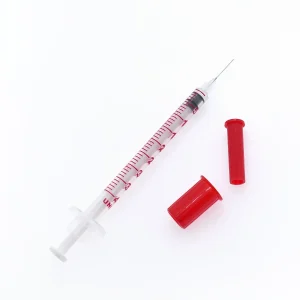
Once molded, the barrel is printed with volume graduation marks using non-toxic, medical-grade ink. Syringe barrels are printed with measurement scales using non-toxic ink, and this stage determines the dosing accuracy that clinics and laboratories depend on for repeatable measurements.
Step 3 — Automated Assembly
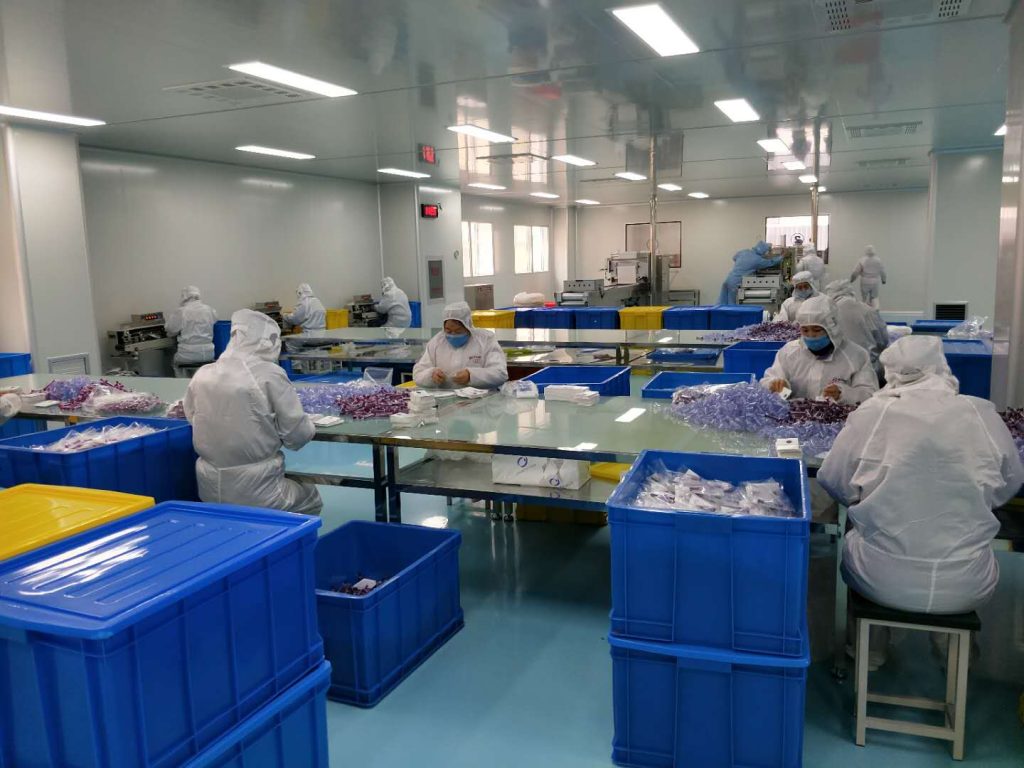
The barrel, plunger, rubber gasket, and (for luer lock models) the locking nozzle are brought together on automated assembly lines. A syringe assembly machine realizes the automatic assembly of barrels, plungers, gaskets, and needle components, and can be equipped with an inspection system to ensure product quality during production. Reputable factories run this stage inside cleanroom environments — for Class II medical devices such as syringes, the production workshop must meet Class 100,000 cleanliness standards — to prevent particulate or microbial contamination before sterilization.
Step 4 — Sterilization
Because plastic syringes cannot withstand high-heat sterilization, manufacturers use low-temperature methods. Syringes are sterilized using Ethylene Oxide (EtO) or gamma radiation to ensure safety, with EtO being the industry standard for polypropylene components. EO equipment must precisely regulate temperature, humidity, and gas concentration to ensure effective and stable sterilization — a process that is validated and documented as part of ISO 13485 and CE compliance.
Step 5 — Packaging and Quality Release
Finally, sterile syringes are individually sealed — sterile syringes are packed in blister packs or peelable pouches — before secondary bulk packaging for shipment. Each production batch typically undergoes dimensional, leak, and sterility testing before release, which is the documentation buyers should always request when evaluating a 50ml syringe supplier.
Part 2: Global Market Size and Growth Trends
Understanding market direction helps buyers negotiate better contracts and anticipate supply conditions. Recent industry data shows consistent, steady growth across the disposable syringe category:
- One 2026 market analysis estimates the global disposable syringes market grew from USD 18.13 billion in 2025 to USD 19.33 billion in 2026, and is projected to expand at a CAGR of 6.88% to reach USD 28.91 billion by 2032.
- A separate industry report puts the 2026 market at USD 18.36 billion, growing at a 6.32% CAGR to reach USD 24.94 billion by 2031.
- Regionally, North America is identified as the leading region in the disposable syringes market in 2026, while the Asia-Pacific region is expected to register the fastest growth rate, driven by rising awareness and expanding life science industries in countries such as India, China, and Malaysia.
- Within the broader syringe category, disposable syringes are projected to hold roughly 54.3% of overall syringe market share in 2026, due to their convenience and elimination of sterilization requirements between patients.
On the supply side, the market is not without pressure points. Global injections now exceed 16 billion annually, with polypropylene accounting for nearly 60% of syringe materials, and over 50% of global production concentrated in Asia-Pacific — a concentration that creates both cost advantages and geographic dependency risk for international buyers. New tariff measures introduced in 2025 have pushed manufacturers to expand production footprints, work more closely with regional suppliers, and refine inventory strategies to manage cost pressure.
What this means for buyers: demand for disposable syringes — including large-volume formats like the 50ml size used in irrigation, enteral feeding, and industrial dosing — is on a stable long-term growth path. Sourcing from a factory with diversified capacity and stable raw-material supply is increasingly a risk-management decision, not just a cost decision.
Part 3: A Practical Guide to Sourcing Disposable 50ml Syringes
For buyers evaluating suppliers for the first time, here is a straightforward framework used by experienced procurement teams:
1. Verify certification before requesting pricing.
Ask for ISO 13485 certification, CE marking documentation, and — if selling into the U.S. — FDA registration status. These confirm the factory operates under a recognized quality management system rather than producing to no formal standard.
2. Request sterilization validation records.
Since EtO sterilization is standard for this product category, ask the supplier for their sterilization validation report and residual gas testing results. This protects your business from compliance issues at customs or during hospital tender audits.
3. Compare 3-part vs. 2-part construction for your use case.
A 3-part luer lock design (separate barrel, plunger, and rubber gasket) offers smoother plunger movement and a more secure seal — important for high-volume or high-pressure applications like wound irrigation. Buyers unfamiliar with the size and configuration differences across the syringe range can review a full breakdown on the syringe sizes catalog page before finalizing specifications.
4. Ask about customization and MOQ flexibility.
If you’re building a private-label product, confirm whether the factory supports custom printing, packaging design, and adjustable scale units — and what minimum order quantity applies to first trial orders versus recurring bulk contracts.
5. Evaluate sample lead time and communication responsiveness.
A factory that responds quickly and ships samples promptly is a strong signal of how they will handle your production timeline once you place a bulk order.
6. Confirm logistics and packaging capability for your region.
Ask whether the supplier has export experience to your specific market (EU, US, or elsewhere), including familiarity with regional labeling and documentation requirements.
Buyers who want to see current specifications, certifications, and customization options for this product category can review the 3-part luer lock 50ml syringe product page directly, where wholesale pricing tiers and OEM/ODM options are outlined.
Conclusion
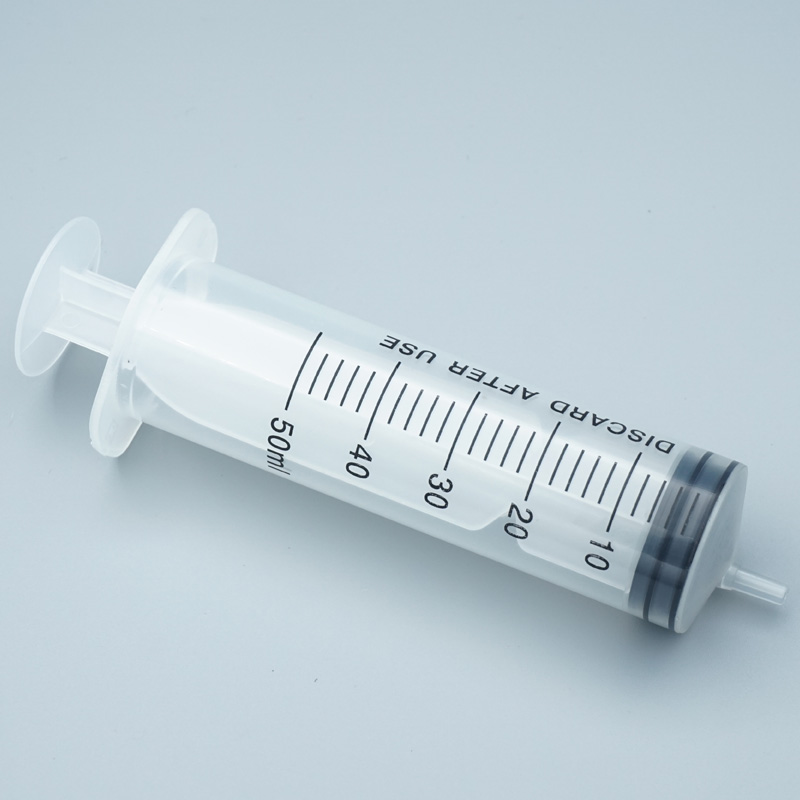
The disposable 50ml syringe sits at the intersection of steady clinical demand and a manufacturing process built around precision molding, controlled assembly, and validated sterilization. With the broader disposable syringes market continuing its multi-year growth trajectory, buyers who understand both the production process and the certification checkpoints are better positioned to select a supplier that delivers consistent quality at scale — not just a lower unit price.