If you or someone you love has just started insulin therapy, you have probably noticed something surprising: the tiny needle on the end of your pen comes in many sizes. Short, long, thin, thinner, with a safety shield, without one. It can feel like one more thing to figure out on top of carb counting, glucose checks, and dosing.
The good news is that choosing the right needle is much simpler than it looks. This insulin pen needle guide walks you through everything a beginner needs to know: what the numbers on the box mean, which length and gauge suit different bodies, how to tell whether a needle fits your pen, and how to make every injection more comfortable and more accurate.
By the end, you will know exactly how to choose insulin pen needle options with confidence, and you will have a short checklist to bring to your next appointment with your healthcare provider.
Quick note: This article is for general education. Always follow the advice of your doctor, diabetes care and education specialist, or pharmacist, who know your medical history and treatment plan.
Why the Right Pen Needle Matters
More than 38 million people in the United States have diabetes, according to the Centers for Disease Control and Prevention (CDC), and millions more live with the condition in Canada. A large share of them use insulin pens to deliver their medication. The pen gets most of the attention, but the needle is the part that actually touches your body, so it affects comfort, dose accuracy, and long-term skin health.
Here is what a well-chosen needle can do for you:
- Reduce pain. A thinner, shorter needle generally hurts less. Many people describe a 4 mm, 32G needle as barely noticeable.
- Deliver insulin to the right layer. Insulin is designed to be absorbed from the fat layer just beneath the skin (the subcutaneous layer). If the needle is too long, insulin can end up in muscle, where it is absorbed faster and less predictably, which may cause low blood sugar. If it is too short or not inserted properly, insulin may leak or stay in the skin.
- Support steadier glucose readings. Consistent delivery means more predictable insulin action.
- Protect your skin. Using a fresh needle every time helps prevent lumps, scar-like tissue, and bruising.
- Make injecting easier to stick with. If injections are comfortable, you are more likely to take every dose on time.
The international Forum for Injection Technique (FIT) has long recommended shorter needles for most adults and children, and clinical research has found that short needles control blood sugar just as well as longer ones.
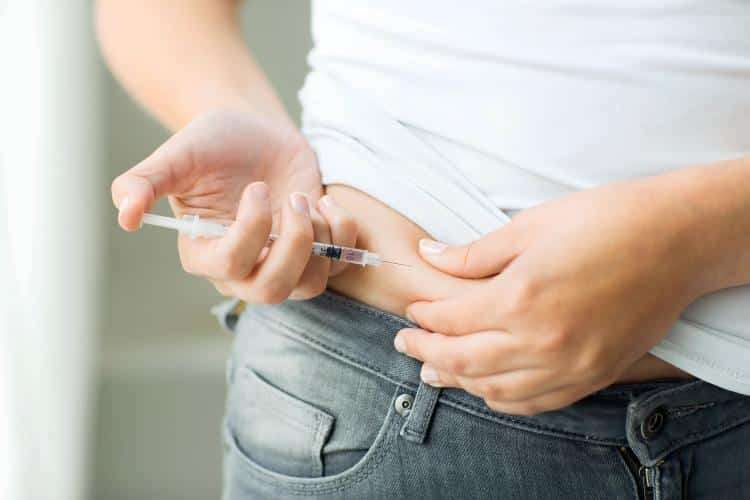
Pen Needle Anatomy: The Four Things on the Box
Before you compare products, it helps to know what you are looking at. Every box of pen needles lists a few key details.
1. Length
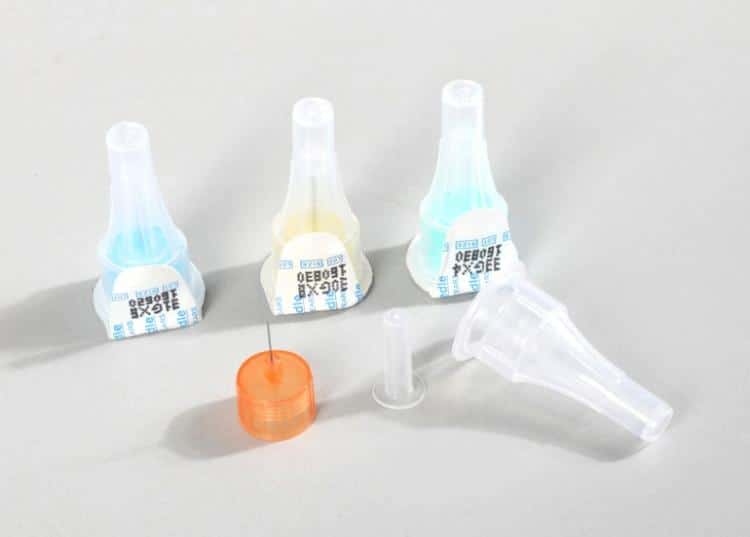
Length is how far the needle reaches into your body. It is measured in millimeters (mm). Common lengths in North America are 4 mm, 5 mm, 6 mm, 8 mm, 10 mm, and 12.7 mm (½ inch).
2. Gauge
Gauge (written as a number followed by G) describes how thick the needle is. The rule is a little counterintuitive: the higher the gauge number, the thinner the needle. So a 33G needle is thinner than a 29G needle.
3. Tip and coating
Most modern pen needles have a multi-bevel (multi-facet) tip and a lubricating coating, usually silicone. These features help the needle glide through skin with less resistance.
4. Safety features
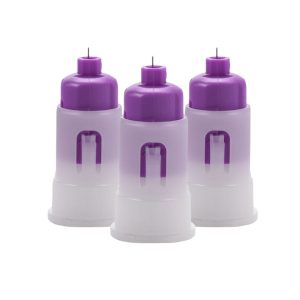
Some pen needles come with a built-in shield that locks over the needle after use. These are called safety pen needles. Others are standard needles with removable outer and inner caps.
Step 1: Choose the Right Needle Length
Length is the single most important choice. For many years, 12.7 mm needles were common. Today, experts recommend much shorter options because skin and fat layers are thinner than most people assume. Adult skin is typically only about 1.6 to 2.4 mm thick, and a 4 mm needle is long enough to pass through it and reach the fat beneath.
Here is a simple overview:
| Needle Length | Typical Use | What to Know |
|---|---|---|
| 4 mm | Adults and children, including people with larger bodies | Shortest option; lowest risk of hitting muscle; usually no need to pinch the skin in adults |
| 5 mm | Adults and children | Slightly longer; widely available; pinching may be advised for children or very lean adults |
| 6 mm | Adults and some teens | Good middle option; may need a skin fold for thin people |
| 8 mm | Adults who prefer or were trained on it | Longer; skin fold is often recommended, especially for lean adults |
| 10 mm and 12.7 mm | Rarely recommended today | Higher chance of injecting into muscle; usually only if your provider specifically advises it |
What most experts suggest
- Adults of any size: A 4 mm pen needle is considered safe and effective, including for people who are overweight or have obesity. Studies comparing 4 mm needles with longer ones found similar blood sugar results (HbA1c) with less pain and fewer leaks.
- Children and teens: FIT recommends 4 mm, 5 mm, or 6 mm needles. Longer needles carry a higher risk of reaching muscle because children have less fat under the skin.
- Very lean adults: Choose the shortest needle available and ask your provider whether you should lift a skin fold when injecting.
- Pregnancy: Needles of 4 mm to 6 mm are commonly used throughout pregnancy, and many people switch injection sites as the abdomen changes.
If you are unsure, start with a 4 mm needle and ask your care team to confirm it is right for you.
Step 2: Choose the Right Gauge
Gauge affects comfort, flow, and how stiff the needle feels. Pen needles are usually sold in gauges from 29G to 34G. Here is how the numbers translate to actual thickness:
| Gauge | Approx. Outer Diameter | Feel |
|---|---|---|
| 29G | 0.33 mm | Thickest; rarely used in modern pen needles |
| 30G | 0.30 mm | Sturdy; less common now |
| 31G | 0.25 mm | Very common |
| 32G | 0.23 mm | Popular, comfortable balance |
| 33G | 0.20 mm | Very thin; popular for sensitive users |
| 34G | 0.18 mm | Ultra thin; thinnest on the market |
Is thinner always better?
Not necessarily. Thinner needles hurt less, which is a big plus. But very fine needles can also make the injection feel slower, because insulin has less room to flow. That is why many people pair a thin gauge with a thin-wall design, which keeps the opening inside the needle larger while the outside stays slim.
If you take large doses of insulin, particularly thick formulations like U-500, talk to your provider. Higher doses can require a little more injection time, and the right gauge and technique can make a real difference.
For most beginners, a 31G to 33G needle is a smart starting point. It is thin enough to be comfortable and sturdy enough to feel reliable.
Step 3: Check Pen Compatibility
The good news: most insulin pens use a standard threaded connection called ISO 11608-2, so pen needles from different brands usually fit most pens. That includes many of the widely used pens in the US and Canada from major insulin manufacturers.
Still, always do a quick check:
- Read the box. Most pen needle packaging lists compatible pen brands.
- Check your pen’s manual. Manufacturers often name needles they have tested.
- Ask your pharmacist. They can confirm compatibility in seconds.
- Test the fit. A needle should screw on straight and snug. If it feels loose, wobbly, or cross-threaded, do not use it.
If you want to browse a range of lengths and gauges in one place, you can explore these insulin pen needles and compare specifications side by side before you decide.
Step 4: Decide Between Standard and Safety Pen Needles
For most people injecting at home, standard pen needles are the usual choice. But safety pen needles have important uses too.
Standard pen needles
- Typically cost less.
- Come with an outer cap (to protect the needle in the box and to help with removal) and an inner cap (to cover the needle before use).
- Need careful handling after use to avoid accidental needlesticks.
Safety pen needles
- Have a shield that covers the needle after the injection.
- Reduce the chance of accidental needlestick injuries.
- Are often used by caregivers, nurses, school staff, and anyone helping someone else inject.
- May cost more per box.
In the United States, the Needlestick Safety and Prevention Act (2000) requires healthcare employers to use safer needle devices where available. If a family member or caregiver injects for you, a safety needle is worth serious consideration.

Step 5: Consider Comfort and Special Situations
Everyone’s body and routine are different. These common scenarios can help you decide.
You are afraid of needles. Choose a 4 mm needle in 32G or 33G. Many people also say that a quick, confident insertion hurts less than a slow, hesitant one. Some needles have a hidden design (the needle stays covered until it enters the skin), which can ease anxiety.
You are a parent choosing needles for a child. Stick with shorter lengths (4 mm to 6 mm) and ask your pediatric diabetes team about injection sites and whether a skin fold is needed.
You have limited hand strength or dexterity. Look for needles that are easy to attach and remove, and pens with large, easy-to-press buttons. Some safety needles require less handling than standard ones.
You have vision problems. Easy-to-read labels and color-coded packaging can help prevent mix-ups between needle sizes. A magnifier or a pen with an audible click can also be useful.
You travel often. Pack more needles than you think you need, keep them in your carry-on, and bring a small sharps container or a travel-safe disposal option.
Step 6: Learn the Basics of Good Injection Technique
Even the perfect needle will not help if technique is off. Here is a simple routine for beginners.
- Wash your hands and check your insulin: the type, the appearance, and the expiration date.
- Attach a new needle. Screw it on straight, remove both caps, and keep the outer cap for later.
- Do a safety test (priming). Dial 2 units and press the button with the needle pointing up. You should see a drop of insulin. This confirms that the needle is not blocked and that the pen is working.
- Dial your dose.
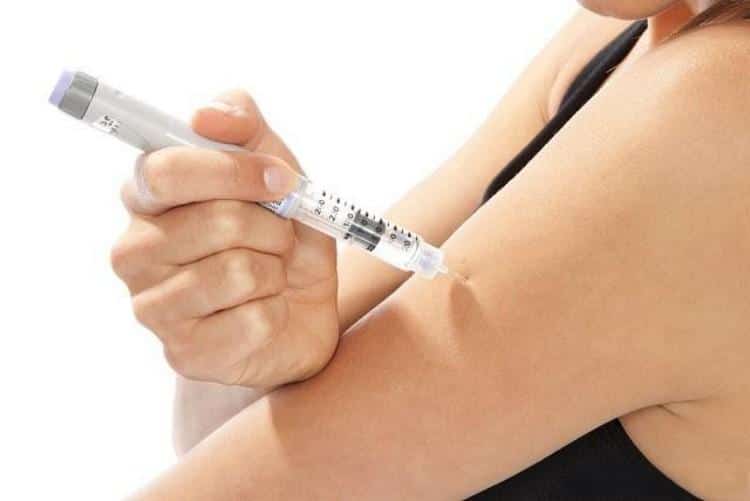
- Choose your site. The abdomen (about two inches away from the belly button), thighs, buttocks, and the back of the upper arms are common sites.
- Insert the needle straight in at a 90-degree angle for most short needles.
- Press the button fully and slowly count to 10 before removing the needle. This helps make sure the whole dose is delivered and reduces leakage.
- Remove the needle and discard it safely right after injecting.
Rotate your injection sites
Injecting in the same spot over and over can cause lipohypertrophy, which are firm lumps of fatty tissue under the skin. Studies suggest that a significant number of people who inject insulin, often in the range of one in three or more, develop these lumps. Insulin absorbed from lumpy areas can be unpredictable, which may lead to higher or more variable glucose levels.
Try this: divide your injection area into sections, use one section for a week, then move to the next, and keep each injection at least one inch (about 2.5 cm) away from the last one.
Never reuse a needle
It can be tempting to reuse needles to save money, but this is not recommended. After a single use, the tip can bend or dull, which can cause pain, bruising, and skin damage. Used needles can also clog, grow bacteria, and let insulin leak out of the pen. The American Diabetes Association and FIT both advise using a new needle for every injection.
Step 7: Dispose of Pen Needles Safely
Safe disposal protects you, your family, and sanitation workers.
- Use an FDA-cleared sharps container when possible. These are widely available at pharmacies.
- No sharps container? Use a heavy-duty plastic household container such as a laundry detergent bottle with a screw-on lid. Do not use glass or clear plastic bottles, and never use containers that will be recycled.
- Never throw loose needles in the trash or recycling.
- Never recap with two hands. Use the outer cap method: place the cap on a flat surface and slide the needle in without holding the cap.
- Check local rules. Disposal rules vary by state, province, and municipality. Many pharmacies, hospitals, and community programs offer drop-off or mail-back programs.
Understanding Cost and Coverage in North America
Pen needles are inexpensive compared with insulin, but the cost adds up over time. A person on multiple daily injections may use four or more needles per day, which is well over 1,400 needles a year.
A few tips for managing cost:
- Check your insurance. In the United States, pen needles are usually covered under the pharmacy benefit, and many Medicare Part D plans cover them when used with insulin. Copays and rules vary by plan.
- Ask for a prescription. Having one often helps with coverage, and it ensures the correct needle size is on file.
- Compare brands and pack sizes. Boxes typically contain 100 needles, and larger packs or generics may reduce cost per needle.
- In Canada, ask about provincial and private plans. Coverage differs by province, so check with your pharmacist or plan provider.
- Never ration needles. Reusing needles to stretch supply can lead to skin problems. If cost is a barrier, speak with your care team or pharmacist about assistance programs.

Common Mistakes to Avoid
Many beginners make the same small errors. Here is what to watch for:
- Picking a needle that is too long. Longer is not better. For most people, 4 to 6 mm is plenty.
- Skipping the priming step. This can lead to under-dosing, especially with a new needle or pen.
- Removing the needle too soon. Count slowly to 10 after pressing the button.
- Using the same spot every time. Rotate your sites to protect your skin.
- Reusing needles. One needle, one injection.
- Leaving the needle attached to the pen. Air and temperature changes can cause insulin to leak, and air can enter the cartridge. Remove it after every injection.
- Assuming every needle fits every pen. Always confirm compatibility.
Quick Checklist: How to Choose Insulin Pen Needle in 60 Seconds
Use this as a handy summary the next time you shop:
- Length: Start with 4 mm unless your provider says otherwise.
- Gauge: Pick 31G to 33G for a good balance of comfort and flow.
- Compatibility: Confirm the needle fits your pen.
- Safety: Choose safety needles if a caregiver will inject or if needlestick risk is a concern.
- Comfort features: Look for a lubricated coating, multi-bevel tip, and thin-wall design.
- Cost and coverage: Check your plan and compare pack sizes.
- Technique: Use a new needle every time, rotate sites, and hold for 10 seconds.
Frequently Asked Questions
What is the best insulin pen needle size for beginners?
For most beginners, a 4 mm needle with a gauge between 31G and 33G is a safe and comfortable starting point. Your provider may recommend a different size based on your age, body type, and injection sites.
Do shorter needles work as well as longer ones?
Yes. Research shows that short needles (4 to 6 mm) deliver insulin just as effectively as longer needles, with lower risk of injecting into muscle and often less pain.
Does a higher gauge number mean a thinner needle?
Yes. A 34G needle is thinner than a 31G needle. Thinner needles are generally more comfortable.
Can I use any brand of pen needle with my pen?
Most pen needles are designed to fit standard insulin pens, but you should always check the packaging or ask your pharmacist to confirm compatibility with your specific pen.
How often should I change my pen needle?
Use a new needle for every injection. This protects your skin, helps keep injections comfortable, and supports accurate dosing.
Do I need to pinch my skin when using a 4 mm needle?
In most adults, no. Children and very lean adults may need a skin fold, so ask your care team what is best for you.
Are safety pen needles worth the extra cost?
They can be, especially if someone else gives your injections, or if you want an added layer of protection against accidental needlesticks.
What should I do if I see insulin leaking after an injection?
A small drop can happen. To reduce leaks, hold the needle in for a full 10 seconds, make sure the needle is fully inserted, and confirm that your site is not lumpy. If leaks keep happening, talk to your provider.
Final Thoughts
Picking a pen needle may seem like a small decision, but it can shape how comfortable, accurate, and sustainable your insulin routine feels. The key points are simple: choose a short needle (often 4 mm), a thin gauge (usually 31G to 33G), make sure it fits your pen, and use a fresh needle every time.
With this insulin pen needle guide, you now have the tools to understand every label on the box and to ask better questions at your next visit. Whenever you are ready to compare options, you can browse a full range of insulin pen needles and find the one that fits your needs and your routine.
Your healthcare team is your best partner. Bring this checklist with you, share any discomfort or concerns, and together you can find the pen needle that makes your day-to-day diabetes care just a little bit easier.
Disclaimer: This article is for educational purposes only and does not replace professional medical advice. Always consult your healthcare provider before changing your insulin delivery routine.