Medical disposables such as syringes, IV sets, catheters, gloves, and masks are the items hospitals and distributors reorder every week. For years, buying them was mostly a price negotiation. In 2026 it has become something more demanding: a mix of trade policy, regulation, supplier risk, and clinical performance.
This guide walks through the six trends shaping medical disposables procurement in 2026, in plain language, with data where reliable figures exist. Whether you are a new purchasing assistant or an experienced sourcing manager, it should help you plan your next tender.
The Big Picture: A Large, Growing, and Price-Sensitive Market
Demand keeps rising because of aging populations, chronic disease, and more injectable and infused therapies.
- IMARC estimates the disposable syringes market at about USD 17.1 billion in 2025, growing to USD 29.1 billion by 2034 (a CAGR of roughly 5.9%).
- A Future Market Insights forecast, cited by Medical Design Briefs, puts the IV disposables market at about USD 21.2 billion in 2025, heading toward roughly USD 64.8 billion by 2035 (around 11.8% a year).
Treat market-research forecasts as directional, not exact: different firms define the market differently and their numbers vary. The useful takeaway is the direction. Volumes are growing, and so is the number of suppliers competing for your orders.
Trend 1: Total Value Is Replacing Lowest Unit Price
The most important shift is in how buyers compare offers. Disposables used to be treated as interchangeable commodities. Now more buyers look at total cost of ownership, which includes:
- Unit price
- Injury and infection costs linked to the product
- Staff time and training
- Waste and disposal costs
- Compatibility with pumps, connectors, and existing workflows
- The cost of a stock-out or recall
Industry analysis of IV disposables points the same way: components such as needleless connectors, filters, and tubing increasingly affect pump accuracy, safety, and data capture, so buyers weigh outcomes and workflow fit alongside price. Price pressure has not gone away, though. The practical approach is to compare suppliers on a total-cost basis, not to ignore price.
What to do: Add a total-cost section to your tender template, and ask suppliers for evidence such as injury-rate data, compatibility lists, and quality certificates.
Trend 2: Safety-Engineered Products Are Becoming the Default
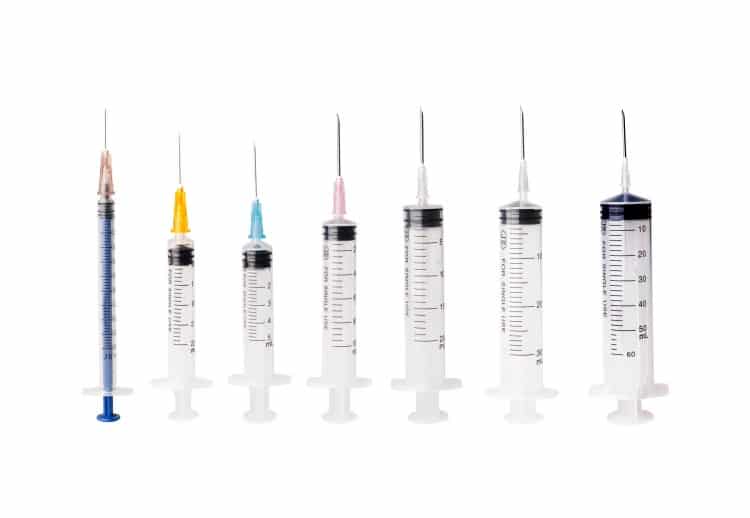
Safety features are no longer a premium add-on. IMARC reports that safety syringes accounted for about 80.9% of the syringe market in 2025, driven by concern about needlestick injuries, cross-contamination, and stricter safety rules. Auto-disable and prefilled syringes continue to grow as well, with prefilled syringes favored for vaccines and biologics because they reduce dosing errors.
If you are still deciding between the two main protection types, our comparison of auto-disable and safety syringes explains which suits which setting. When you evaluate suppliers, confirm they follow recognized single-use syringe standards and can provide test reports for the safety mechanism, not just the base device.
What to do: Specify the protection you need (reuse prevention, needlestick protection, or both) in your tender instead of asking for “safety syringes” in general.
Trend 3: Tariffs and Trade Policy Add Cost Uncertainty
Trade policy is a live budget risk, especially for buyers in the United States. According to the American Hospital Association’s 2026 Environmental Scan, hospitals imported more than USD 75 billion in medical devices and supplies in 2024, with China the leading source for items such as respirators, masks, and gloves.
Becker’s Hospital Review reports that the U.S. Trade Representative opened Section 301 investigations into 60 economies, and that duties of roughly 10% to 12.5% took effect on July 24 when an earlier tariff expired. The same report does not say whether those duties cover specific products such as syringes, so check the Harmonized Tariff Schedule codes for each item you buy rather than assuming. It also notes that manufacturers run on thin margins and that pre-negotiated contracts often delay price pass-through until the next budget cycle.
Tariff rules can change quickly, so verify current rates with your customs broker or the USTR before pricing a contract.
What to do: Add price-adjustment clauses to long contracts, ask suppliers where each product is made, and model a best case and worst case for landed cost.
Trend 4: Supply Chain Resilience Beats a Single Cheap Source
The pandemic taught buyers how fast a supply chain can break. In 2026 the lesson is turning into policy: more organizations are diversifying suppliers and regions, and analysts note that regional manufacturing and partnerships are increasingly valued, particularly in emerging markets.
Practical steps many procurement teams are taking:
- Qualify at least two suppliers for critical items such as syringes and IV sets
- Hold safety stock for high-use products, based on actual consumption data
- Ask suppliers for lead times, production capacity, and contingency plans in writing
- Include delivery performance (on-time, in-full) in supplier scorecards
What to do: Rank your disposables by clinical criticality. A shortage of syringes is a much bigger problem than a shortage of a low-risk accessory, so protect the critical items first.
Trend 5: Regulation Is Shifting, and Compliance Documents Matter More
In Europe, the Medical Device Regulation (MDR) remains fully in force, and a revision is in progress. According to Emergo by UL, the European Commission published draft proposals to revise the MDR and IVDR at the end of 2025, a European Parliament vote is scheduled for early 2027, and a compromise is expected around mid-2027, followed by a transition period. The outcome is not certain, and the current rules still apply in the meantime.
For buyers, the safe approach is simple: keep demanding current compliance documents and avoid waiting for rule changes.
- CE marking and the relevant notified body certificate (for the EU)
- ISO 13485 quality management certification
- FDA registration or clearance where required (for the US)
- Sterilization validation and shelf-life data
- Lot traceability and recall procedures
Industry commentary also highlights that traceability and supplier quality systems carry more weight because of recall risk. A supplier that organizes its documents well usually manages its production well too.
What to do: Build a supplier file checklist and re-check expiry dates on certificates every year.
Trend 6: Sustainability and Smarter Packaging Enter the Scorecard
Single-use does not mean careless. Healthcare systems face growing scrutiny over plastic waste, and analysts expect lifecycle impact and packaging reduction to become supplier-selection criteria. Infection control still comes first, so sustainability efforts focus on what can change safely: lighter packaging, fewer layers, recyclable outer materials, and less transport volume.
Related developments include:
- Smarter disposables: sensors and identification features that feed data to hospital systems
- Home and outpatient care: demand for pre-assembled kits and simpler connectors designed for non-clinical users
These are earlier-stage trends than the first five, but buyers who ask about them now will be better prepared.
What to do: Add one or two sustainability questions to your supplier questionnaire, such as packaging material and recycling options, and weight them modestly at first.
A Quick Procurement Checklist for 2026
| Question | Why it matters |
|---|---|
| Have we compared total cost, not just unit price? | Cheap products can cost more through injuries, waste, and delays |
| Are safety features specified precisely? | Avoids buying the wrong protection type |
| Do we know the country of origin and tariff exposure? | Prevents surprise cost increases |
| Do we have a second qualified supplier for critical items? | Reduces stock-out risk |
| Are certificates current and verified? | Protects against compliance and recall problems |
| Have we asked about packaging and sustainability? | Prepares for future requirements |
Final Thoughts
The 2026 procurement landscape rewards buyers who think beyond the price tag. Costs are shaped by trade policy, regulation, and supply risk. Quality is judged by safety design, documentation, and compatibility. And resilience comes from having options, not from a single low bid.
Start small: update your tender template, qualify a backup supplier for your most critical item, and verify your suppliers’ certificates. Those three steps alone will put your medical disposables procurement on firmer ground for the year ahead.
Sources