In modern medical and laboratory applications, precision, safety, and consistency are critical factors when selecting disposable injection devices. Among the most widely used medium-volume options, the 2.5ml syringe plays a key role in controlled dosing, research procedures, and clinical treatments.
As a professional medical consumables manufacturer, we provide high-quality solutions designed for global distributors, hospitals, and OEM partners.
Table of Contents
- What Is a 2.5ml Syringe and Who Uses It?
- 2.5ml Syringe Luer Lock vs. Luer Slip: Which Should You Choose?
- Why Disposable Sterile Syringes Are the Industry Standard
- The Case for No Needle Syringes in Clinical and Industrial Settings
- Key Specifications Procurement Teams Should Evaluate
- Application Scenarios: Medical, Lab, Veterinary, and Beyond
- How to Source 2.5ml Syringes Factory-Direct from China
- Certifications and Compliance: What Buyers Must Verify
- OEM and Private Label: Building Your Own Brand
- Frequently Asked Questions
1. What Is a 2.5ml Syringe and Who Uses It?
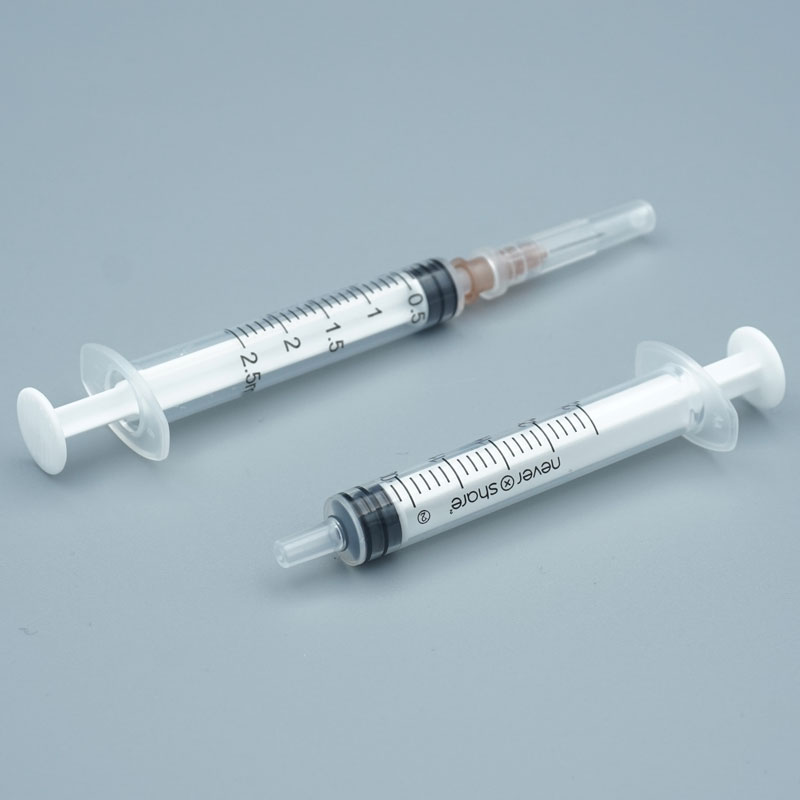
A 2.5ml syringe is a medium-capacity, single-use medical device designed for the accurate measurement, transfer, and administration of liquid medications in controlled volumes. Positioned between small-dose precision syringes and larger general-purpose injectors, it offers an ideal balance of dosing flexibility and operational accuracy.
The 2.5ml syringe is widely used across clinical, laboratory, and specialty care environments where consistent dosing and reliable graduations are essential. Hospitals and clinics commonly use it for routine injections, vaccine preparation, and medication administration that requires slightly higher volume than microdosing devices. Laboratories rely on it for reagent handling, sample preparation, and controlled liquid transfer processes. Veterinary professionals use it for small-to-medium animal treatments where dosage accuracy is critical for safety and effectiveness.
In addition to medical applications, the 2.5ml syringe is also frequently adopted in pharmaceutical production and industrial environments where precise fluid dispensing is required, including chemical sampling, cosmetic formulation, and light industrial fluid control.
Because of its versatility, the demand for 2.5ml syringes remains strong in global procurement markets. Distributors, hospital supply chains, and medical device importers increasingly source from certified Chinese manufacturers to ensure stable supply, competitive pricing, and compliance with international medical standards such as ISO and CE requirements.

2. 2.5ml Syringe Luer Lock vs. Luer Slip: Which Should You Choose?
When specifying a 2.5ml syringe, the tip configuration is one of the most important technical decisions in procurement. The two most widely adopted standards are Luer Lock and Luer Slip (Luer Taper), each designed for different clinical and operational requirements.
Luer Slip systems rely on friction-fit engagement between the syringe tip and the needle hub. This allows for fast assembly and easy detachment, making it suitable for general-purpose injections and low-pressure applications where speed and simplicity are prioritized.
However, in environments where injection pressure, fluid viscosity, or patient safety risks are higher, Luer Slip designs may present limitations due to potential loosening under stress.
In contrast, Luer Lock systems utilize a threaded locking mechanism that secures the needle or connector with a quarter-turn twist. This mechanical locking structure provides significantly improved stability and is widely preferred in professional medical settings.
Key advantages of Luer Lock 2.5ml syringes include:
• Prevents accidental needle or connector detachment during use
• Supports higher injection pressure without leakage risk
• Enhances safety in IV flushing, fluid transfer, and catheter-related procedures
• Reduces exposure risk during needle connection and removal
For most hospital procurement departments, pharmaceutical distributors, and laboratory buyers, the 2.5ml Luer Lock syringe is typically the default specification. Although it may carry a slightly higher unit cost compared to Luer Slip variants, the added safety, reliability, and compliance advantages make it the preferred long-term choice.
Our 2.5ml syringe is manufactured with a precision-molded polypropylene tip that complies with ISO 594-2 dimensional standards, ensuring full compatibility with standard Luer Lock needles, tubing systems, and medical connectors used globally.
3. Why Disposable Sterile Syringes Are the Industry Standard
The transition from reusable injection devices to disposable sterile syringes represents one of the most significant advancements in modern infection control. Today, single-use syringe systems are widely recommended or required by global health authorities such as the WHO, FDA, CE regulatory framework, and institutional procurement guidelines across hospitals and public healthcare systems.
For medium-volume applications such as medication administration and clinical dosing, the 2.5ml disposable sterile syringe has become a standard specification due to its balance of precision, safety, and operational efficiency.
The Sterility Assurance Process
A properly manufactured disposable sterile syringe undergoes a controlled ethylene oxide (EO) sterilization process after assembly and packaging. EO gas penetrates sealed medical-grade blister packaging, effectively eliminating bacteria, viruses, and fungi while maintaining material integrity.
This process ensures a Sterility Assurance Level (SAL) of 10⁻⁶, which is the globally recognized benchmark for terminally sterilized medical devices used in clinical environments.
Key sterility assurance factors procurement teams should verify include:
• Individual blister packaging for each 2.5ml syringe, ensuring single-device sterility
• Clearly printed expiration date on each sterile pack, typically 3–5 years post-sterilization
• Batch-level sterilization validation and traceability documentation
• EO residual testing reports confirming compliance with safety thresholds
• Packaging integrity testing to ensure seal strength and sterile barrier protection
These factors are critical for hospital procurement departments, pharmaceutical distributors, and laboratory buyers evaluating supplier reliability.
Single-Use Policy Compliance
Global regulatory agencies enforce strict single-use policies for syringes due to the proven risk of cross-contamination associated with reuse. Even minimal reuse in clinical environments can result in infection transmission and compromised patient safety.
The design of a 2.5ml disposable sterile syringe ensures that it is intended for one-time use only, often becoming mechanically compromised after activation to discourage reuse and enforce compliance with safety protocols.
For procurement teams, this also introduces a broader consideration: total cost of ownership. Beyond unit pricing, buyers must factor in safe disposal systems such as sharps containers and regulated medical waste handling processes.
By sourcing directly from certified manufacturers, healthcare distributors can significantly reduce per-unit costs while maintaining compliance with international sterilization and safety standards. Our 2.5ml syringe is produced under strict quality control systems to support global single-use medical programs efficiently and reliably.
4. The Case for No Needle Syringes in Clinical and Industrial Settings
A no needle syringe refers to a syringe supplied without a pre-attached needle. This is not a reduced or incomplete configuration; rather, it is a deliberate and widely adopted specification designed to maximize flexibility, safety, and cross-sector usability.
In the case of the 2.5ml syringe, the no-needle format is especially common in hospital procurement, laboratory workflows, and industrial applications where end users require full control over needle or connector selection.
Why Supply Without a Needle?
Flexibility of tip configuration
A no needle 2.5ml syringe allows the end user to select the appropriate needle gauge, blunt cannula, or connector depending on the application. This is particularly important in laboratory environments and pharmaceutical workflows where multiple delivery systems may be used with the same syringe barrel.
Reduced handling and logistics risk
Shipping syringes without attached needles significantly reduces the risk of needlestick injuries during packaging, storage, and transportation. This improves occupational safety in warehouses and simplifies international logistics compliance, especially for air freight shipments.
Broader application range
Not all syringe use cases require a needle. The 2.5ml no needle syringe is widely used in:
• Oral medication dosing and transfer
• Laboratory reagent handling and sample preparation
• Wound irrigation and flushing procedures
• Cosmetic and aesthetic product mixing and application
• Industrial fluid dispensing (adhesives, resins, and dyes)
Regulatory and customs advantages
In many international markets, syringes supplied without needles are classified separately from complete needle-syringe assemblies. This distinction can simplify import documentation, reduce regulatory complexity, and improve customs clearance efficiency for distributors and importers.
Factory-Ready Sterile Configuration
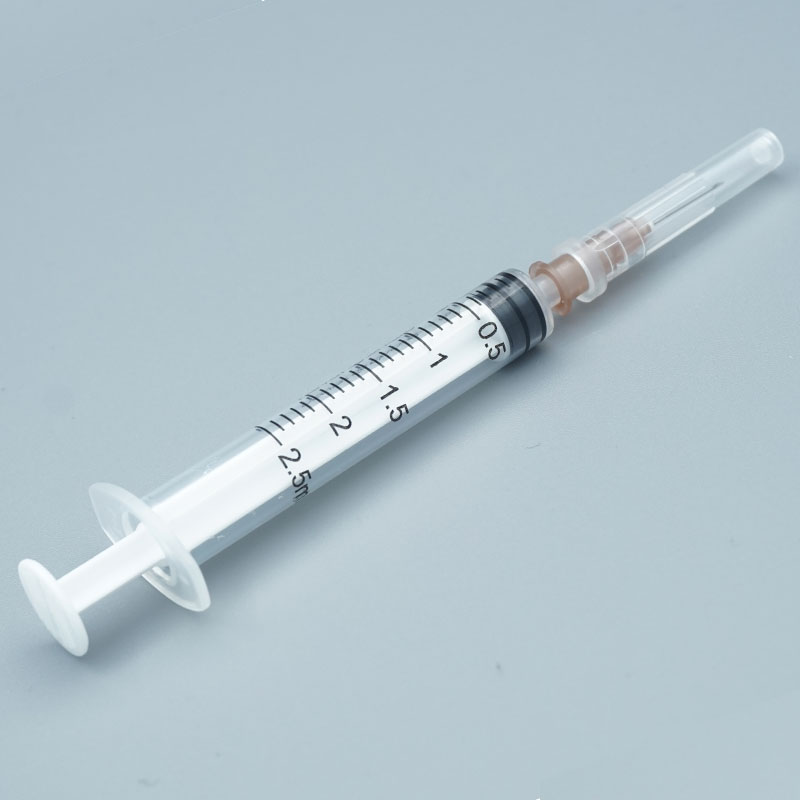
Our 2.5ml no needle syringe is supplied with a sealed Luer Lock or Luer Slip tip, protected by a sterile cap and individually packaged in medical-grade blister packaging. This ensures full sterility while allowing the end user to attach the required needle or connector at the point of use.
5. Key Specifications Procurement Teams Should Evaluate
When issuing a Request for Quotation (RFQ) for 2.5ml syringes, procurement teams must define clear technical and regulatory specifications to ensure consistent product comparison across different suppliers. Without standardized requirements, quotations may vary significantly in quality, compliance level, and performance.
To support accurate evaluation, the following key parameters should be clearly defined in your procurement documentation:
| Specification | What to Look For |
|---|---|
| Barrel material | Medical-grade polypropylene (PP), compliant with ISO 10993 or USP Class VI standards |
| Barrel clarity | High transparency for accurate and distortion-free dose reading |
| Graduation accuracy | Clear, durable markings suitable for precise 2.5ml measurement |
| Graduation resolution | Fine-scale increments appropriate for controlled dosing applications |
| Plunger stopper | Latex-free silicone rubber, ensuring smooth, low-friction movement |
| Tip type | Luer Lock (preferred) or Luer Slip depending on clinical requirements |
| Needle | No needle (standard bulk supply) or customizable gauge on request |
| Sterilization method | EO (ethylene oxide) sterilization with validated SAL 10⁻⁶ level |
| Packaging format | Individual sterile blister packaging with peelable aseptic design |
| Pack configuration | Standard 100 pcs/box or customized packing based on distributor needs |
| Shelf life | Minimum 3–5 years from sterilization date depending on validation |
| Certifications | CE certification, ISO 13485 compliance, FDA 510(k) where applicable |
Why Specification Standardization Matters
For hospital procurement departments, medical distributors, and OEM buyers, standardizing RFQ specifications is essential to eliminate ambiguity in supplier quotations. Without unified criteria, suppliers may offer structurally different 2.5ml syringe products that appear similar but vary significantly in material grade, sterilization level, or dimensional accuracy.
A clearly defined specification sheet ensures:
• Accurate like-for-like supplier comparison
• Reduced risk of receiving substandard materials
• Improved regulatory compliance in target markets
• More predictable production and delivery outcomes
By aligning procurement requirements with international medical device standards, buyers can ensure consistent quality across global supply chains while optimizing cost efficiency.

6. Application Scenarios: Medical, Lab, Veterinary, and Beyond
Understanding where 2.5ml syringes are used helps procurement teams better forecast demand, optimize inventory planning, and ensure the correct technical specifications are communicated to suppliers. Due to its medium-volume design, the 2.5ml syringe is widely adopted across clinical, research, veterinary, and industrial sectors.
Clinical and Hospital Use
In hospital environments, the 2.5ml syringe is commonly used for procedures that require moderate dosing precision and flexible volume control, including:
• Subcutaneous and intramuscular injections
• Vaccine preparation and administration in adult immunization programs
• Medication delivery requiring volumes slightly higher than micro-dose syringes
• IV line flushing with saline or heparin solutions
• Pharmacy compounding and drug dilution processes
Its balance between capacity and precision makes it a standard consumable in general ward and outpatient clinical workflows.
Research and Laboratory Applications
In laboratory and pharmaceutical research settings, the 2.5ml syringe is used for controlled liquid handling and experimental procedures, such as:
• Reagent transfer between containers with minimal contamination risk
• Cell culture medium supplementation and nutrient dosing
• Analytical sample preparation for chromatography systems (HPLC/GC) with appropriate needle configurations
• Micro-volume liquid dispensing in biochemical testing
• Controlled inoculation in microbiology research environments
The consistent graduation accuracy of the 2.5ml format is particularly valuable in experimental environments where reproducibility is critical.
Veterinary Medicine
Veterinary clinics and animal care facilities frequently rely on 2.5ml syringes for medium-range dosing requirements, including:
• Medication administration for small to medium-sized animals
• Subcutaneous fluid therapy for dehydration treatment
• Vaccination programs across companion animal care
• Controlled dosing for post-operative recovery treatments
Its versatility allows veterinarians to use a single syringe format across multiple species and treatment protocols.
Industrial and Aesthetic Applications
Beyond traditional healthcare environments, the 2.5ml syringe (including no-needle configurations) is widely used in industrial and precision manufacturing sectors, such as:
• Adhesive, epoxy, and resin dispensing in electronics assembly
• Pigment and dye measurement in textile and material testing
• Cosmetic formulation transfer and mixing processes
• Aesthetic medicine clinics for filler preparation and handling
• Fragrance and essential oil blending in cosmetic production lines
These non-clinical applications highlight the syringe’s role as a precision fluid-control tool beyond medical use cases.
The wide range of applications explains why the 2.5ml syringe remains one of the most frequently specified sizes in global procurement programs, especially among distributors, hospital supply chains, and OEM medical brands.
7. How to Source 2.5ml Syringes Factory-Direct from China
China is one of the world’s largest manufacturing bases for disposable medical devices, including 2.5ml syringes, supplying a significant share of global hospital, laboratory, and distributor demand. For international buyers, understanding how to properly source directly from factories is a key advantage in controlling cost, quality, and supply chain stability.
The Factory-Direct Advantage
Sourcing 2.5ml syringes directly from a manufacturer—rather than through trading companies or regional distributors—provides several structural procurement benefits:
• 15–30% lower unit cost by eliminating intermediary margins
• Direct control over production scheduling and lead time planning
• Full OEM/ODM customization (branding, packaging, specifications)
• Access to complete quality documentation and batch traceability records
• Faster technical communication and issue resolution with engineering teams
For hospital procurement groups and medical distributors, these advantages directly translate into improved pricing competitiveness and supply reliability.
What to Verify Before Placing a First Order
Before selecting a supplier for 2.5ml syringe procurement, proper due diligence is essential to ensure regulatory compliance and production capability.
Key verification points include:
ISO 13485 Certification
Confirm the manufacturer operates under a valid ISO 13485 quality management system specifically for medical devices. Always request the latest certificate and verify authenticity.
CE Mark Documentation
For EU-bound products, ensure the supplier provides a valid Declaration of Conformity along with Notified Body information where applicable.
Factory Audit Reports
Review third-party audit documentation (e.g., SGS, TÜV, Bureau Veritas) conducted within the last 12–24 months to assess production and quality systems.
Sample Evaluation
Always request pre-production 2.5ml syringe samples to verify barrel clarity, graduation accuracy, plunger smoothness, and sterility packaging quality before bulk ordering.
Production Capacity
Confirm monthly output capacity to ensure the supplier can meet your demand volume within required lead times, especially for high-frequency distribution programs.
Payment Terms & Incoterms
FOB Shanghai is the most commonly used shipping term for Chinese medical device exports, while CIF or DDP arrangements may be available depending on order size and buyer requirements.
Factory Capability and Compliance Assurance
Kohope Medical operates ISO 13485-certified manufacturing facilities and has extensive experience supplying disposable medical consumables to Europe, North America, and the Middle East. Our 2.5ml syringe products are produced under strict quality control systems and are available with full regulatory documentation to support international procurement requirements.
8. Certifications and Compliance: What Buyers Must Verify
Regulatory compliance is not a formality in medical procurement — it is a continuous manufacturing obligation that determines whether a supply chain can withstand audits, customs inspections, and hospital procurement reviews. For 2.5ml syringes, certification validation is one of the most critical steps in supplier qualification.
CE Mark (European Union)
CE marking for medical devices in the European Union is regulated under Medical Device Regulation (MDR 2017/745). For syringe products, classification depends on configuration:
• Non-sterile syringes are typically classified as Class I and may be self-declared by the manufacturer
• Sterile 2.5ml syringes are classified as Class Is and require involvement of a Notified Body
For EU-bound products, procurement teams should always request:
• Full Declaration of Conformity (DoC)
• Notified Body identification number (for sterile products)
• Technical documentation reference and traceability file
These documents ensure that the product is legally compliant for distribution within EU healthcare systems.
FDA Registration and 510(k) (United States)
For the United States market, syringe manufacturers must comply with FDA regulatory requirements. Depending on product classification and intended use, this may include:
• FDA establishment registration and device listing
• 510(k) clearance (where applicable for specific device configurations)
Buyers supplying hospitals, distributors, or e-commerce medical channels in the US should verify both manufacturer registration status and product eligibility before importation.
ISO 13485 Quality Management System
ISO 13485 is the global benchmark for medical device quality management systems. It confirms that the manufacturer maintains controlled processes across:
• Product design and development
• Raw material control
• Production consistency
• Sterilization validation
• Post-market surveillance and complaint handling
For 2.5ml syringe procurement, ISO 13485 certification is considered a baseline requirement for supplier qualification in most international tenders.
Additional Certifications and Compliance Documents
Beyond core regulatory approvals, buyers may request supporting documentation to strengthen compliance assurance:
• Third-party test reports (SGS, TÜV, or Bureau Veritas) for material and performance validation
• Latex-free declaration confirming safe use in allergy-sensitive clinical environments
• EO sterilization residual reports verifying compliance with safety limits after sterilization
• Biocompatibility testing results (ISO 10993) for patient-contact materials
Compliance as a Procurement Risk Control Tool
For hospital procurement departments and medical distributors, certification verification is not only about regulatory approval — it is also a risk management mechanism. Proper documentation reduces:
• Import clearance delays
• Hospital audit failures
• Product recall risks
• Supplier qualification issues in tenders
By working with certified manufacturers, buyers ensure that every batch of 2.5ml syringes meets internationally recognized safety and quality expectations.
9. OEM and Private Label: Building Your Own Brand
For medical distributors, importers, and healthcare brands, OEM and private-label manufacturing offers a strategic pathway to build market differentiation without investing in production infrastructure. Instead of competing purely on price, buyers can establish their own branded 2.5ml syringe product line with full control over specification and presentation.
Working with a factory like Kohope enables end-to-end OEM support across product development, manufacturing, and regulatory documentation.
Barrel Customization
OEM customization begins at the product level. The 2.5ml syringe barrel can be adapted to reflect brand identity and functional requirements:
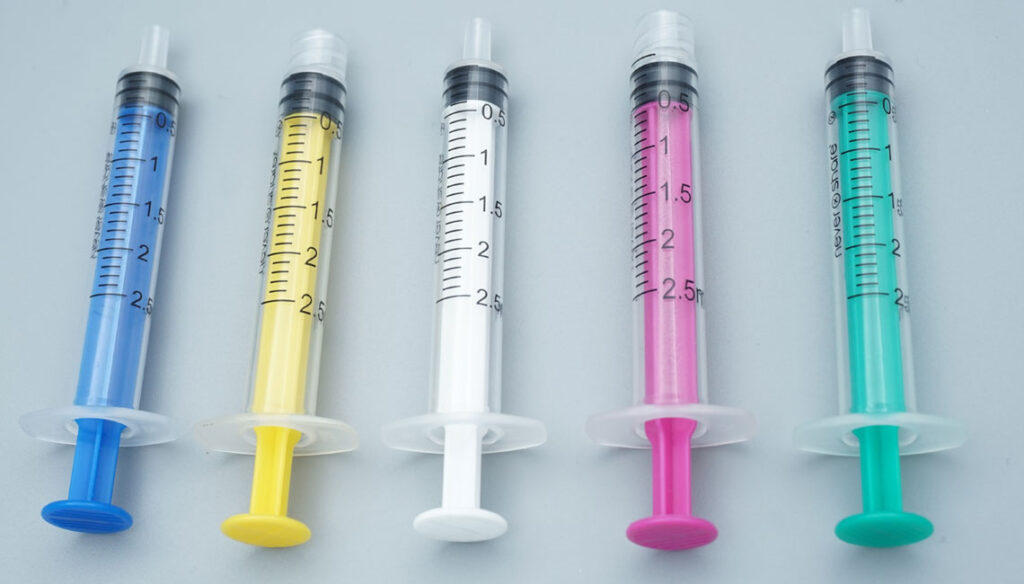
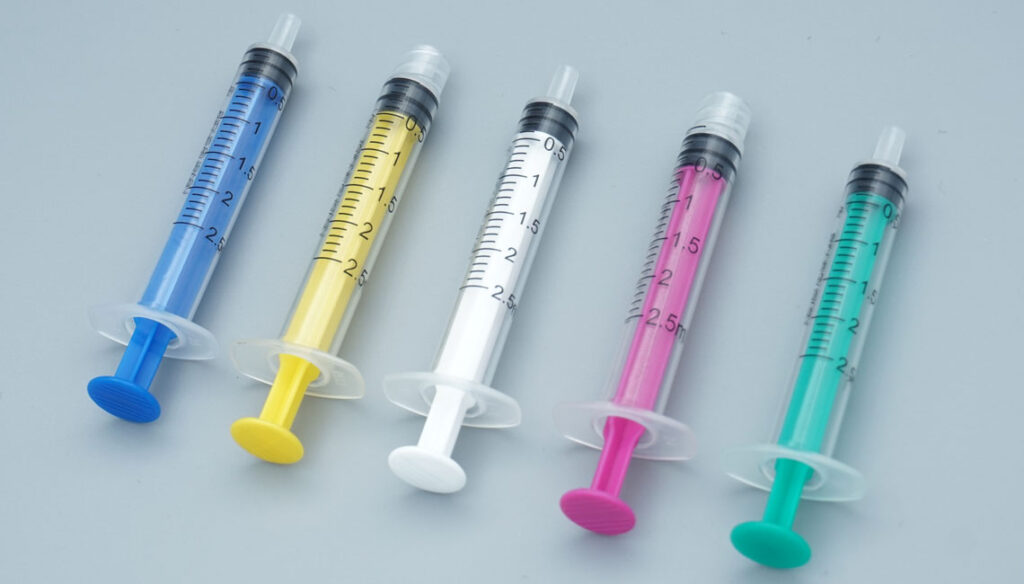
• Logo printing directly on the polypropylene barrel via pad printing or laser marking
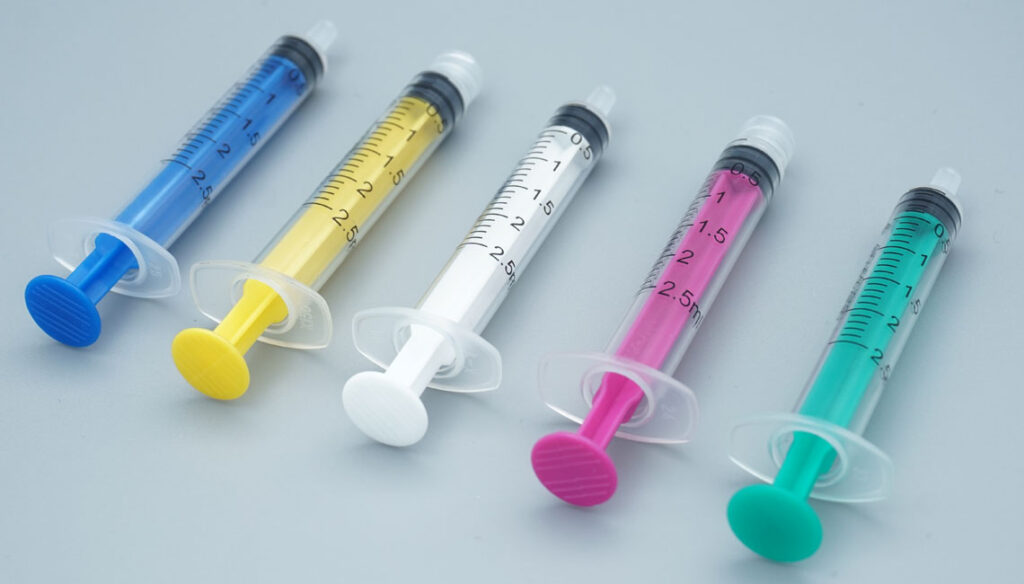
• Custom color-coded plunger rings for size or product line differentiation
• Tailored graduation markings or enhanced visibility scale design (if required by market)
These modifications allow distributors to create a recognizable product identity in competitive medical supply markets.
Packaging Design and Branding
Packaging plays a critical role in hospital procurement and retail distribution channels. OEM private-label programs typically include:
• Fully customized outer carton design aligned with brand guidelines
• Sterile blister packaging with branded labeling and color systems
• Bilingual or multilingual labeling for EU, US, and Middle Eastern markets
• Barcode, QR code, and lot number customization for traceability systems
A well-designed packaging system improves both regulatory compliance and end-user trust in clinical environments.
Documentation and Regulatory Support
A complete OEM program for 2.5ml syringes includes regulatory and documentation services to support market entry:
• Customized Instructions for Use (IFU) documents
• CE Declaration of Conformity issued under the buyer’s brand (where applicable)
• Labeling compliance review for target regulatory markets
• Batch traceability documentation aligned with hospital procurement standards
This ensures that private-label products meet both commercial and regulatory expectations.
Production Volume and MOQ Structure
OEM syringe programs are typically structured around scalable production volumes. For 2.5ml syringe private-label projects, typical requirements include:
• Minimum order quantity (MOQ): 50,000–100,000 units depending on customization level
• Tiered pricing models for higher-volume procurement
• Flexible production scheduling for repeat or phased orders
This structure allows distributors to balance market testing with long-term scaling strategies.
Sample-to-Production Timeline
A standard OEM development cycle includes:
• Sample development and approval phase
• Packaging and labeling confirmation
• Regulatory documentation alignment
• Mass production and quality inspection
The typical timeline from sample approval to first shipment is approximately 45–60 days, depending on customization complexity.
Fast-Track Private Label Strategy
For buyers entering the market quickly, the most efficient approach is to start with a standard 2.5ml syringe Luer Lock no needle configuration, then apply custom branding and packaging. This reduces development time while still enabling full private-label positioning.

10. Frequently Asked Questions
Q: What is the difference between a 2.5ml syringe and other standard syringe sizes?
A: A 2.5ml syringe is a medium-capacity syringe designed to bridge the gap between low-volume precision syringes (such as 1ml) and larger general-purpose syringes (such as 3ml or 5ml). It offers improved dosing flexibility while maintaining accurate graduation control, making it suitable for a wide range of clinical and laboratory applications.
Q: Can a 2.5ml Luer Lock syringe be used without a needle?
A: Yes. A 2.5ml Luer Lock syringe can be used without a needle when fitted with a protective cap or connected to accessories such as blunt cannulas, tubing systems, or stopcocks. No-needle configurations are commonly used in laboratory transfer, oral dosing preparation, and industrial fluid dispensing applications.
Q: What is the typical shelf life of EO-sterilized 2.5ml syringes?
A: Most EO-sterilized 2.5ml syringes have a shelf life of 3 to 5 years, depending on packaging integrity and storage conditions. Each unit is individually sealed in sterile blister packaging to maintain sterility throughout its validated shelf life.
Q: What is the typical MOQ for factory-direct 2.5ml syringe orders?
A: For standard stock specifications, minimum order quantities typically range from 10,000 to 50,000 units. For OEM or private-label 2.5ml syringe projects, MOQ usually starts from 50,000 to 100,000 units depending on packaging and customization requirements.
Q: Are your 2.5ml syringes latex-free?
A: Yes. Our 2.5ml syringes are manufactured using medical-grade polypropylene barrels and latex-free silicone rubber plungers, making them suitable for latex-sensitive clinical environments. Latex-free compliance documentation is available upon request.
Q: How can I request samples before placing a bulk order?
A: Buyers can request samples of our 2.5ml syringe products by contacting our sales team at sales@kohope.com or submitting an inquiry through the product page. Sample evaluation is recommended prior to bulk procurement to verify specifications, packaging, and performance.
Summary: Why the 2.5ml Syringe Remains a Critical Standard in Medical Procurement
Across clinical healthcare systems, laboratory environments, veterinary practices, and industrial fluid control applications, the 2.5ml syringe remains one of the most frequently specified medium-volume consumables in the global medical supply chain. Its balanced capacity, precise graduation system, and compatibility with universal Luer Lock and Luer Slip standards make it a reliable and repeatable procurement item for international buyers.
For procurement teams evaluating long-term supply strategies, the combination of sterile disposable syringe compliance, Luer Lock connection security, and no needle configuration flexibility ensures that the 2.5ml format can support a wide range of professional use cases without requiring multiple product substitutions.
This versatility is a key reason why distributors, hospital supply chains, and OEM medical brands continue to prioritize the 2.5ml syringe as a core SKU in their product portfolios.
Explore Kohope’s full 2.5ml syringe product specification or view the featured sterile configuration directly:
👉 2.5ml Syringe – Luer Lock Disposable Sterile Syringe, No Needle (100 Pack) | Kohope Medical
Kohope Medical Devices Co., Ltd.
Room 1001, Building B, No. 2888 South Qilianshan Road, Shanghai 200331, China
Email: sales@kohope.com | Phone: +86-21-6083-6338
© 2026 Kohope Medical. All rights reserved.