—How to Develop Reliable Syringe Suppliers in 2026 After Industry Reshuffling?
In 2025, the global syringe manufacturing industry underwent a historic structural reorganization. After the pandemic, a sharp decline in orders, stricter FDA compliance reviews, rising raw material costs, and the accelerated consolidation of multinational giants led many small and medium-sized syringe manufacturers to bankruptcy, acquisition, or voluntary market exit. This supply chain shake-up is profoundly changing the global medical consumables procurement landscape.
For buyers, this presents both a crisis—old partners may suddenly disappear—and an opportunity—the reshuffling of suppliers opens a golden window for establishing new partnerships. This article deeply analyzes the turmoil of 2025 and provides a practical guide to developing new syringe manufacturers in 2026.

1. 2025 Syringe Manufacturer Shake-Up: A Case Review
1.1 Industry Background: Why Did 2025 Become a Watershed Year?
According to IBISWorld industry data, the U.S. syringe and needle manufacturing industry has seen annual revenue decline at a rate of 0.7% over the past five years, with the market size expected to reach about $3.7 billion in 2025. The global market is under similar pressure:
Decline in Pandemic-Fueled Demand: The super-order surge from 2020-2021 driven by vaccine demand has ended, leading to overcapacity in many expanded production lines.
Stricter FDA Compliance: Between 2023-2024, the FDA’s quality investigation of Chinese-manufactured syringes led to market exits for several Chinese manufacturers.
Intensifying Price Wars: Multinational giants like BD (Becton Dickinson) continue to suppress prices using economies of scale, severely compressing profit margins for small and medium manufacturers.
Fluctuating Raw Material Prices: The rise in prices for polypropylene and other materials, combined with labor cost increases, further erodes the survival space for smaller manufacturers.
1.2 Major Mergers & Acquisitions (2025 Real Events)
Case 1: H&T Presspart Acquires Plas-Tech Engineering (November 2025)
In one of the most significant syringe industry mergers of 2025, H&T Presspart, a pharmaceutical delivery device manufacturer under the Heitkamp & Thumann Group, acquired a majority stake in U.S.-based Plas-Tech Engineering, a private medical device manufacturer in Lake Geneva, Wisconsin. Plas-Tech Engineering, with over 35 years of syringe manufacturing experience, specializes in developing parenteral syringe systems for the pharmaceutical and biotech industries. Its proprietary Equinox prefilled syringe offers a competitive edge in biologics and high-viscosity drug delivery.
This acquisition strategically expands H&T Presspart’s footprint in the U.S. while integrating Plas-Tech’s expertise in polymer prefilled syringe systems, signaling a major shift for a once-independent medium-sized syringe manufacturer now joining a large European group.
Case 2: Mallinckrodt and Endo Merge, Sterile Injectables Business Spun Off (2025)
In the pharmaceutical sector, Mallinckrodt and Endo announced a $6.7 billion merger, quickly followed by the spin-off of their sterile injectables and generic drug businesses into a new entity, Par Health. Par Health, with seven U.S. production sites, is now one of the top 15 generic drug manufacturers in the U.S. and one of the largest domestic API producers.
These changes directly impacted the sterile injectables supply chain, often leading to extended delivery times and quality system re-certifications.
Case 3: Chinese Manufacturers Exit the Market Due to FDA Compliance Crisis
Between 2023-2024, the FDA initiated a large-scale quality investigation into syringes manufactured in China, leading to recalls and import bans for several Chinese manufacturers, including:
- Jiangsu Shenli Medical Production Co. (FDA warning letter, Medline Industries recall)
- Jiangsu Caina Medical (FDA import warning)
- Zhejiang Longde Pharmaceutical and Shanghai Kindly Enterprise Development Group
The investigation found serious quality issues, such as leaks, breakage, and failure to maintain sterility, which forced U.S. buyers to switch suppliers in a hurry, causing a temporary syringe shortage and a significant surge in orders for domestic brands like BD.
1.3 Three Structural Reasons Behind the Market Shake-Up
Reason 1: Increasing Barriers to Economies of Scale
Modern syringe production is highly automated, with investments in advanced automated assembly lines and EO sterilization equipment reaching millions of dollars per line. Large manufacturers benefit from economies of scale, reducing unit costs to a point where small and medium-sized manufacturers can no longer compete, often leading them to sell or shut down.
Reason 2: Rising Compliance Costs
The cost of maintaining international certifications such as ISO 13485, FDA 510(k), CE, and EU MDR increases annually. Mid-sized syringe manufacturers can face compliance costs in the tens of thousands of dollars, and losing certification leads directly to market bans.
Reason 3: Accelerated Consolidation by Industry Giants
The global syringe market is highly concentrated, with BD (Becton Dickinson), Terumo, and Nipro holding the majority of the market share. Their market dominance is expanding through mergers and acquisitions, squeezing smaller manufacturers either into larger group ecosystems or out of the market due to price competition.
2. 2026 Strategic Opportunities: Why Is Now the Best Time to Develop New Suppliers?
After this reshuffling, a rare strategic window is opening. For global buyers, 2026 offers several distinct advantages:
Supplier Relationship Gap: Many old suppliers have disappeared or been acquired, leaving clients in a position to reselect partners, with relatively lower barriers to entry for new suppliers.
Stronger Negotiating Power: With industry order volumes still below pandemic peak levels, and quality manufacturers operating below full capacity, there is more room for price negotiations than in previous years.
Heightened Demand for Compliant Manufacturers: After the FDA crisis, there is a sharp increase in demand for compliant, high-quality manufacturers, with only the truly outstanding manufacturers emerging from the turmoil.
Diversified Supply Chains Become the Norm: Following the pandemic and product recalls, buyers are moving away from single-source strategies in favor of multi-source layouts, providing more opportunities for emerging high-quality suppliers.
3. How to Develop New Syringe Manufacturers in 2026? A Step-by-Step Guide
3.1 Step 1: Define Your Requirements
Before looking for new suppliers, clearly define your needs to avoid wasting time during the selection process:
- Product Type: Disposable Syringe / Insulin Syringe / Prefillable Syringe / Safety Syringe
- Specification Requirements: Capacity (1ml, 2ml, 5ml, etc.), needle specifications, Luer Lock or Luer Slip
- Target Markets: Compliance with FDA (USA), CE (EU), NMPA (China), or other region-specific regulations
- Annual Demand and Delivery Schedule: Minimum Order Quantity (MOQ), standard lead time, seasonal demand variations
3.2 Step 2: Supplier Evaluation Criteria (Four-Dimensional Framework)
Key Evaluation Questions
- Qualification Compliance: Is the supplier ISO 13485 certified, and is their FDA registration valid?
- Warning Signs: Certifications nearing expiration or refusal to provide originals
- Production Capacity: What is the maximum monthly capacity, and what is the expansion cycle?
- Warning Signs: Full capacity with no flexibility
- Financial Health: Has the supplier undergone any recent mergers or reorganizations? Is the key team stable?
- Warning Signs: Recent acquisition with high management turnover
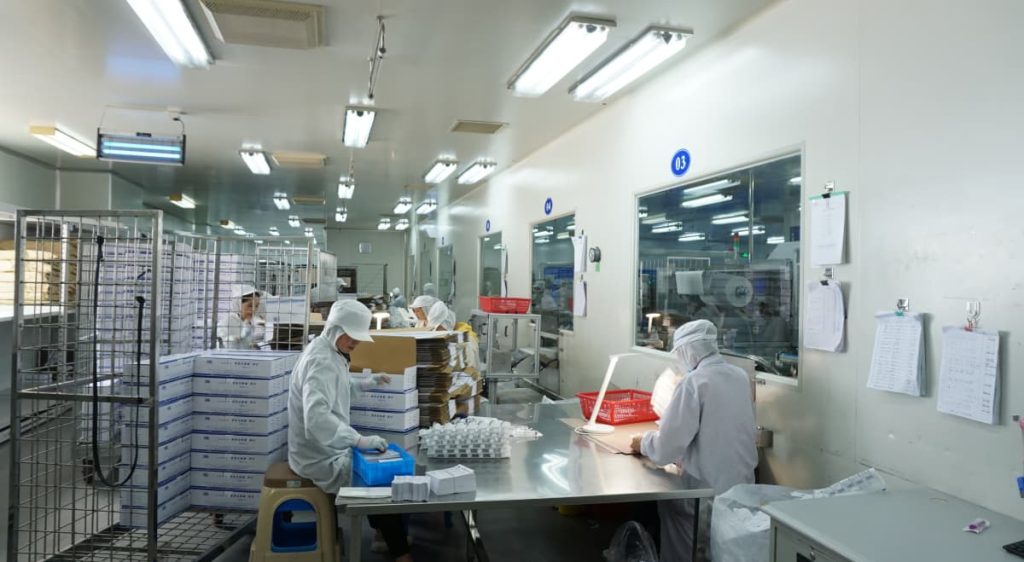
- Quality Management: What are the cleanroom grades, automation levels, and third-party inspection reports?
- Warning Signs: Relying on visual inspections without systematic recordkeeping
- Delivery & Stock Management: What is their standard delivery time, inventory policy, and ability to handle rush orders?
- Warning Signs: No safety stock and no rush order contingency plans
3.3 Step 3: Information Gathering Channels
For 2026, here are efficient channels to find syringe manufacturers:
- International Medical Trade Shows: MEDICA (Germany), CMEF (China), Arab Health (UAE)—directly engage qualified manufacturers
- B2B Platforms: Alibaba International, Global Sources, Made-in-China—ensure background checks, don’t rely solely on listings
- Industry Associations & Whitelists: CAMDI (China), EUCOMED (Europe)—they maintain public lists of compliant manufacturers
- Third-Party Audit Services: SGS, BV, TÜV offer factory audit reports to assess supplier qualifications
3.4 Step 4: Sampling and Verification Process (Start with Small Orders)
- Initial Contact: Send RFQ, clarify specifications, certifications, and minimum order quantity
- Sample Testing: Request free or paid samples, send them to third-party testing agencies (e.g., SGS) for leakage, sterility, and accuracy tests
- Factory Audits: Conduct on-site or video audits, focusing on cleanroom management and quality control processes
- Small Trial Orders: First-time orders should be small (e.g., 10,000-50,000 units) to verify batch consistency
- Performance Evaluation: Establish KPIs (on-time delivery rate, defect rate, complaint response time) and review after 6 months
3.5 Step 5: Dual Source Strategy to Avoid Single Supplier Dependency
The events of 2025 demonstrate the significant risks of a single supplier strategy in high-risk medical consumables. Buyers should implement a dual-source strategy, with the main supplier handling 70%-80% of orders, and a backup supplier managing 20%-30%, ensuring a quick switch if unexpected issues arise with the main supplier.
4. Why Choose Shanghai Kohope? — 20 Years of Expertise in Navigating Industry Cycles
In the midst of this industry reshuffling, the syringe manufacturers that remain trustworthy are those with over 20 years of experience who have weathered multiple industry cycles.
Kohope, founded in 2005 and headquartered in Shanghai, is a professional supplier specializing in the research, development, and manufacturing of high-precision syringes. With nearly 20 years of experience in syringe manufacturing, Kohope has become a reliable partner for global buyers looking for syringe OEM suppliers in Shanghai.
4.1 Kohope Core Advantages
- Strong Technical Expertise: Kohope has been focusing on syringe manufacturing technology development since its founding, accumulating extensive experience in disposable syringes, insulin syringes, and prefillable syringes.
- Rigorous Quality Management System: Kohope holds ISO 13485 certification and meets CE, FDA, and other international market standards. The company passed FDA quality checks in 2023-2024 without incident.
- Flexible OEM/ODM Services: Kohope offers custom OEM and ODM services, supporting customized packaging, specification adjustments, and brand design for clients to launch products quickly in target markets.
- Stable Supply Chain and Delivery Capacity: Kohope’s strong geographic advantage in Shanghai ensures flexible procurement, inventory management, and logistics, guaranteeing on-time deliveries and backup inventory services.
4.2 Kohope Product Line
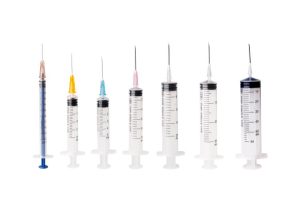
- Disposable Syringes: 1ml, 2ml, 3ml, 5ml, 10ml, 20ml, 50ml, with Luer Lock or Luer Slip options.
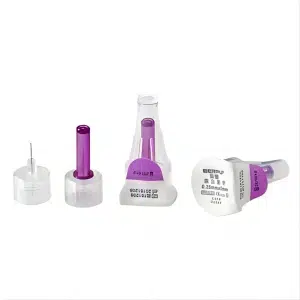
- Insulin Syringes: U-40, U-100, ultra-fine needle design to reduce patient injection pain.
- Prefillable Syringes: COC/COP polymer materials, suitable for biologics and high-viscosity drug delivery.
- Safety Syringes: Auto-disable feature to prevent reuse, compliant with WHO standards for vaccine programs.
4.3 Kohope Qualifications
- ISO 13485: International medical device quality management system certification.
- CE Certification: Market access for the European Union.
- FDA Registration: Authorization for the U.S. market.
5. Common Risks in Developing New Syringe Suppliers for 2026
- Risk 1: The Low-Price Trap: Some emerging manufacturers offer ultra-low prices but produce unstable quality or even fake certifications. Always verify certification documents and conduct factory audits.
- Risk 2: Post-Acquisition Transition: Mergers can create instability in production, with new processes or quality standards, especially during the 6-18 months after the deal.
- Risk 3: Certification Timeliness: Certification validity is limited, and changes in regulations can lead to de-certification. Ensure that your contract includes provisions for timely notification of certification changes.
- Risk 4: Exchange Rate and Trade Policy Risk: Be mindful of fluctuations in the exchange rate and trade policy changes between China and the U.S./Europe.
Conclusion: A Reliable Partner is Priceless After a Crisis
The reshuffling of the syringe industry in 2025 was essentially a market cleansing, favoring the most resilient manufacturers. Those who survived the FDA crisis, resisted price pressure, and maintained quality through the consolidation era are the ideal long-term partners.
With over 20 years of experience, Kohope has become a preferred choice for global buyers looking for syringe OEM suppliers in Shanghai. We look forward to collaborating with our global partners to build a more stable and efficient medical device supply chain in 2026.
If you would like more details about Kohope’s products, samples, or OEM cooperation, please feel free to contact us anytime.